
Ian Stevenson — Canadian psychiatrist and researcher of reincarnation claims
Profile of Ian Stevenson, a Canadian-born psychiatrist at the University of Virginia who investigated childhood reports of past lives, his methods, publications, controversies, and legacy.
Ian Stevenson was a Canadian-born psychiatrist who spent most of his career at the University of Virginia studying children who reported memories of previous lives. He became known for an empirical, case-oriented approach to a topic typically relegated to religious or philosophical discussion. Stevenson treated these reports as data to be examined, not as evidence presented apart from verification and analysis. He proposed that some cases were difficult to explain by ordinary means and suggested that the hypothesis of survival of personality after death was worth scientific attention, while explicitly acknowledging he could not offer a physical mechanism.
Image gallery
2 Images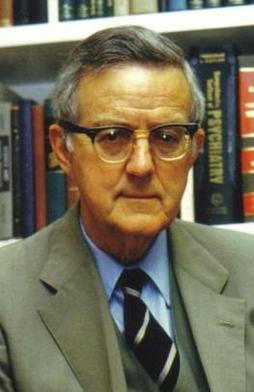

Research approach and methods
Stevenson conducted prolonged field investigations, often traveling to countries where spontaneous reports of past-life memories were common. His methods combined clinical interviewing, corroboration of statements, examination of birthmarks and birth defects reported in connection with past-life injuries, and interviews with independent witnesses. He placed emphasis on contemporaneous records, cultural background, and efforts to exclude fraud, coaching, or suggestibility. His work sought to document features that could be checked empirically rather than relying on anecdote alone.
- Detailed interviews with the child and family
- Verification of factual statements against historical records
- Comparison of claims with known local names, places, and events
- Physical examination of birthmarks or scars that matched reported wounds
Findings, publications and scope
Over roughly four decades Stevenson and colleagues collected and analyzed several thousand cases in many countries. He is best known for publications that presented case material methodically and at length. Notable books include accounts that organized cases by type and geographic region and that discussed methodological issues and possible interpretations. His data, which emphasized young children whose memories tended to fade with age, repeatedly highlighted instances where specific, verifiable details matched deceased individuals unknown to the child’s family.
Reception, influence and continuation of work
Stevenson’s work attracted attention both inside and outside psychiatry. Some researchers applauded his systematic fieldwork and careful documentation; others criticized his interpretations. He helped establish an academic unit at the University of Virginia that continued to study anomalous claims. Later investigators, including Jim B. Tucker, carried forward similar case-based research and published summaries aimed at a broader audience. For access to archival material and institutional information, see institutional and biographical sources such as biography pages and the university research division at the department page.
Criticisms and alternative explanations
Major criticisms focus on potential cultural contagion, suggestion, selective reporting, and the difficulty of ruling out normal mechanisms such as cryptomnesia or inadvertent transfer of information. Skeptics point to methodological challenges: the reliance on retrospective testimony, variable standards of documentation across cases, and interpretive judgments about which details are truly improbable. Supporters counter that many cases were documented before a child’s claims were known and that investigators made extensive efforts to verify facts.
Notable facts and where to read more
Stevenson never claimed to have demonstrated reincarnation beyond doubt; rather, he argued certain cases warranted further study. His published case collections remain a reference point in debates about memory, identity, and survival. For introductions and critiques, see summaries and reviews available at overviews, scholarly discussions at academic resources, and popular treatments by other authors such as related books. For archival collections and ongoing work consult the research division records and later syntheses by other investigators at further reading. More accessible summaries and media pieces can be found at public articles, while critical perspectives appear in skeptical reviews at critical analyses. For a contemporary overview of how this line of research has been framed, see a recent popular account at an authored summary.
Stevenson’s legacy is mixed: he set a high bar for case documentation within his field and stimulated debate about how to investigate claims that touch on identity and consciousness. Whether one views his conclusions as persuasive depends on weighing documented anomalies against alternative, naturalistic explanations. Nonetheless, his work expanded the range of questions some scientists were willing to examine and left a substantial documentary record for future researchers to evaluate.
Questions and answers
Q: Who was Ian Stevenson?
A: Ian Stevenson was a Canadian professor of psychiatry who worked at the University of Virginia in the area of parapsychology.
Q: What did Stevenson believe about reincarnation?
A: Stevenson thought that the idea of reincarnation might help modern medicine better understand aspects of human behavior and development. He saw it as the survival of the personality after death, although he never suggested a physical process by which a personality might survive death.
Q: How long did Stevenson work on his research?
A: Stevenson worked on his research for over 40 years.
Q: How many cases did he investigate?
A: He investigated 3,000 childhood cases that suggested to him the possibility of past lives.
Q: What is Jim B. Tucker's book about?
A: Jim B. Tucker's book Life Before Life (2005) is about Stevenon's research into reincarnation and past lives.
Q: Where did Stevenson conduct his research?
A: Stevenson conducted his research at the University of Virginia in the area of parapsychology.
Q: What type of evidence did he use to support his theories?
A: He used evidence from 3,000 childhood cases that suggested to him the possibility of past lives to support his theories on reincarnation and survival after death.
Related articles
Author
AlegsaOnline.com Ian Stevenson — Canadian psychiatrist and researcher of reincarnation claims Leandro Alegsa
URL: https://en.alegsaonline.com/art/120837
Sources
- nytimes.com : Ian Stevenson Dies at 88; Studied Claims of Past Lives
- telegraph.co.uk : Professor Ian Stevenson
- washingtonpost.com : Ian Stevenson; Sought To Document Memories Of Past Lives in Children
- books.google.com : Parapsychology: Research on Exceptional Experiences
- bmj.com : Ian Pretyman Stevenson: Psychiatrist who researched reincarnation with scientific rigour
- books.google.com : Irreducible mind: toward a psychology for the 21st century