
Hiram Fong
Profile of Hiram L. Fong (1906–2004), the first U.S. senator from Hawaii, Republican leader, 1964 presidential candidate, and an early Asian‑American figure in national politics.
Hiram Leong Fong (October 15, 1906 – August 18, 2004) was an American politician and businessman who became a prominent public figure after Hawaii achieved statehood. He served as one of the first U.S. senators representing the new state from 1959 until 1977 and was a leading Republican voice from the Pacific region. During his lifetime Fong combined public service with private enterprise and civic involvement. politician and businessman is a common description of his career.
Image gallery
3 Images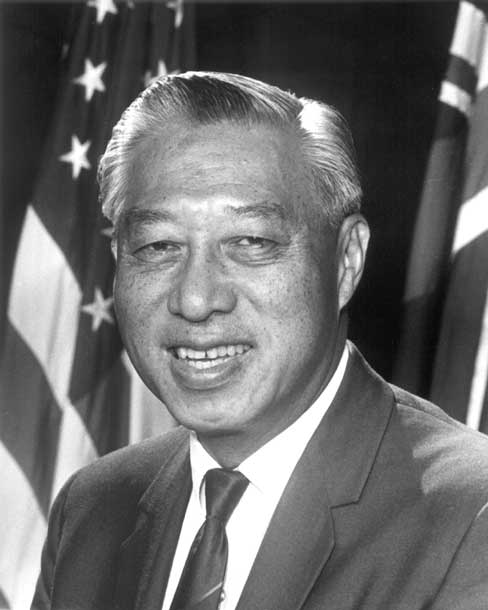


Early life and career
Born to immigrant parents in the Hawaiian Islands and raised in a multicultural community, Fong trained as a lawyer and worked in local business before entering politics. His background reflected the ethnic and economic diversity of mid‑20th century Hawaii and helped him build a broad base of support. He was active in community organizations and local civic causes prior to winning high office after statehood.
Senate service and priorities
With Hawaii's admission to the Union in 1959, Fong became a member of the United States Senate and one of his state's first federal lawmakers. As a senator from Hawaii he focused on economic development, infrastructure, veterans' affairs, and federal programs that affected island communities. A member of the Republican Party, he was often described as a pragmatic, moderate Republican who worked across party lines on matters affecting his constituents.
1964 presidential campaign and significance
Fong sought the Republican presidential nomination in 1964, entering a crowded primary field. He lost the nomination contest to Barry Goldwater but made history by becoming the first Asian‑American to mount a nationwide campaign for the presidency. His candidacy helped broaden perceptions of who could aspire to national leadership and prefigured later campaigns by other politicians from diverse backgrounds. 1964 presidential run is often cited as a landmark moment, and other Hawaiians such as Patsy Mink would later pursue national office as well.
Later years and legacy
After leaving the Senate in 1977, Fong remained active in business and public life in Hawaii. He was widely remembered for breaking barriers for Asian Americans in national politics, for his long tenure as a senator, and for his role in helping integrate Hawaiian interests into federal policy. Fong died in Kahaluu, on the island of Oahu, of complications following a fall at the age of 97. Kahaluu, Hawaii was noted in contemporary reports of his passing.
Notable facts
- First U.S. senator from Hawaii after statehood.
- Longest-serving early representative of Hawaii at the federal level; served from 1959 to 1977 in the Senate.
- First Asian‑American major‑party presidential candidate in 1964 (campaign).
- Recognized for bridging ethnic communities in a diverse state and for his moderate Republican stance.
Fong's career is often studied as part of Hawaii's transition to statehood and as an early example of increasing ethnic diversity in American national politics. His life illustrates the intersections of local business, law, and public service in the mid‑20th century United States.
Related articles
Author
AlegsaOnline.com Hiram Fong Leandro Alegsa
URL: https://en.alegsaonline.com/art/120650
Sources
- the.honoluluadvertiser.com : Hiram Fong dead at 97