
Heinz Zemanek: Austrian computer scientist and Mailüfterl pioneer
Heinz Zemanek (1920–2014), Austrian computer scientist who led the design of the Mailüfterl, Europe's first fully transistorised computer, and helped found computing education and research in Austria.
Overview
Heinz Zemanek (January 1, 1920 – July 16, 2014) was an Austrian computer scientist best known for directing the development of the Mailüfterl, regarded as the first complete transistorised computer built in Europe. His career combined hardware design, programming language interests, teaching and institution building; he is remembered for helping to establish computer science as an academic and professional field in Austria.
Image gallery
1 Image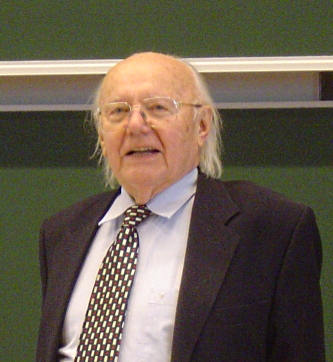
Mailüfterl and technical contributions
During the 1950s Zemanek led a small team that designed the Mailüfterl (German for "May breeze"). The project moved away from vacuum tubes toward transistor technology and explored modular logic, component testing, and practical engineering techniques for reliable operation. As an experimental machine it provided a platform to develop low-level software, benchmark architectures and demonstrate that transistor-based designs were viable for general-purpose computation.
Zemanek wrote about his work and participated in international exchanges; biographical resources and archival materials can be consulted here, while technical descriptions of the Mailüfterl and its design appear here.
Academic career and influence
As a professor and mentor he taught at technical institutions in Vienna, supervised students and helped create curricula and laboratories that supported computing research in Central Europe. His interests extended into programming and formal methods, and he advocated rigorous, engineering-oriented approaches to software and system development. Through teaching and administrative work he influenced both industry practice and academic training.
Legacy and notable facts
- Led the construction of one of Europe's earliest transistorised computers.
- Played a formative role in establishing computing education and research in Austria.
- Mentored engineers and researchers who contributed to European computing efforts.
Zemanek received recognition at national and international levels for his pioneering activities. His combination of practical engineering, scholarly work and institution building left a lasting imprint on the development of computer science in Europe.
Related articles
Author
AlegsaOnline.com Heinz Zemanek: Austrian computer scientist and Mailüfterl pioneer Leandro Alegsa
URL: https://en.alegsaonline.com/art/120462
Sources
- gmanetwork.com : "Austrian computing pioneer Heinz Zemanek dead at 94"