
Hans Spemann and the Organizer: Pioneer of Embryonic Induction
German embryologist Hans Spemann (1869–1941) discovered the embryonic 'organizer' that directs tissue patterning and won the 1935 Nobel Prize for his work on induction.
Overview
Hans Spemann (27 June 1869 – 9 September 1941) was a German embryologist and physician whose experiments reshaped understanding of early animal development. Working in the early 20th century, Spemann introduced microsurgical techniques and produced the concept of an embryonic "organizer"—a region of tissue that can direct neighboring cells to form body structures. He received the 1935 Nobel Prize in Physiology or Medicine for this discovery and its implications for developmental biology. See a brief bio here and a general page on embryonic development here.
Image gallery
2 Images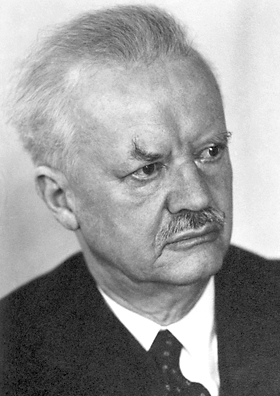

Key experiments and findings
Spemann's most famous work involved transplantation and constriction experiments on amphibian embryos. Using fine instruments and a hair loop he isolated parts of early embryos and grafted them into new locations. In 1924 a foundational grafting experiment showed that tissue from the dorsal lip of the blastopore could induce a second embryonic axis when transplanted, producing a partial or complete twinned embryo. That region became known as the "Spemann-Mangold organizer."
Methods and techniques
Spemann pioneered delicate microsurgical manipulations that made precise tissue grafts possible. He mapped cell fates by physical separation and proved that some embryonic regions act instructively, not merely as permissive environments. His combination of careful observation, methodical experimentation, and technical innovation set methodological standards for later developmental research.
Historical context and recognition
The organizer concept arrived at a turning point between descriptive embryology and experimental embryology. Results from Spemann and his colleagues persuaded many scientists that development involves cell-to-cell signaling and induction, rather than only predetermined cell fates. The Nobel Prize in 1935 recognized this shift and Spemann's central role in it.
Legacy and later developments
Although Spemann described the organizer at the tissue level, later molecular research identified signaling molecules and antagonists responsible for organizer activity (for example, secreted factors that regulate BMP and related pathways). Modern developmental biology traces a direct lineage from Spemann's classical experiments to the molecular dissection of patterning and axis formation.
Notable facts
- Spemann's collaboration and mentorship were influential; a key experiment is often associated with his student Hilda Mangold, whose transplant work demonstrated organizer properties.
- His techniques emphasized precision and reproducibility, influencing experimental design in embryology.
- The term "organizer" remains in use as a historical and conceptual milestone in studies of embryonic induction.
Related articles
Author
AlegsaOnline.com Hans Spemann and the Organizer: Pioneer of Embryonic Induction Leandro Alegsa
URL: https://en.alegsaonline.com/art/120301
Sources
- nobelprize.org : "Biography of Hans Spemann"
- nobelprize.org : "The Nobel Prize in Physiology or Medicine 1935"