
Hale Boggs: U.S. Representative, House Majority Leader, and 1972 Disappearance
Profile of Thomas Hale Boggs Sr., long-serving Democratic congressman from New Orleans, House Majority Leader, Warren Commission member, and his 1972 plane disappearance with Rep. Nick Begich.
Overview
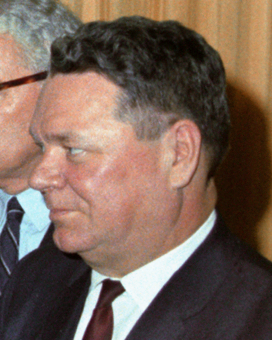
Thomas Hale Boggs Sr. (February 15, 1914 – disappeared October 16, 1972) was a prominent Democratic Party politician and member of the U.S. House of Representatives from New Orleans, Louisiana. During his congressional career he rose to party leadership and served as the House majority leader. He also served as a member of the Warren Commission, the panel formed to investigate the assassination of President John F. Kennedy.
Image gallery
4 Images


Early life and career
Boggs was born in 1914 and established himself professionally before entering national politics. He trained in law and became involved in local and state affairs in Louisiana, building a reputation that helped him win election to Congress. His background combined legal practice and civic engagement typical of mid-20th-century Southern Democratic leaders.
Congressional leadership
Over multiple terms in the House, Boggs accumulated seniority and influence. He was considered a pragmatic legislator who worked on procedural and policy matters important to his region and to the Democratic caucus. As a member of party leadership he helped coordinate legislative strategy, manage floor proceedings, and represent the House Democratic leadership in negotiations with other officials and committees.
Warren Commission involvement
Boggs was one of several congressional and public figures selected to serve on the commission that examined the facts and circumstances surrounding President Kennedy's assassination. His role on that panel reflected his standing in Congress and his engagement with significant national issues of the time.
Disappearance and search efforts
On October 16, 1972, Boggs was traveling by small plane in Alaska with Representative Nick Begich and two other people when the aircraft disappeared while en route from Anchorage to Juneau. The flight crossed remote and sparsely populated terrain in Alaska. Despite an extensive air and sea search, no survivors or conclusive wreckage were recovered. The absence of definitive evidence and the remote location complicated search operations and left questions about the plane's fate.
Legal status and aftermath
Following months of search and investigation, authorities took legal steps to address Boggs's status. In December 1972 he was declared legally dead in absentia. His disappearance ended his active career in the House and prompted adjustments within Democratic leadership. His congressional seat was succeeded by his wife, Lindy Boggs, who continued the family's public service in Washington.
Legacy
Boggs is remembered as a leading mid-20th-century congressional figure from Louisiana whose work combined regional advocacy with national responsibilities. His participation in the Warren Commission and his role in House leadership are notable elements of his public life. The unexplained nature of the 1972 disappearance has continued to draw public interest and has been the subject of historical summaries and retrospectives on political figures lost in aviation accidents.
Key points
- Birth: February 15, 1914.
- Service: Long-serving U.S. Representative from New Orleans; House majority leader and senior Democratic figure.
- Warren Commission: Member of the investigatory panel into President Kennedy's assassination (Warren Commission).
- 1972 disappearance: Vanished on a flight from Anchorage to Juneau with Rep. Nick Begich; flight was over remote areas of Alaska and no wreckage was conclusively recovered.
- Aftermath: Declared dead in absentia in December 1972; his wife Lindy Boggs succeeded his seat and their daughter, Cokie Roberts, became a well-known journalist.
Related articles
Author
AlegsaOnline.com Hale Boggs: U.S. Representative, House Majority Leader, and 1972 Disappearance Leandro Alegsa
URL: https://en.alegsaonline.com/art/120220