
Haldan Keffer Hartline — American physiologist and Nobel laureate
American physiologist Haldan K. Hartline (1903–1983) pioneered single‑cell studies of the retina, revealing neural mechanisms of vision and sharing the 1967 Nobel Prize in Physiology or Medicine.
Overview
Haldan Keffer Hartline (December 22, 1903 – March 17, 1983) was an American physiologist whose experimental work clarified how the eye and early visual pathways encode light and contrast. His discoveries about individual retinal cells and their interactions established fundamental principles of visual neurophysiology and earned him a share of the 1967 Nobel Prize in Physiology or Medicine, awarded jointly with George Wald and Ragnar Granit.
Image gallery
3 Images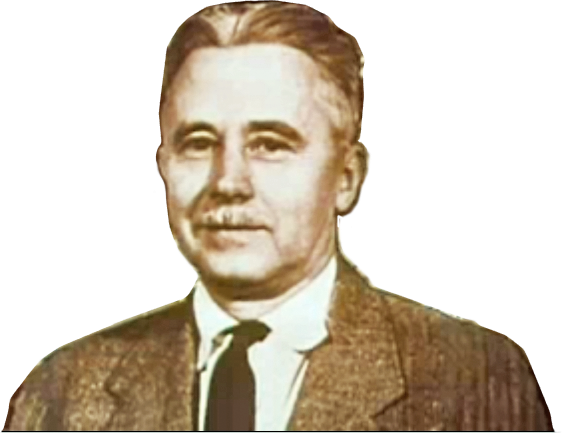


Scientific contributions
Hartline's research showed that the responses of individual optic nerve fibers and photoreceptor units were not simple reflections of light intensity but were shaped by inhibitory and excitatory interactions. He demonstrated how neighboring retinal elements influence each other's firing, a phenomenon now known as lateral inhibition, which enhances contrast and edge detection in visual scenes.
Methods and experiments
Working primarily with preparations that allowed stable single‑unit recordings, Hartline developed and refined electrophysiological techniques to measure the electrical activity of single photoreceptors and nerve fibers in response to controlled light stimuli. These precise measurements linked stimulus patterns to neural response properties and helped define the concept of a receptive field — the specific region of the visual field to which a neuron responds.
Importance and legacy
Hartline's findings provided experimental grounding for theories of sensory coding and influenced subsequent work in systems neuroscience, computational models of vision, and artificial vision technologies. By revealing how early stages of the visual system filter and emphasize information, his work helped explain perceptual phenomena such as contrast enhancement and edge recognition.
Career highlights and honors
- Shared the 1967 Nobel Prize in Physiology or Medicine for analyses of primary visual processes.
- Recognized for pioneering single‑cell recording methods and for elucidating neural interactions in the retina.
- Remembered as a formative figure in neurophysiology whose approach combined careful measurement with clear conceptual advances.
Hartline remains an important historical figure in neuroscience: his careful experiments converted abstract ideas about sensory processing into measurable biological mechanisms and paved the way for decades of work that followed on how nervous systems represent and transform sensory information.
Related articles
Author
AlegsaOnline.com Haldan Keffer Hartline — American physiologist and Nobel laureate Leandro Alegsa
URL: https://en.alegsaonline.com/art/120216
Sources
- doi.org : 10.1098/rsbm.1985.0010
- doi.org : 10.1016/S0140-6736(05)77968-X
- doi.org : 10.1016/0042-6989(68)90103-X
- doi.org : 10.1126/science.158.3800.468