
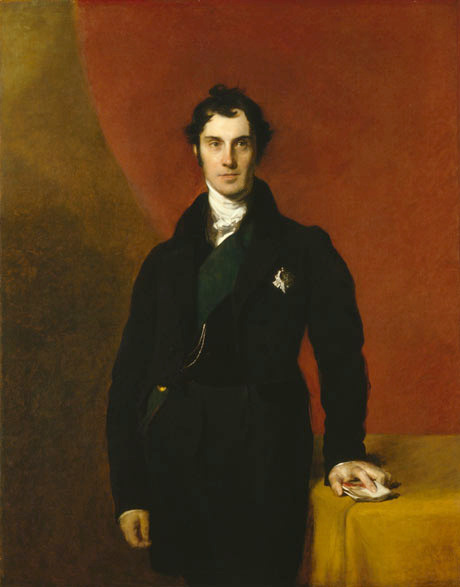
George Hamilton-Gordon, 4th Earl of Aberdeen
Scottish peer and statesman (1784–1860), twice Foreign Secretary and Prime Minister 1852–1855; led a Peelite–Whig coalition whose ministry collapsed amid the Crimean War.
Overview
George Hamilton-Gordon, 4th Earl of Aberdeen (28 January 1784 – 14 December 1860) was a Scottish peer and statesman who played a prominent role in British diplomacy and government in the first half of the 19th century. He belonged to the Tory tradition but later associated with the Peelites, a group that supported Sir Robert Peel's economic policies. Aberdeen is chiefly remembered for his long service in foreign affairs and for his term as Prime Minister from 1852 to 1855, when his coalition government struggled with the challenges of the Crimean War.
Image gallery
9 Images



Early life and education
Aberdeen came from an aristocratic Scottish family and received an education typical for his class, preparing him for public life and diplomacy. He developed an early interest in foreign policy and international affairs, qualities that shaped his later career. His experience and temperament led contemporaries to view him as a cautious and conciliatory minister, often more at home in negotiation than in aggressive party politics.
Diplomatic career and offices
Over several decades Aberdeen held important diplomatic and ministerial positions and served twice as Foreign Secretary. He built a reputation for detailed knowledge of European affairs and for attempting to preserve the balance of power on the Continent. His approach emphasized moderation, international law and careful negotiation rather than ideological confrontation.
- Key offices: served twice as Foreign Secretary; Prime Minister 1852–1855.
- Political alignment: Tory roots; identified with the Peelite faction in later life.
Prime Ministership and the Crimean War
Aberdeen led a coalition ministry composed of Peelites, Whigs and moderate Conservatives. The government sought to combine moderate reform with stable administration, but the outbreak of the Crimean War in 1853–1854 exposed weaknesses in wartime administration and logistics. Public and parliamentary criticism focused on failures in supply, medical provision and organisation of the army. These controversies undermined confidence in the ministry and contributed to Aberdeen's resignation in early 1855.
Political style and legacy
Aberdeen is often described as cautious, urbane and preferring diplomacy to partisan conflict. Supporters praised his statesmanship and commitment to measured policy; critics argued he could be indecisive in crisis. Historians place him among a generation of statesmen who bridged traditional aristocratic government and the increasingly party-driven politics of Victorian Britain. His record remains tied to his reputation as a skilled diplomat and to the difficulties his government faced during the Crimean campaign.
Personal life and later years
Following his resignation Aberdeen lived in relative retirement from frontline politics and continued to take an interest in public affairs. He retained family estates in Scotland and was honoured with senior orders and membership of the Privy Council. He died in 1860 after a long public career that left a complex legacy in British political and diplomatic history.
Further reading and resources: biographical summary, honours and titles, parliamentary record, political affiliation, diplomatic career, prime ministership (1852–1855).
Related articles
Author
AlegsaOnline.com George Hamilton-Gordon, 4th Earl of Aberdeen Leandro Alegsa
URL: https://en.alegsaonline.com/art/119596