
Eugene Botkin — court physician to the last Russian imperial family
Yevgeny (Eugene) Botkin (1865–1918) was the personal physician to Tsar Nicholas II. He accompanied the Romanovs into exile, was killed with them at Yekaterinburg, and was later honored by the Russian Orthodox community in exile.
Yevgeny Sergeivich Botkin (commonly Anglicized as Eugene Botkin; born 27 March 1865, died 17 July 1918) was a Russian physician best known for serving as the court physician to Tsar Nicholas II and Tsarina Alexandra. He became closely associated with the imperial household and is remembered for his medical care, personal loyalty and the choice to remain with the family after the 1917 revolutions.
Image gallery
1 Image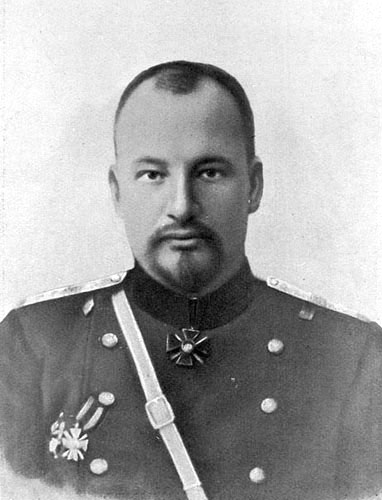
Early life and career
Botkin trained and practised medicine in the late 19th and early 20th centuries, combining clinical work with duties in the imperial medical service. In his role at court he attended to day‑to‑day illnesses and emergencies, advised the family on health matters and accompanied them on travels. Over time he developed a reputation as a calm and dedicated physician within the household.
Role in the Romanov household
Among Botkin’s most notable responsibilities was assisting in the care of Tsarevich Alexei, whose serious bleeding disorder required special attention and occasional urgent treatment. Botkin worked alongside other attendants and specialists to provide both medical and palliative care. His position required discretion and frequent personal contact with the imperial family, which deepened the bonds of trust between physician and patients.
Revolution, exile and captivity
After the February and October revolutions of 1917 the imperial family was placed under increasing restriction. Botkin elected to accompany them into exile, first in Tobolsk and later in the Ural city of Yekaterinburg, where the household was held under confinement. Contemporary accounts describe him as remaining at his post, continuing to attend to the family’s medical and personal needs despite the growing dangers.
Death and immediate aftermath
On 17 July 1918, Botkin was murdered together with the former imperial family in Yekaterinburg. He left behind a brief farewell in which he explained his decision to remain: he wrote that he had “unhesitatingly orphaned my own children in order to carry out my physician's duty to the end, as Abraham did not hesitate at God's demand to sacrifice his only son.” This statement is frequently cited in accounts of his final choice and has been preserved in documentary sources.
Personal life
Botkin’s private life included strains that were public enough to be noted by biographers. He and his wife Olga were divorced after marital difficulties that reportedly involved a relationship between Olga and the family’s German tutor; this episode appears in several contemporary and later accounts (divorce, affair). His children were left without their father following his decision to stay with the Romanovs.
Commemoration and canonization
For his service and death alongside the Romanov family, Botkin was honored by the Russian Orthodox community in exile. The Russian Orthodox Church Outside Russia recognized him as a martyr and canonized him in 1981. His memory has been included in broader discussions and commemorations of the Romanov tragedy, and his life is often cited in works dealing with medical ethics, professional duty and religious conviction under extreme circumstances.
Legacy and historical context
Botkin is remembered in several ways: as a physician who practised medicine at the highest level available to him at the imperial court; as a loyal attendant who chose to remain with patients under political threat; and as a figure in the complex history of the Romanovs’ final years. Histories of the period place his actions in the context of medical practice of the time and the personal loyalties that shaped conduct at the end of the imperial era.
Key facts
- Born 27 March 1865; died with the Romanovs on 17 July 1918.
- Served as the personal court physician to Nicholas II and his family.
- Assisted in the medical care of Tsarevich Alexei, who had a serious bleeding disorder.
- Accompanied the family into exile and remained with them during captivity.
- Canonized by the Russian Orthodox Church Outside Russia as a martyr in 1981 (canonized).
- Personal farewell letter cited as an explanation for his final choice (final letter).
Later historical and forensic work on the fate of the Romanovs and their attendants has examined the circumstances of their deaths and the discovery, identification and burial of remains; Botkin’s story remains a topic of interest for scholars studying the medical, social and moral dimensions of the late imperial household. For readers seeking further detail, specialist monographs and archival studies on the last Romanovs and on contemporary medical practice provide fuller accounts and primary-source documentation.
For related topics see sources that discuss the imperial court, medical care in the Russian Empire and the history of the Russian Orthodox communities in exile and at home. Contemporary introductions and scholarly treatments place Botkin’s actions within debates over professional duty, loyalty and the responsibilities of physicians under political upheaval.
Selected references in general literature address Botkin’s role at court, his service during the family’s captivity and his later commemoration; for online and archival entry points consult specialist collections and museum materials that document the last years of the Romanovs and the attendants who shared their fate.
court physician | Nicholas II | exile | Tsarevich Alexei | canonized | martyr | Russian Orthodox Church Outside Russia | divorce | affair | final letter
Related articles
Author
AlegsaOnline.com Eugene Botkin — court physician to the last Russian imperial family Leandro Alegsa
URL: https://en.alegsaonline.com/art/118731