
Nicholas II of Russia
Last Emperor (Tsar) of Russia (reigned 1894–1917). His rule saw modernization efforts, the 1905 unrest, World War I, the 1917 revolutions, and his execution in 1918; his legacy remains contested.
Overview
Nicholas II (May 18, 1868 – July 17, 1918) was the final ruler of the Romanov dynasty and the last autocratic Emperor (Tsar) of the Russian Empire. He inherited the throne on the death of his father, Alexander III, in 1894 and reigned until his forced abdication during the revolution of 1917. His reign bridged a period of rapid industrial and social change, growing political movements, and catastrophic military conflicts that together transformed Russia and led to the end of centuries of imperial rule.
Image gallery
10 Images


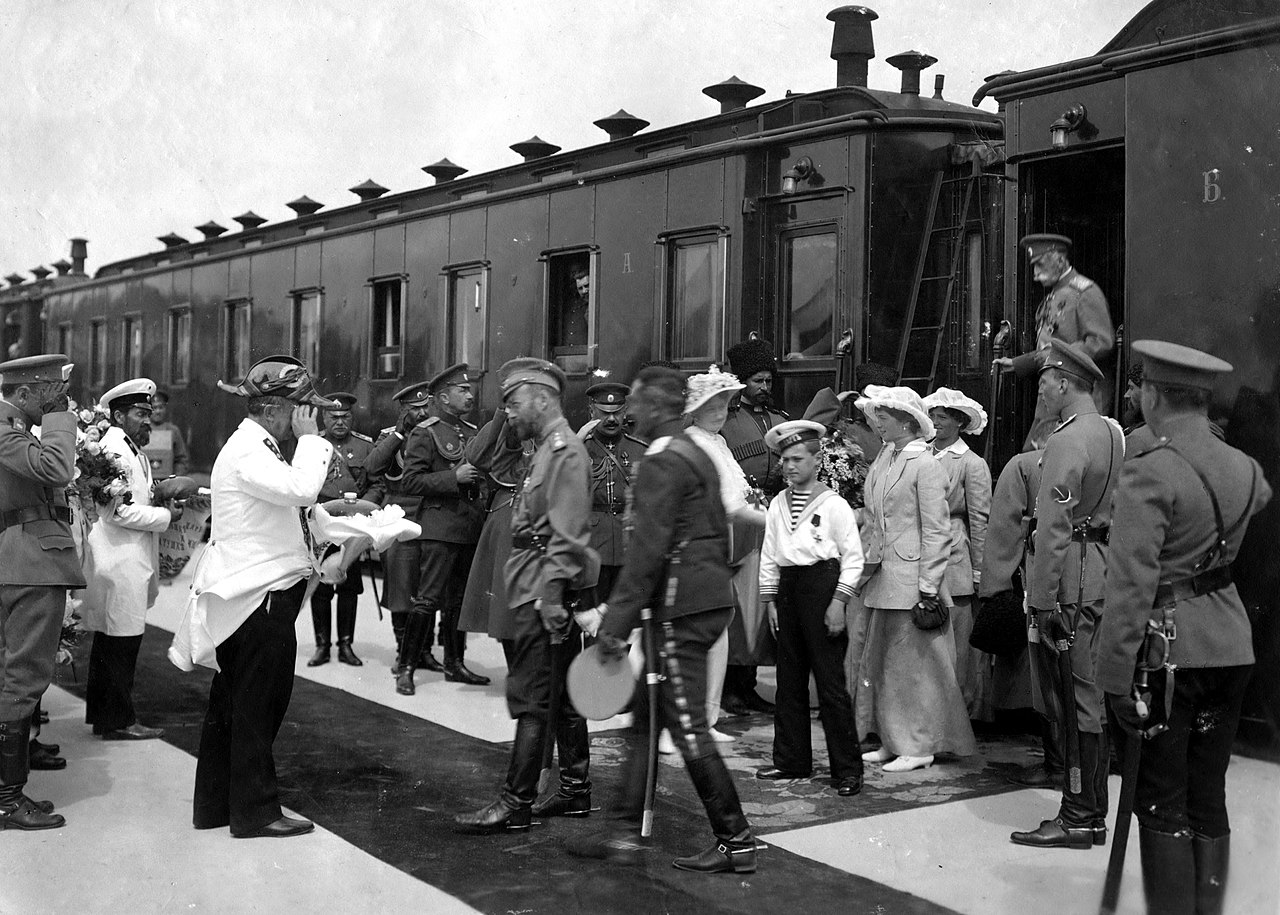


Character, family and court
Nicholas was raised within the traditions of Russian autocracy and personally believed in the divine right and duties of a monarch. In 1894 he married Princess Alix of Hesse (often known in Russia as Alexandra Feodorovna), a granddaughter of Queen Victoria. They had five daughters—Olga, Tatiana, Maria, Anastasia—and a son, Alexei, who suffered from hemophilia. Alexei's illness deeply affected the royal family and contributed to their reliance on unconventional advisers. The court attracted intense public scrutiny and scandal, particularly around the influence of the mystic Grigori Rasputin, who gained the family's confidence because of his perceived ability to comfort or help their ailing son.
Policies, reforms and the 1905 crisis
During the early years of his reign, Nicholas supported limited modernization: industrial expansion, railway construction, and some agrarian and administrative reforms promoted by ministers such as Sergei Witte and Pyotr Stolypin. These efforts encountered resistance from conservative elites and were often undermined by political hesitation and uneven implementation. Military defeat in the Russo-Japanese War (1904–1905) and the massacre of demonstrators on Bloody Sunday in January 1905 sparked mass unrest across the empire. Faced with strikes, peasant uprisings and political agitation, Nicholas issued the October Manifesto and created the Duma—a parliamentary assembly—but preserved substantial autocratic powers and restricted the Duma’s influence.
World War I and collapse of the monarchy
The outbreak of World War I in 1914 strained Russia’s economy and institutions. Military setbacks, heavy casualties, and logistical failures compounded domestic shortages and political discontent. In 1915 Nicholas took personal command of the armed forces, a decision that tied his personal prestige to military fortunes and left the capital under the de facto oversight of his wife and the increasingly controversial figures around her. By 1917, widespread strikes, food shortages and the strain of war precipitated the February (March, Gregorian calendar) Revolution. Nicholas abdicated in March 1917 in favor of his brother (who declined the throne), ending Romanov rule.
Imprisonment, execution and posthumous reputation
After abdication, Nicholas and his family were detained and moved between locations before being held in the Ipatiev House in Yekaterinburg. On the night of July 16–17, 1918, the imperial family and several retainers were executed by Bolshevik forces. Their deaths marked a definitive break with the imperial past and helped to cement the Bolsheviks’ hold on power. In the decades that followed, Soviet historians portrayed Nicholas as an ineffectual autocrat responsible for systemic injustices. Later scholarship has been more nuanced, examining structural pressures, the limits of monarchy in modernizing societies, and the roles of advisers and institutions in shaping outcomes.
Legacy and memory
Nicholas II’s legacy remains contested. For some he personifies the failures of autocracy to adapt; for others he is a tragic, pious family man caught in overwhelming historical forces. The Russian Orthodox community outside Soviet control canonized the imperial family earlier, and the Moscow Patriarchate recognized them as martyrs at a later date, while the discovery and identification of the family’s remains in the 1990s led to reburial and renewed public attention. Historians continue to debate the balance between personal responsibility and structural crisis in explaining the end of the Romanov monarchy.
Key facts and distinctions
- Reign: 1894–1917 (last Tsar of the Russian Empire).
- Family: Married to Alexandra Feodorovna; five children, including heir Alexei (hemophiliac).
- Major events: Russo-Japanese War, Revolution of 1905, creation of the Duma, World War I, 1917 revolutions, 1918 execution.
- Historical assessments: Soviet-era portrayals emphasized tyranny; modern studies stress complexity, institutional failure and wartime collapse.
Resources
- Nicholas II — disambiguation and namesakes
- Tsar — title and role
- Emperor — imperial traditions
- Russian Empire — territorial and political context
- Alexander III — predecessor and influence
- 1917 Russian Revolution — overview
- Princess Alice and European dynastic links
- Queen Victoria — family connections
- Olga Nikolaevna — eldest daughter
- Tatiana Nikolaevna — second daughter
- Maria Nikolaevna — third daughter
- Anastasia Nikolaevna — youngest daughter and myths
- Alexei Nikolaevich — heir and health
- Hemophilia — medical background
- Grigori Rasputin — influence on the court
- Franco-Russian relations — foreign policy
- Anglo-Russian relations — diplomacy
- Russo-Japanese War — causes and outcome
- Bloody Sunday — 1905 events
- Parliamentary movements and the Duma
- Anti-Jewish violence and social tensions
- World War I — Russia’s involvement
- Abdication — process and aftermath
- House arrest and captivity
- Execution of the Romanovs
- Bolsheviks — revolutionary faction
- Canonization by émigré Orthodox authorities
- Russian Orthodox Church — role in remembrance
- Soviet historiography — interpretations
- Modern historiography — debates and reassessments
Questions and answers
Q: Who was Nicholas II of Russia?
A: Nicholas II of Russia was the last Tsar (Emperor) of the Russian Empire. He became Tsar in 1894 after his father, Tsar Alexander III died and his reign lasted until the 1917 Russian Revolution.
Q: Who did he marry?
A: He married Princess Alix of Hesse, who was the daughter of Princess Alice of the United Kingdom and the granddaughter of Queen Victoria.
Q: How many children did they have?
A: They had five children, Olga, Tatiana, Maria, Anastasia, and Alexi.
Q: What medical condition did Alexi suffer from?
A: Alexi suffered from a disease called haemophilia.
Q: What were some accomplishments during Nicholas' reign?
A: During his reign Nicholas tried to make Russia more modern by encouraging railways, land reform, education and borrowing money as well as fostering friendship with France and the United Kingdom. However these plans were held back by nobles and his weak leadership. He also created a parliament (the Duma), but it didn't have much power.
Q: What led to the fall of monarchy in 1917?
A: The fall of monarchy in 1917 was caused by Russia's loss in a war with Japan combined with Bloody Sunday protests against his government which wanted a parliament that had more power than what he allowed them to have as well as anger over Rasputin's influence on him and imprisonments/executions for those who opposed him leading into WWI which went badly for Russia causing great hardship resulting in revolution which overthrew him from power.
Q: Was Nicholas II viewed positively or negatively by historians?
A:Historians from Soviet Union often described Nicholas II as a tyrant while modern historians view him as someone who tried to do what was right for his country but lacked skills and was easily influenced by bad advice given to him
Author
AlegsaOnline.com Nicholas II of Russia Leandro Alegsa
URL: https://en.alegsaonline.com/art/127560