
Erskine Bowles
American businessman and public official: former White House Chief of Staff, president of the University of North Carolina system, two-time Senate candidate and co-chair of a national fiscal commission.
Erskine Boyce Bowles (born August 8, 1945) is an American business executive and public servant best known for roles in both national government and higher education administration. He served as White House Chief of Staff during the Clinton administration and later led the statewide University of North Carolina system. Bowles has also been active in national fiscal policy efforts and twice sought election to the United States Senate.
Image gallery
3 Images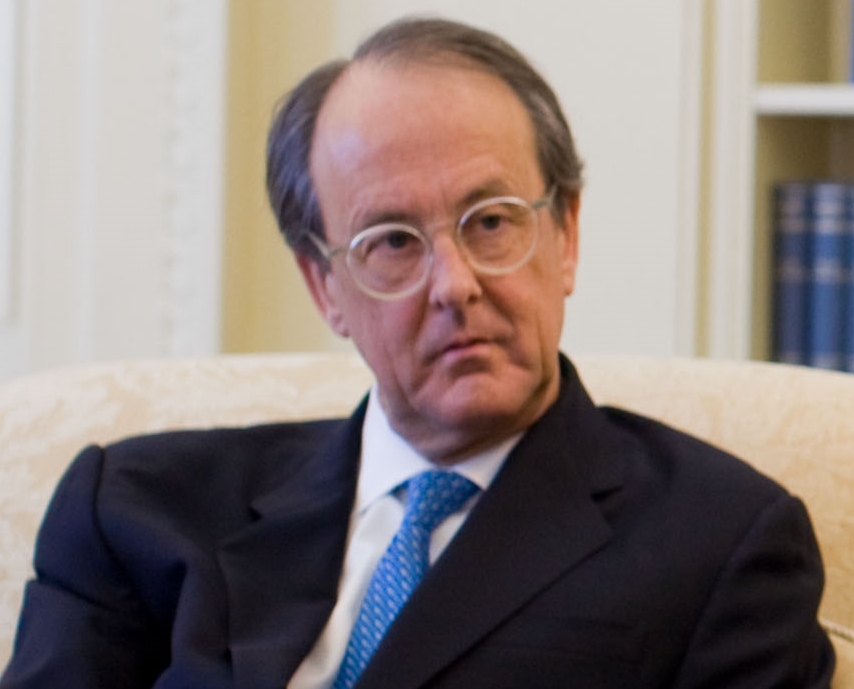


Early life and education
Bowles was raised in Greensboro, where his family had longstanding ties to business and public life. He completed preparatory school at Virginia Episcopal School before attending the University of North Carolina at Chapel Hill, where he earned a business degree and was a member of the Zeta Psi fraternity. After brief service in the United States Coast Guard, he returned to school to earn an MBA from Columbia Business School.
Business and public service career
Bowles began his professional career in finance with firms such as Morgan Stanley, where he worked in investment banking. He later moved between the private sector and public roles, bringing corporate experience into government management. In the late 1990s he was appointed White House Chief of Staff, a role that placed him at the center of daily operations, policy coordination and personnel management for the executive office.
University leadership and commissions
In 2005 Bowles became president of the University of North Carolina system, overseeing academic, financial and administrative matters for the statewide university organization until 2010. His tenure emphasized fundraising, campus coordination and efforts to modernize operations. In 2010 he co-chaired a high-profile, bipartisan national fiscal commission that examined long-term budgetary challenges and offered policy recommendations.
Political campaigns
Bowles was an active figure in North Carolina politics and ran as a Democratic candidate for the United States Senate on two occasions. Although unsuccessful in those Senate bids, his campaigns raised his profile across the state and highlighted themes of economic growth, education and thoughtful fiscal policy.
Notable facts and legacy
- Bowles combines private sector experience with decades of public service, moving between corporate roles and government appointments.
- His work as a university system president focused on governance reforms and increased fundraising for higher education institutions.
- Bowles' leadership of a national fiscal commission brought bipartisan attention to long-term budget challenges and policy trade-offs.
- He remains a widely recognized figure in North Carolina civic life and in discussions about fiscal responsibility and higher education administration.
For readers seeking further details on specific episodes of his career—such as administration responsibilities in the White House, initiatives at the university system, or the commission's recommendations—consult institutional profiles and contemporary news accounts for fuller timelines and analysis. See also links to organizations and institutions mentioned above for primary-source context.
North Carolina | White House Chief of Staff | United States Senate | Greensboro | UNC Chapel Hill | U.S. Coast Guard | Columbia Business School | Morgan Stanley
Related articles
Author
AlegsaOnline.com Erskine Bowles Leandro Alegsa
URL: https://en.alegsaonline.com/art/118693