
Bishkek: capital and largest city of Kyrgyzstan
Overview of Bishkek, the capital of Kyrgyzstan: geography, history from Pishpek to Frunze to Bishkek, urban features, culture, economy, transport, and notable landmarks.
Overview
Bishkek is the capital and largest city of Kyrgyzstan and serves as the country's political, cultural, and economic center. Situated in the northern Chuy Valley at the foot of the Kyrgyz Ala-Too range, it functions as a regional hub for administration, education and services. The city's population has grown since the late 20th century to roughly around one million inhabitants according to various estimates; earlier figures cited a population of about 900,000 in 2005 (population source).
Image gallery
10 Images




History
The modern settlement began as a Russian military fortress founded in 1878 called Pishpek. During the Soviet era the city was renamed Frunze in 1926 after the Bolshevik commander Mikhail Frunze, reflecting its new role as an administrative and industrial center. After Kyrgyzstan declared independence in 1991 the historic name Bishkek was restored. The name Bishkek comes from the Kyrgyz word for a churn used to make kumis, a traditional fermented horse milk; this etymology is rooted in local language and culture (Kyrgyz language).
City layout and landmarks
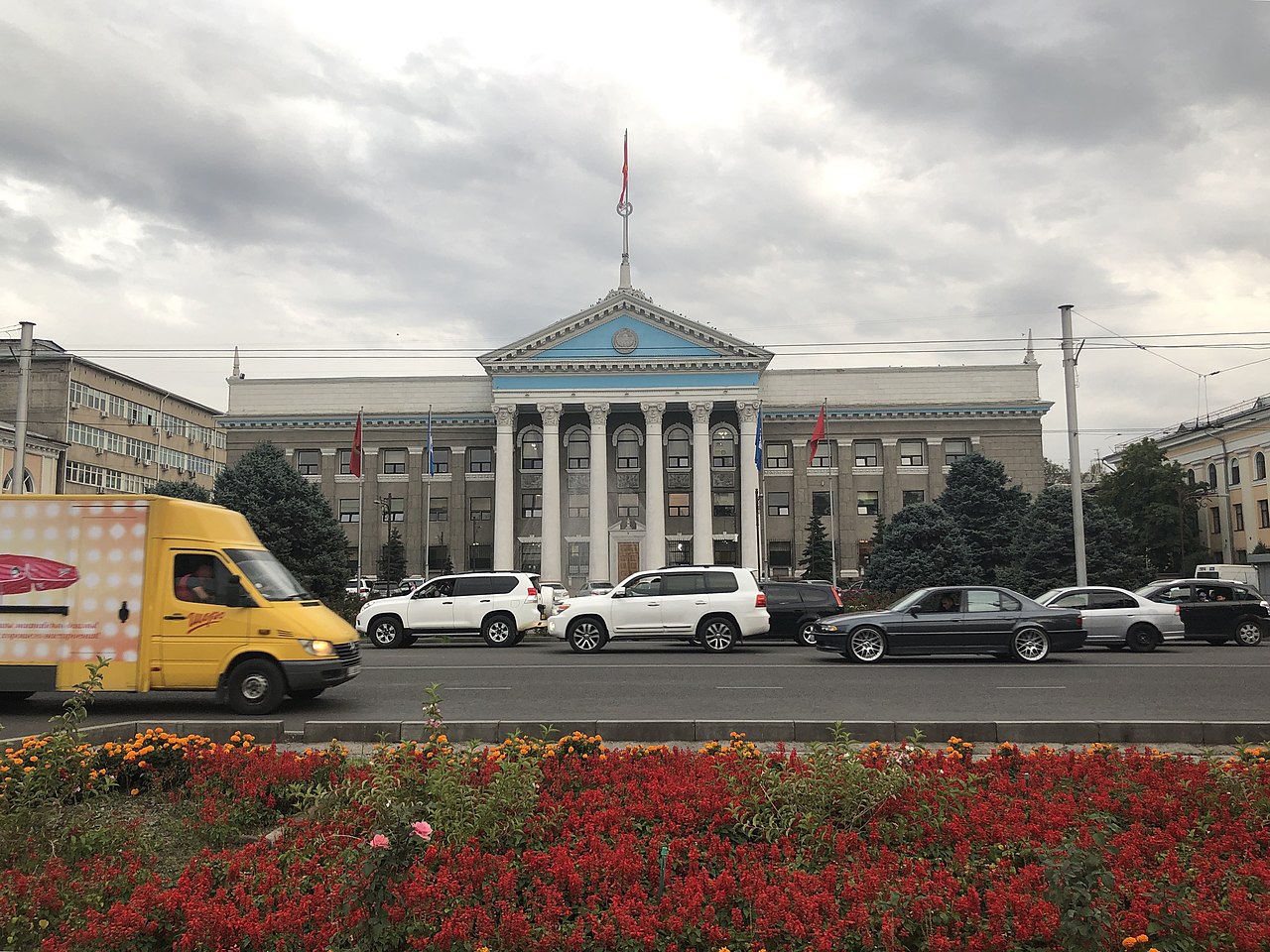
Bishkek's urban plan retains strong Soviet-era characteristics: broad, tree-lined boulevards, large public squares and functionalist architecture. Prominent sites include Ala-Too Square, the State History Museum, the National Philharmonic, and the Manas monument. Public green spaces such as Oak Park and Victory Square are important civic areas. Markets and bazaars, notably the Osh Bazaar, remain central to daily commerce and social life.
Economy and culture
The city's economy mixes government services, education, light industry (textiles and food processing), retail and a growing services sector. Bishkek hosts the main universities and cultural institutions of Kyrgyzstan, including museums, theaters and galleries. Festivals tied to seasonal and national traditions—such as Nooruz—are widely observed. Russian and Kyrgyz are commonly used in public life, reflecting the country's bilingual reality; historical ties to Russia are visible in architecture and institutional structures (historical figure).
Transport and climate
Bishkek is connected by road and air to regional and international destinations; Manas International Airport serves the city and the wider country. Public transport includes buses, trolleybuses and marshrutka minibuses. The climate is continental, with hot summers and cold, snowy winters; the nearby mountains influence local weather and provide opportunities for recreation and tourism.
Notable facts and distinctions
- Bishkek is the seat of national government and hosts foreign missions and international organizations (capital city).
- The city's name reflects a piece of nomadic material culture: the churn used for kumis (etymology).
- Its urban character juxtaposes Soviet-era planning with vibrant market traditions and contemporary cultural life.
As Kyrgyzstan's primary urban center, Bishkek continues to evolve as a place where history, geography and modern development intersect, shaping the nation's identity and public life.
Related articles
Author
AlegsaOnline.com Bishkek: capital and largest city of Kyrgyzstan Leandro Alegsa
URL: https://en.alegsaonline.com/art/11783