
Deb Haaland — U.S. Secretary of the Interior and Native American leader
Deb Haaland, a member of Laguna Pueblo, is the U.S. Secretary of the Interior and one of the first Native American women elected to Congress. Her tenure emphasizes tribal sovereignty, public lands, and climate action.
Debra A. Haaland (born December 2, 1960) is an American politician and tribal member who serves as the 54th United States Secretary of the Interior. A former member of the U.S. House of Representatives, she was elected to Congress in 2018 and served New Mexico's 1st district until her appointment to the Cabinet in 2021. Haaland is an enrolled member of Laguna Pueblo and her career has been marked by a focus on tribal sovereignty, conservation, and renewable energy.
Image gallery
8 Images




Early life and background
Haaland was born in 1960 and raised in the Southwest. She attended the University of New Mexico and later worked in community organizing, local government, and civic engagement. Her identity and upbringing within the Laguna Pueblo community have been central to her public profile and policy outlook, particularly on matters involving tribal governance and federal-tribal relations.
Political rise and congressional service
Haaland served as chair of the Democratic Party of New Mexico before winning election to the U.S. House in 2018. Alongside Sharice Davids, she became one of the first two Native American women elected to the U.S. Congress. In the House she advocated for issues such as access to health care, public-land protections, and reforms affecting Native communities, gaining recognition for her efforts to elevate Indigenous perspectives in federal policymaking. Her tenure in Congress is often described as a bridge between grassroots organizing and national legislative work.
Secretary of the Interior: role and priorities
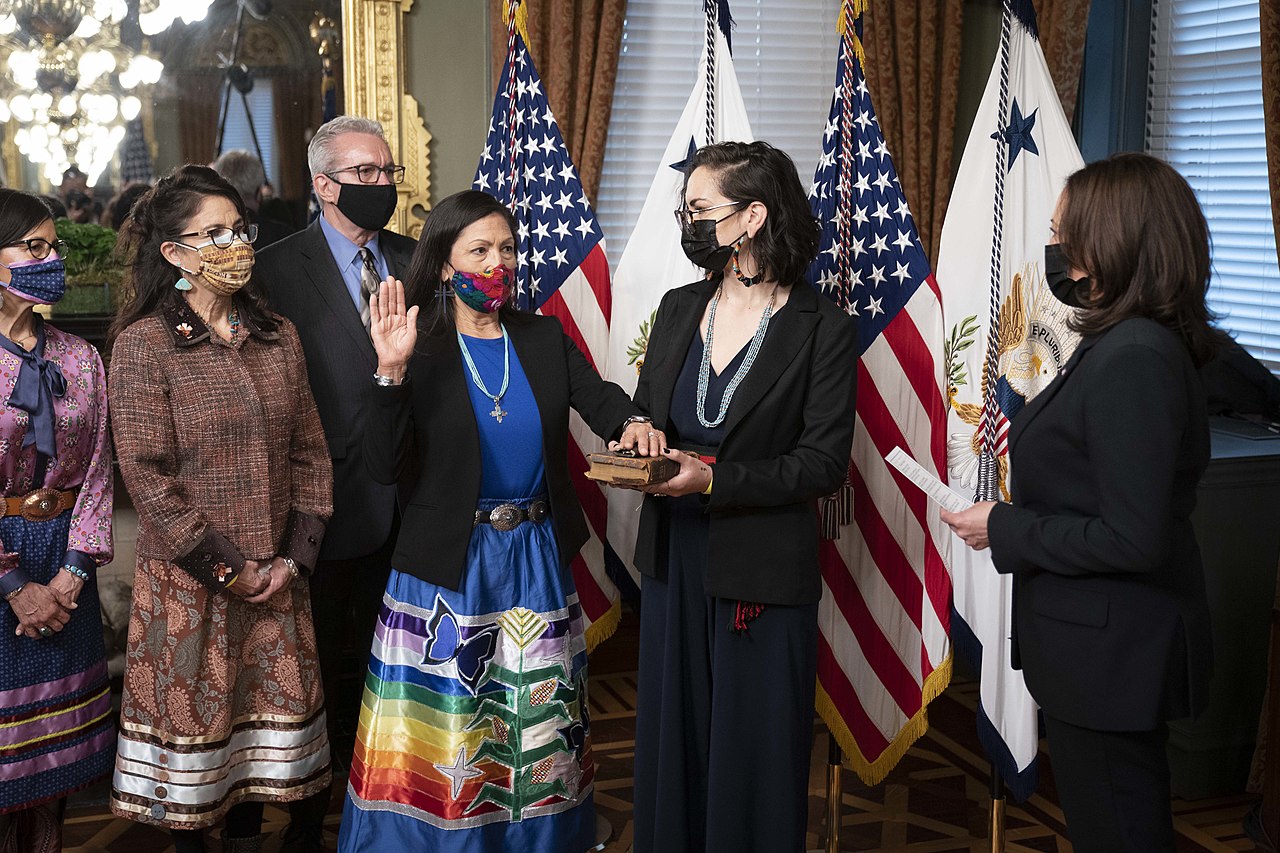
On December 17, 2020 President-elect Joe Biden nominated Haaland to lead the Department of the Interior. She was confirmed by the United States Senate on March 15, 2021 by a 51–40 vote and sworn in shortly afterward. As head of the Department of the Interior, Haaland oversees agencies that manage federal lands and waters, wildlife and national parks, and programs affecting tribal nations, including the Bureau of Indian Affairs. Her stated priorities include strengthening government-to-government relationships with tribes, advancing conservation initiatives, addressing climate change impacts on public lands, and reforming oil and gas leasing on federal property.
Significance and notable actions
Haaland's appointment marked a historic milestone: she is widely recognized as the first Native American to serve as a federal Cabinet secretary. Her leadership has included restoring protections for some national monuments, elevating tribal input in land management decisions, and reshaping Interior policies to align with conservation and climate objectives. Advocates praise her efforts to center Indigenous knowledge and sovereignty; critics, particularly from some energy-producing regions, have expressed concern about restrictions on fossil-fuel development.
Responsibilities and broader impact
The Secretary of the Interior manages a complex portfolio that affects public lands, natural resources, and millions of acres of tribal trust lands. Key responsibilities include:
- Overseeing national parks, wildlife refuges, and public lands administration.
- Administering programs that support tribal self-determination and services.
- Guiding mineral and energy leasing on federal lands and waters.
- Implementing conservation and climate-related initiatives.
Haaland's tenure has drawn attention to the intersection of environmental stewardship and Indigenous rights, highlighting how federal land policy can reflect both ecological goals and long-standing tribal interests. Her role continues to influence debates over public-land use, climate mitigation, and reconciliation between the U.S. government and Native nations, and remains a focal point for observers of both environmental and Indigenous policy.
For more on the department she leads, see the Department of the Interior. For a summary of her congressional service, see her record as a U.S. Representative. Her confirmation and historical status were reported by multiple outlets and recorded by the United States Senate; she is cited as a prominent Native American leader in contemporary U.S. government history and frequently discussed in analyses of Cabinet composition and diversity.
Related articles
Author
AlegsaOnline.com Deb Haaland — U.S. Secretary of the Interior and Native American leader Leandro Alegsa
URL: https://en.alegsaonline.com/art/117460