
Claudia Emerson (1957–2014) — American Poet and Pulitzer Prize Winner
Claudia Emerson (1957–2014) was an American poet whose Pulitzer Prize–winning collection Late Wife and tenure as Poet Laureate of Virginia highlighted her themes of memory, loss, and the Southern landscape.
Claudia Emerson (January 13, 1957 – December 4, 2014) was an American poet known for spare, image-driven lyric narratives that probe memory, marriage, mourning, and the particular contours of the American South. Born in Chatham, Chatham, Virginia, she achieved national recognition when her collection Late Wife was awarded the 2006 Pulitzer Prize for poetry. In 2008 she was appointed Poet Laureate of Virginia by Governor Tim Kaine, a role in which she promoted reading, writing, and public programs across the state. Emerson died in Richmond, Virginia, from colon cancer at age 57.
Image gallery
4 Images
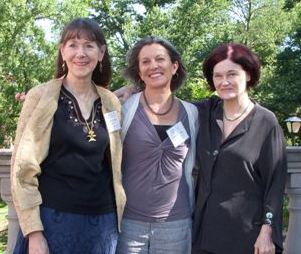


Early life and formation
Emerson grew up in rural Virginia, and the region’s small towns, family histories, and natural settings are frequent touchstones in her work. Her poems often move between precise domestic detail and larger historical or emotional registers. She came to poetry with a clear interest in narrative compression: the ability to suggest long stories and complex feeling within concise, carefully controlled stanzas.
Career, teaching, and civic work
Throughout her career Emerson combined writing with teaching and mentorship. She worked with students and emerging writers, offering workshops and reading series, and she participated in programs aimed at widening access to poetry in communities across Virginia. Colleagues remember her for a direct, attentive pedagogy and for the way her own creative practice informed her support of others’ work.
Major themes and style
Emerson’s poetry is often celebrated for its formal restraint and emotional immediacy. Recurrent themes include grief and survival, the traces left by loved ones, the negotiation of intimate relationships, and attention to objects and landscapes that carry stories across generations. Her diction tends to be economical, with images that accumulate meaning through repetition and careful juxtaposition; narrative fragments and elegiac moments recur across sequences of poems.
Late Wife and recognition
The collection Late Wife, which received the Pulitzer Prize, exemplifies Emerson’s approach: personal narrative intertwined with formal craft, exploring the aftermath of loss and the attempt to record what remains. The award and her appointment as the state’s Poet Laureate brought wider readership and led to invitations to speak and teach beyond her home state.
Legacy and influence
Emerson’s reputation rests on a body of work that is both formally careful and emotionally candid. She is remembered for helping to renew attention to contemporary Southern voices and for mentoring younger poets who carried forward an interest in lyric narrative. Her poems remain in circulation through anthologies, journals, and teaching syllabi, where they continue to be read for their clarity, moral perception, and craft.
Notable facts
- Award: Winner of the 2006 Pulitzer Prize for the poetry collection Late Wife.
- Public role: Appointed Poet Laureate of Virginia in 2008 by Governor Tim Kaine.
- Origins: Born in Chatham, Virginia, and associated with Southern landscapes and family histories in her work.
- Teaching: Active as a teacher and mentor at colleges, in workshops, and in community programs.
- Death: Died in Richmond, Virginia, after a battle with colon cancer in 2014.
- Form and tone: Known for economical language, vivid images, and lyric narratives that reward close reading.
For readers seeking Emerson’s work, the collection Late Wife is widely available and often recommended as an entry point. Her poems appear in literary journals and in course reading lists where themes of loss, memory, and the workings of place are discussed. Emerson’s combination of formal craft and personal candor continues to influence poets and readers who value precise, image-driven lyric writing.
Related articles
Author
AlegsaOnline.com Claudia Emerson (1957–2014) — American Poet and Pulitzer Prize Winner Leandro Alegsa
URL: https://en.alegsaonline.com/art/116668
Sources
- poetryfoundation.org : "Claudia Emerson"
- pbs.org : "Claudia Emerson Wins Pulitzer Prize for Poetry"
- fredericksburg.com : "Distinguished poet, Pulitzer Prize-winner Claudia Emerson dies"