
Ciel Bergman (1938–2017) — American painter focused on environment and feminine consciousness
Ciel Bergman, born Cheryl Marie Olsen (also known as Cheryl Bowers), was an American painter whose post‑modern work explored environmental themes and feminine identity. Born in Berkeley, California.
Overview
Ciel Bergman (September 11, 1938 – January 15, 2017), also known early in her life as Cheryl Marie Olsen and later as Cheryl Bowers, was an American artist best known for paintings that address ecological concern and aspects of feminine consciousness. Critics and historians have often situated her work in post‑modern contexts because of its layered symbolism, shifting references and engagement with cultural narratives. She was born in Berkeley and raised in California, and she had ancestral ties to Swedish heritage.
Image gallery
3 Images
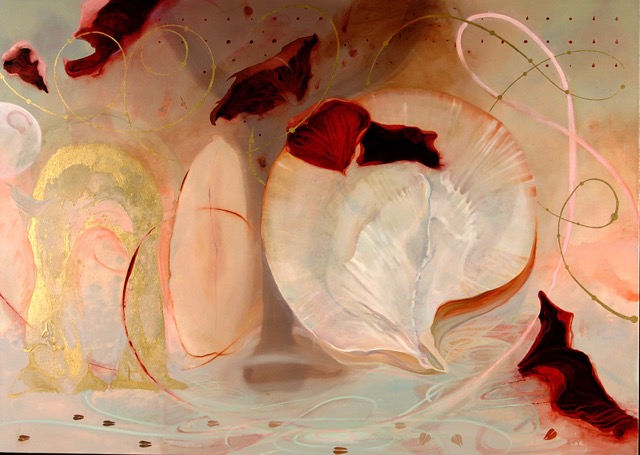

Artistic characteristics
Bergman's work combined figurative and abstract elements to explore landscape, water, plant forms and archetypal imagery. Her paintings frequently use color, texture and repeated motifs to suggest cycles of growth, decay and renewal. Observers describe an ecological sensibility in her compositions—an interest in human relationships with the natural world—and a concern with identity and gender that aligns her work with feminist and ecofeminist dialogues.
Development and context
Working across the late 20th and early 21st centuries, Bergman produced pieces that responded to environmental crises and cultural change. Her practice was discussed within broader conversations about the role of art in social and ecological critique, and her paintings were often characterized as part of a post‑modern approach that mixes references, materials and methods. Commentators note that she brought personal, mythic and environmental themes into conversation.
Career highlights and practice
Throughout her career Bergman exhibited in group and solo settings and her work entered public and private collections. She used traditional painting media alongside layered surfaces and symbolic imagery to invite viewers to reflect on the condition of the environment and the place of women in cultural narratives. Her art was sometimes presented in thematic exhibitions that emphasized ecology, gender and the intersection of both.
Legacy and significance
Bergman is remembered for a body of work that fused aesthetic experimentation with moral and ecological urgency. She contributed to ongoing conversations about how art can articulate environmental stewardship and feminine perspectives, and scholars reference her practice when discussing post‑modern painting that engages social issues. Her life and work continue to be cited in studies of art, ecology and gender.
Notable facts
- Born in Berkeley, California; connected to Swedish ancestry through family roots (see note).
- Her work has been described in post‑modern terms (post‑modern) for its layered references and hybrid forms.
- Environment and the feminine were recurrent themes (environment).
- Biographical and exhibition details are linked in regional and national art records (California, Berkeley).
Related articles
Author
AlegsaOnline.com Ciel Bergman (1938–2017) — American painter focused on environment and feminine consciousness Leandro Alegsa
URL: https://en.alegsaonline.com/art/116605
Sources
- wikidata.orgQ21993965.html : wikidata.orgq21993965.html
- d-nb.info : 143202901
- isni.org : 0000 0001 1078 6324
- id.loc.gov : nr2005003370
- getty.edu : 500084578
- viaf.org : 96291180
- worldcat.org : lccn-nr2005003370