
Arthur Grumiaux: Belgian violinist and pianist (1921–1986)
Belgian violinist Arthur Grumiaux (1921–1986) was admired for his elegant tone, clear phrasing and classical repertoire. His many mid‑20th century recordings and an eponymous Stradivarius sustain his musical legacy.
Arthur Grumiaux (21 March 1921 – 16 October 1986) was a Belgian musician best known as a violinist who also performed as a pianist. He enjoyed an international career as a soloist and chamber musician, leaving a substantial recorded legacy that continues to be consulted by listeners and students. Contemporary references often note his nationality and roles: Belgian, violinist and pianist.
Image gallery
2 Images
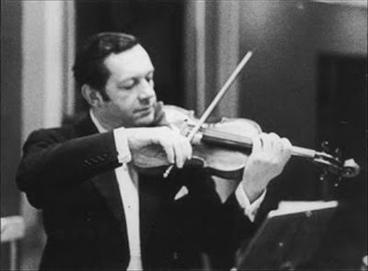
Overview and early life
Born in Belgium in 1921, Grumiaux received his musical training within the Belgian conservatory tradition and showed early promise that led to public appearances and competitive recognition. Like many European conservatory-trained players of his generation, he combined solo study with chamber music experience and early orchestral appearances that prepared him for a touring career. His formative years established the technical foundation and musical sensibility that marked his later interpretations.
Career and repertoire
Grumiaux's repertoire emphasized the core classical and early romantic literature. He was particularly associated with works by Bach, Mozart and Beethoven, performing concertos, sonatas and chamber works with a focus on clarity of line and structural coherence. Throughout the mid‑20th century he gave recitals, concerto appearances and chamber concerts across Europe and beyond, sharing programmes that balanced solo showpieces with thoughtful ensemble playing.
Style and technique
Critics and colleagues praised Grumiaux for a warm, pure tone and an unforced, elegant approach to phrasing. His playing is often described as transparent and composed, favoring musical expression and stylistic restraint over overt virtuoso display. These qualities made his interpretations models of taste for generations of listeners and students seeking a classical ideal of balance and communicative clarity.
Instrument, recordings and collaborations
Grumiaux played an Italian instrument long associated with his name and is often linked in the record catalogue with a Stradivarius. From the 1950s he made numerous studio and live recordings, including concertos, solo works and chamber music, many of which remain in circulation. He collaborated with leading conductors, accompanists and chamber partners of his era and appeared on major concert platforms, contributing to a broad recorded archive that documents his interpretive approach.
Legacy and significance
The legacy of Arthur Grumiaux rests on the combination of his recorded output and the reputation of his refined musicianship. Students, performers and listeners continue to consult his recordings for their tonal beauty, rhythmic poise and stylistic consistency. While fashions in performance practice have evolved, Grumiaux's work endures as an exemplar of mid‑20th century classical violin artistry and as a reference point for those studying the repertoire he championed.
Notable aspects
- Primary roles: celebrated violin soloist, chamber musician and occasional pianist.
- Repertoire focus: classical and early romantic works, with frequent performances of Bach, Mozart and Beethoven.
- Recordings: extensive mid‑20th century studio and live recordings admired for tonal beauty and musical integrity.
- Instrument: an Italian instrument often described in association with his name, commonly referred to in discussions of historic violins.
- Influence: regarded as a model of refined phrasing and tasteful interpretation for later generations.
Related articles
Author
AlegsaOnline.com Arthur Grumiaux: Belgian violinist and pianist (1921–1986) Leandro Alegsa
URL: https://en.alegsaonline.com/art/114601