
Arthur Liebehenschel — SS Officer at Auschwitz and Majdanek
Arthur Liebehenschel (1901–1948) was an SS officer who served in the administration of Auschwitz and Majdanek. After World War II he was tried by Polish courts, convicted of war crimes and executed in 1948.

Image gallery
2 Images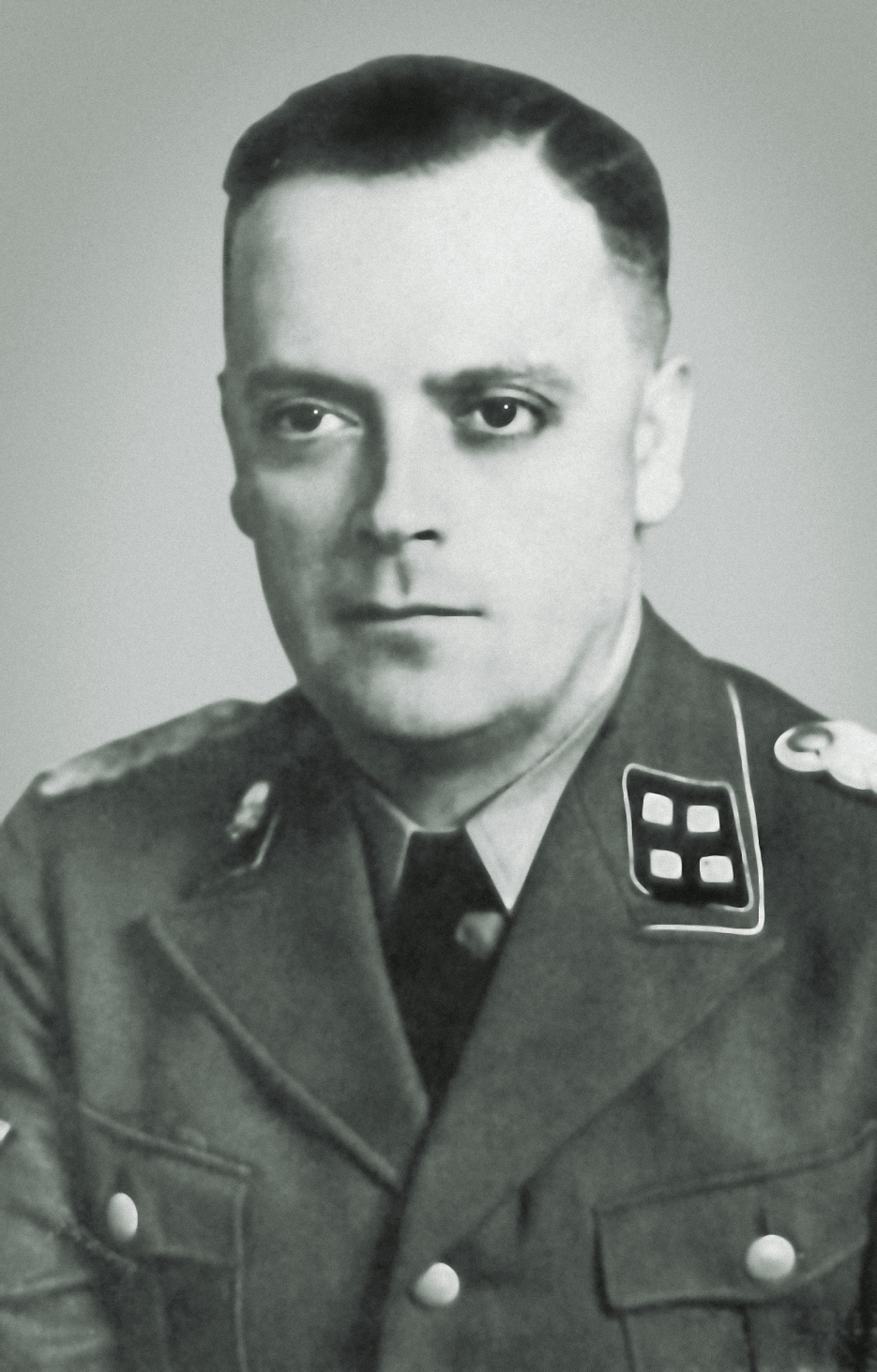

Background and career
Liebehenschel's early life led him into Nazi institutions and the SS, where he rose to positions that placed him in the camp bureaucracy. He was not an isolated lower-ranking guard but part of the staff that directed and implemented policies inside large camp complexes. His duties combined administrative oversight with responsibility for enforcing camp regulations and coordinating prisoner labor and transport.
Roles and responsibilities
As an official connected with both Auschwitz and Majdanek, Liebehenschel oversaw aspects of daily camp function as well as larger procedures that affected prisoner populations. Responsibilities commonly attributed to officers in his position included:
- managing administrative sections responsible for records and assignments;
- supervising security personnel and camp routines;
- participating in or authorizing selections, deportation logistics and the exploitation of forced labor.
Context: Auschwitz and Majdanek
Liebehenschel served within the broader apparatus of the Auschwitz complex and was also connected to Majdanek. Both sites combined functions of forced labor, detention and, in many cases, mass murder, and they have been extensively studied as central elements of Nazi persecution during World War II. Camp administrators like Liebehenschel were instrumental in turning policy into day-to-day practice.
Trial and conviction
Following liberation, surviving victims, investigators and prosecutors documented crimes committed at Nazi camps. Liebehenschel was among those arrested and brought before Polish courts. Evidence presented at trial linked him to actions and policies that constituted war crimes and crimes against humanity. He was found guilty and executed in January 1948 by the Polish state.
Historical significance
Liebehenschel's case forms part of the postwar effort to hold mid- and high-level camp personnel accountable. His prosecution contributed to the body of legal and historical records used to understand how the camp system operated, how responsibility was distributed among administrators, and how judicial processes after the war sought to address atrocities. Scholars continue to examine personnel records, witness statements and trial transcripts to place figures like Liebehenschel in the broader history of Nazi crimes.
Questions and answers
Q: Who was Arthur Liebehenschel?
A: Arthur Liebehenschel was an officer at the Auschwitz and Majdanek concentration camps during World War II.
Q: What was Arthur Liebehenschel guilty of during the war?
A: Arthur Liebehenschel was guilty of committing war crimes during the war.
Q: What happened to Arthur Liebehenschel after the war ended?
A: Arthur Liebehenschel was executed by the Polish government in 1948, following the end of the war.
Q: What role did Arthur Liebehenschel play in the Auschwitz concentration camp?
A: Arthur Liebehenschel was a main officer at the Auschwitz concentration camp during World War II.
Q: What role did Arthur Liebehenschel play in the Majdanek concentration camp?
A: Arthur Liebehenschel was an officer at the Majdanek concentration camp during World War II.
Q: Why was Arthur Liebehenschel executed?
A: Arthur Liebehenschel was executed by the Polish government for his war crimes committed during World War II.
Q: When was Arthur Liebehenschel born and when did he die?
A: Arthur Liebehenschel was born on November 25, 1901, and he died on January 24, 1948.
Related articles
Author
AlegsaOnline.com Arthur Liebehenschel — SS Officer at Auschwitz and Majdanek Leandro Alegsa
URL: https://en.alegsaonline.com/art/114604
Sources
- books.google.com : Holocaust Historiography in Context: Emergence, Challenges, Polemics and Achievements
- jewishvirtuallibrary.org : "Auschwitz Trials (Cracow)"