
Apisai Ielemia
Apisai Ielemia (1955–2018) was a Tuvaluan politician who served as Prime Minister from 2006 to 2010; later re-elected to parliament, his career ended amid a 2016 conviction and legal challenges.
Overview
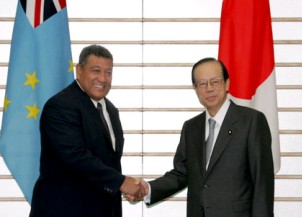
Apisai Ielemia (19 August 1955 – 19 November 2018) was a prominent Tuvaluan political figure who led his country as its tenth Prime Minister from 2006 until 2010. During a career that spanned multiple terms in the national parliament, he was known as an experienced legislator and a participant in the small, consensus-driven politics of Tuvalu. His later years were marked by legal controversies that affected his parliamentary status and generated debate about eligibility and accountability for elected officials.
Image gallery
3 Images

Political career
Ielemia first rose through the ranks of Tuvaluan public life to become prime minister in 2006. He led a government responsible for addressing the routine challenges of a very small island state: managing limited public resources, engaging with regional partners, and responding to long-term concerns such as economic resilience and environmental vulnerability. After leaving the premiership in 2010 he was returned to parliament the same year, and he later won re-election in 2015, demonstrating continued local support in his constituency.
Legal case and parliamentary status
On 6 May 2016 Ielemia was convicted in the Magistrate’s Court on charges described as abuse of office relating to actions during the final year of his term as prime minister. Following that conviction, the High Court of Tuvalu on 5 October 2016 declared his parliamentary seat vacant on the ground that he was not qualified to sit as a member of parliament. Ielemia publicly stated that he considered himself to remain a member of parliament and initiated legal challenges to the decision in 2017. The dispute raised important questions about the interaction of criminal convictions, eligibility rules and the procedures for vacating seats in Tuvalu’s parliamentary system.
Legacy and significance
Apisai Ielemia's career illustrates several features of public life in small Pacific states: the centrality of individual personalities, the close relationship between local constituencies and national office-holders, and the complications that arise when legal processes intersect with political representation. He is remembered both for his period as head of government and for the legal precedent his case helped to clarify regarding parliamentary qualification. His death on 19 November 2018 closed a chapter in Tuvalu's recent political history and prompted reflection on the balance between accountability and political continuity in small polities.
Timeline and notable facts
- Born 19 August 1955 and deceased 19 November 2018.
- Served as Prime Minister of Tuvalu from 2006 to 2010; he was the country’s tenth person to hold that office. See the office entry: Prime Minister of Tuvalu.
- Returned to parliament in 2010 and re-elected in 2015 before his 2016 conviction.
- Convicted in the Magistrate’s Court on 6 May 2016 for abuse of office; the High Court declared his seat vacant on 5 October 2016 and he challenged this ruling in 2017.
- His career and legal proceedings are discussed in regional political analyses and biographical summaries: further reading.
For readers seeking a concise biographical summary or legal timeline, the entries linked above provide additional context and reference material on Ielemia's political role and the judicial decisions that affected his parliamentary membership.
Related articles
Author
AlegsaOnline.com Apisai Ielemia Leandro Alegsa
URL: https://en.alegsaonline.com/art/114493
Sources
- radionz.co.nz : "Former Tuvalu prime minister laid to rest"
- pina.com.fj : "Tuvalu demonstrate against top judge, former PM seeks re-election in Vaitupu seat"
- islandsbusiness.com : "Judge questions handling of case by PM and his deputy"
- radionz.co.nz : "Tuvalu MP claims nepotism after exclusion"
- radionz.co.nz : "Legitimacy of Tuvalu by-election questioned"
- radionz.co.nz : "Tuvalu PM calls media reports blatant lies"