
Anita Hill: American attorney, academic, and advocate
Anita Hill is an American lawyer and professor whose 1991 testimony during a Supreme Court confirmation transformed public debate about sexual harassment and workplace equality.
Overview
Anita Faye Hill (born July 30, 1956) is an American attorney, academic, and public advocate. She came to broad public attention during the 1991 confirmation hearings for the U.S. Supreme Court, when she testified about allegations she made against her former supervisor, Clarence Thomas. Hill later pursued a career in scholarship and teaching and has been associated with Brandeis University as a professor working on law, social policy, and women's studies. She was born near Morris, Oklahoma.
Image gallery
3 Images

Early life and career
Raised in Oklahoma, Hill trained as a lawyer and worked in government and civil rights-related positions early in her career. She held roles at federal agencies, including the United States Department of Education and later at the Equal Employment Opportunity Commission, where her responsibilities involved investigating and interpreting employment policy. These positions informed her later teaching and public commentary on workplace law and equality.
1991 hearings and public response
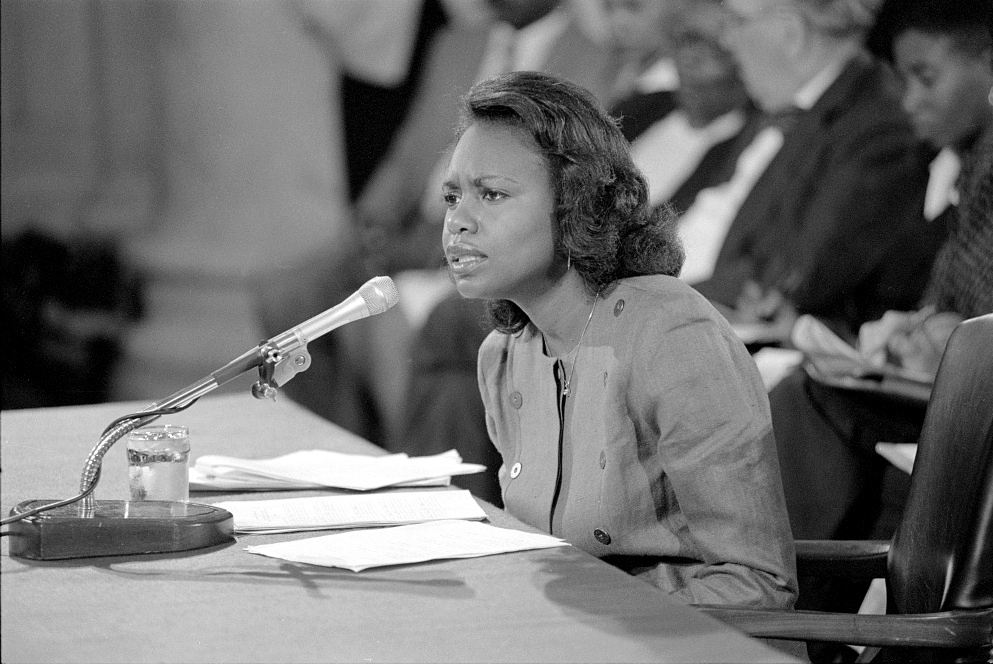
In 1991 Hill publicly accused her former supervisor of workplace sexual harassment during the confirmation process for a Supreme Court nominee. Her testimony was televised and widely reported, prompting a national conversation about the prevalence of harassment, the treatment of women who come forward, and the responsibilities of institutions to investigate complaints. The hearings highlighted how allegations of misconduct interact with political confirmation processes.
Impact and significance
Hill's testimony is often credited with increasing public awareness of workplace harassment and prompting organizations, lawmakers, and employers to reassess policies, complaint procedures, and training programs. It contributed to a cultural shift in how allegations are discussed publicly and how institutions document and respond to claims of misconduct.
- Raised visibility of sexual harassment as a legal and social issue.
- Prompted reviews of workplace policies, reporting mechanisms, and training.
- Encouraged debate about how political processes handle accusations against nominees.
Later career, writing, and public work
After the hearings Hill pursued an academic path, teaching and researching topics related to law, gender, and public policy. She has written essays, delivered public lectures, and participated in dialogues about equality, legal reform, and civic life. Her scholarship and public appearances have continued to influence conversations about workplace rights and the dynamics of power and trust.
Legacy and ongoing debate
Hill remains a prominent figure in discussions about gender, law, and public accountability. Her experience has been interpreted in multiple ways across political and cultural lines: as a catalyst for reform and as a focal point of contested narratives about credibility, power, and process. Regardless of differing perspectives, her role in prompting sustained public attention to harassment and workplace fairness is widely acknowledged.
For more detailed accounts of her testimony, subsequent commentary, and her academic work, see institutional biographies and collections of contemporary reporting and scholarship. Morris, Oklahoma, Brandeis University, U.S. Supreme Court, Clarence Thomas, United States Department of Education, and discussions of sexual harassment provide context for different aspects of her life and influence.
Related articles
Author
AlegsaOnline.com Anita Hill: American attorney, academic, and advocate Leandro Alegsa
URL: https://en.alegsaonline.com/art/114237