
United States Department of Education
Federal Cabinet department that establishes policy, administers funding, and enforces civil rights in the U.S. education system from early childhood through postsecondary levels.
Overview
The United States Department of Education is a Cabinet-level agency of the United States federal government responsible for national education policy, administration of federal aid, and enforcement of certain educational laws and civil rights. It focuses on improving access to high-quality education, supporting academic standards, and collecting data to inform policymakers and the public.
Image gallery
5 Images



Primary functions
The department's work spans policy development, funding distribution, and oversight. Key functions include:
- Administering federal student aid programs and grants to schools and students.
- Conducting research and gathering statistics on educational outcomes.
- Enforcing federal laws related to discrimination, disability services, and privacy in education.
- Supporting initiatives for teacher quality, early childhood education, and postsecondary completion.
Organization and leadership
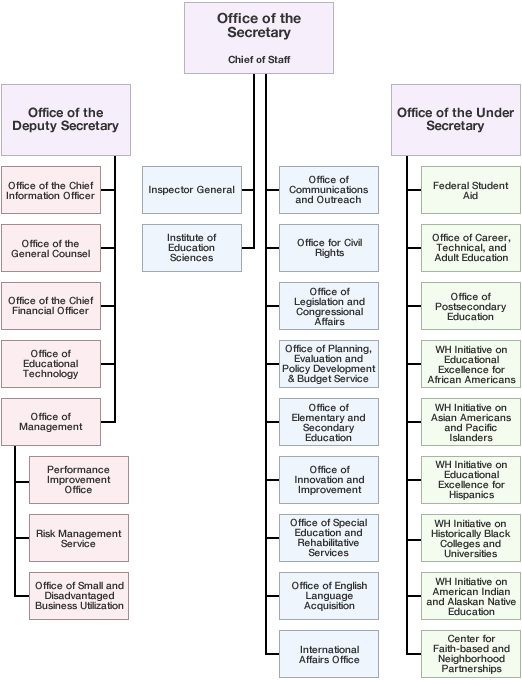
A Cabinet secretary appointed by the President leads the department and reports directly to the President. The department is organized into offices that handle student financial assistance, civil rights, elementary and secondary education, special education, and postsecondary education, among others. Regional staff and grantee relationships help translate federal programs to state and local implementation.
History and development
The Department of Education was created by legislation signed into law by President Jimmy Carter in 1979 and began operations in 1980. Its establishment followed decades of federal involvement in education through smaller offices and reflected a growing national interest in coordinating education policy at the federal level, particularly for equal access and program evaluation.
Programs and impact
Major initiatives administered or supported by the department include federal student financial aid, grants for disadvantaged schools, special education funding, and research programs. By setting conditions for federal funding and publishing data, the department influences curriculum standards, accountability systems, and investment priorities across states.
Controversies and distinctions
Debate continues over the proper scope of federal influence in education, with critics arguing for greater state and local control and proponents emphasizing national standards and civil rights protections. The department differs from state education agencies by operating primarily as a funding and policy body rather than directly running public schools.
Related articles
Author
AlegsaOnline.com United States Department of Education Leandro Alegsa
URL: https://en.alegsaonline.com/art/103029
Sources
- politico.com : "Education Department goes into shutdown mode"
- www2.ed.gov : "Overview and Mission Statement - U.S. Department of Education"