
Anerood Jugnauth: Mauritian Statesman and Longtime Political Leader
Summary of the life and career of Sir Anerood Jugnauth (1930–2021), a central figure in Mauritian politics who served as both prime minister and president and shaped the island's post‑independence development.
Overview
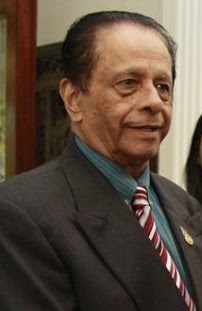
Sir Anerood Jugnauth (29 March 1930 – 3 June 2021) was a prominent Mauritian politician who held the country’s two highest offices during a long public career. He served as Prime Minister and later as President, and represented the constituency of Piton & Riviere Du Rempart in the national legislature. His leadership spanned decades of political change and economic transformation in Mauritius.
Image gallery
6 Images


Political career and offices
Jugnauth’s public life is marked by repeated returns to executive power and by a role as a senior figure within Mauritius’s party system. Over several decades he led governments that aimed to consolidate democratic institutions and to manage the island’s diversified economy. His roles included head of government and head of state, and he remained an active Member of Parliament for his constituency until late in his career.
Influence, policies and legacy
As a political leader, Jugnauth is generally credited with promoting stability and continuity in a multi‑ethnic society navigating post‑colonial development. His administrations focused on economic diversification, investment promotion and social programs intended to broaden opportunity. Opinions about his legacy vary: supporters highlight economic progress and international stature, while critics point to partisan tensions and debates about governance that accompanied long incumbencies.
Honours and status
Over his lifetime Jugnauth received several official distinctions in recognition of his public service. He was styled with high national honours and held honors that reflected his standing in both domestic and Commonwealth circles; documentation of these accolades is often listed alongside parliamentary and judicial records (honours, privy council and parliamentary record).
Notable facts
- Born in 1930 and died in 2021, he was one of the most enduring figures in modern Mauritian politics.
- He represented the constituency of Piton & Riviere Du Rempart in the National Assembly.
- He served in both the executive and ceremonial leadership roles, an uncommon combination internationally.
Jugnauth’s career is studied as part of Mauritius’s broader political history: his tenure illustrates the challenges and achievements of a small island state balancing economic growth with social cohesion. For further reading, consult national archives and contemporary analyses of Mauritius’s post‑independence development.
Related articles
Author
AlegsaOnline.com Anerood Jugnauth: Mauritian Statesman and Longtime Political Leader Leandro Alegsa
URL: https://en.alegsaonline.com/art/114187
Sources
- westmountexaminer.com : "YourLocalNews.ca - TC Media's local information websites"
- cia.gov : "Archived copy" · web.archive.org
- wikidata.orgQ217566.html : wikidata.orgq217566.html
- catalogue.bnf.fr : cb12081425s
- data.bnf.fr : (data)
- isni.org : 0000 0000 3512 3853
- id.loc.gov : n85319242
- data.bibliotheken.nl : 170298299
- idref.fr : 098221116
- viaf.org : 19702966
- worldcat.org : lccn-n85319242