
Andrzej Żuławski: Polish filmmaker known for intense, controversial cinema
Biography and overview of Andrzej Żuławski, a Polish director and writer noted for emotionally extreme, art‑house films, major works, controversies, collaborations, and his legacy.
Overview
Andrzej Żuławski (22 November 1940 – 17 February 2016) was a Polish film director and screenwriter renowned for a confrontational, operatic cinematic style that mixed psychological extremes, surreal imagery and melodrama. Born in the city historically known as Lwów (Lwów), he established an international career that alternated between Poland and France (France). Żuławski's films often provoked strong reactions from audiences and authorities, and several of his productions were subject to censorship during the communist era in Poland.
Image gallery
3 Images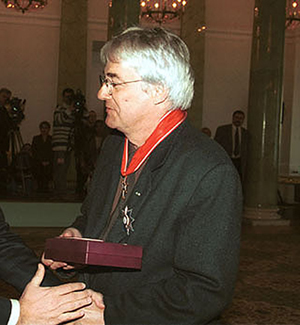


Notable films and artistic characteristics
Żuławski's best-known films span several languages and countries. His breakthrough films include Diabeł (The Devil, 1972), which encountered political controversy; L'important c'est d'aimer (That Most Important Thing: Love, 1975), which increased his international reputation; Possession (1981), a psychological horror often cited for its intensity; and Na Srebrnym Globie (On the Silver Globe), a science‑fiction epic whose production was famously interrupted and later reworked. His work is characterized by long takes, frenetic camera movement, heightened performances, operatic soundtracks and an interest in obsession, love and metaphysical collapse.
- The Devil (Diabeł) – early Polish film that met with official disapproval.
- That Most Important Thing: Love (1975) – commercial and critical breakthrough.
- Possession (1981) – international cult film noted for Isabelle Adjani's performance.
- On the Silver Globe – ambitiously scaled, censored science‑fiction project.
- L'Amour braque (Crazy Love) – an example of his work with younger French actors.
Career, censorship and exile
Żuławski studied filmmaking in France in the late 1950s and began directing in Poland during a period of political sensitivity. After the controversy surrounding The Devil, he spent extended periods living and working in France and elsewhere in Western Europe. The production of On the Silver Globe was halted by Polish authorities in the late 1970s; a condensed version that incorporated documentary material about the film's troubled making was released years later. These clashes with censorship shaped Żuławski's reputation as an uncompromising artist who pushed narrative and visual boundaries.
Collaborations and acting relationships
Żuławski is remembered for intense actor‑director relationships and for eliciting powerhouse performances. He worked with established stars and rising actors across Europe. Notable collaborators include Romy Schneider (Romy Schneider), whose work with Żuławski helped define one of his early successes; Isabelle Adjani (Isabelle Adjani), central to the unsettling power of Possession; and Sophie Marceau (Sophie Marceau), with whom he made films after she became a prominent young actress in France. His direction frequently demanded emotional extremes that divided critics but created memorable screen moments.
Legacy and death
Żuławski's films remain influential within art‑house and cult cinema circles for their formal bravado and psychological intensity. He is often discussed alongside European directors who challenged both genre conventions and political expectations. Andrzej Żuławski died in Warsaw (Warsaw) on 17 February 2016, at the age of 75, after a battle with pancreatic cancer (pancreatic cancer). His work continues to attract reassessment, retrospectives and scholarly interest, and his films are frequently cited in discussions of extremity in cinema.
For further reading on Żuławski's films and production history, see resources on European art‑house cinema and archival materials that recount the controversies surrounding projects such as On the Silver Globe. Contemporary reviews and restored releases have helped keep his distinctive voice in critical conversations.
Selected further resources: birthplace and biography, education and early study, work with Romy Schneider, Possession and Isabelle Adjani, films with Sophie Marceau, notes on his death, final years in Warsaw.
Related articles
Author
AlegsaOnline.com Andrzej Żuławski: Polish filmmaker known for intense, controversial cinema Leandro Alegsa
URL: https://en.alegsaonline.com/art/114156
Sources
- culture.pl : Culture.pl
- polskieradio.pl : "Nie żyje reżyser, scenarzysta i pisarz Andrzej Żuławski"