
Abulfaz Elchibey: Azerbaijani leader and president (1938–2000)
Abulfaz Elchibey was an Azerbaijani scholar and politician, leader of the Popular Front and the country's second president (June 1992–June 1993), noted for nationalist reforms and his role during the early independence era.
Overview
Abulfaz Elchibey (24 June 1938 – 22 August 2000) was an Azerbaijani political figure and intellectual who emerged as a leading voice during the final years of the Soviet Union and the early years of independent Azerbaijan. He headed the Azerbaijani Popular Front movement and served as the country's second president from 16 June 1992 until his removal from office in June 1993. His presidency was marked by efforts to strengthen national identity, align more closely with Turkic neighbors, and contend with the ongoing conflict over Nagorno-Karabakh.
Image gallery
4 Images


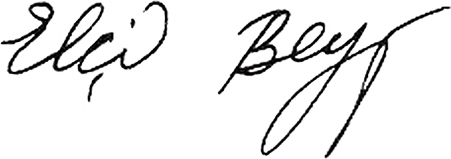
Early life and career
Elchibey trained as a philologist and worked in academic and publishing circles before entering politics. He became widely known for his advocacy of Azerbaijani language, culture, and historical research at a time when national movements were gaining momentum across the Soviet Union. His background as a scholar shaped his emphasis on language reform and cultural revival during the period of state-building after independence.
Political rise and the Popular Front
In the late 1980s and 1990, Elchibey rose to prominence as a leading figure of the Popular Front, a broad-based movement that mobilized against Soviet central control and promoted independence. The movement combined intellectuals, activists, and political organizers and advocated a rapid transition away from Soviet institutions. He led the Popular Front into electoral politics and used its platform to press for democratic reforms and national sovereignty.
Presidency and the 1992–1993 crisis
Elchibey was elected president in June 1992. His administration sought to consolidate independence by changing administrative symbols, promoting the Latin alphabet for Azerbaijani, and pursuing foreign ties with Turkey and other Turkic states. At the same time, the country faced severe challenges: the economy was weakened by the Soviet collapse, state structures were fragile, and the war over Nagorno-Karabakh continued to consume political attention and resources. In June 1993 a power struggle and armed rebellion removed him from office in a crisis that led to a change of leadership.
Removal from office and later years
Elchibey was ousted during the uprising of mid-1993, a turning point that brought new political forces to the fore. He subsequently spent periods away from central power but remained a symbolic figure for opposition and nationalist constituencies. His later years were marked by declining political influence and ill health; he died in August 2000. The events of his presidency and removal remain important in understanding Azerbaijan's turbulent transition from Soviet republic to independent state.
Legacy and significance
- Elchibey symbolized the nationalist and pro-independence strand of Azerbaijani politics that shaped the early 1990s.
- He emphasized cultural and linguistic revival, aligning policies to strengthen national identity after decades of Soviet rule.
- His brief presidency highlighted the difficulties of state-building amid territorial conflict and economic collapse.
- Historians and political analysts view his career as illustrative of the competing forces—reformers, militarized factions, and emerging elites—that defined post-Soviet transition in the South Caucasus.
For full name rendering and Azerbaijani orthography see Azerbaijani. For context on the country he led, see Azerbaijan. For details on the events that removed him from office, see the 1993 coup period.
Related articles
Author
AlegsaOnline.com Abulfaz Elchibey: Azerbaijani leader and president (1938–2000) Leandro Alegsa
URL: https://en.alegsaonline.com/art/113262
Sources
- britannica.com : "Abulfaz Elchibey - president of Azerbaijan"
- wikidata.orgQ319912.html : wikidata.orgq319912.html
- isni.org : 0000 0000 3556 7702
- id.loc.gov : n94106554
- viaf.org : 35506796
- worldcat.org : lccn-n94106554