
President of Azerbaijan: role, powers, and history
Encyclopedic summary of the Azerbaijani presidency: constitutional role, powers, election and immunity rules, historical development since 1991, and relationship with other state institutions.
Overview
The President is the head of state of the Republic of Azerbaijan and occupies the highest public office in the country's political system. In Azerbaijan's modern republic, established after independence, the President serves as the principal representative of the state and combines ceremonial duties with substantial executive authority. The office is defined and limited by the national Constitution, which specifies the President's powers, responsibilities and relations with other branches.
Image gallery
10 Images




Constitutional role and powers
Under the Constitution, the President is the Commander-in-Chief of the Azerbaijani Armed Forces and is responsible for defining major lines of national defence and foreign policy. The President appoints key officials, represents the state in international relations, issues decrees within constitutional limits, and has authority in areas such as national security and the structure of the executive. The office may exercise vetoes, propose legislation and influence the legislative agenda, though many specific powers are exercised in concert with other state organs.
Election, term and immunity
The President is chosen by the people in a nationwide, directly elected ballot. The Constitution sets the term length and conditions for re-election. In practice, the presidential term, re-election rules and related regulations have shaped political continuity. The Constitution provides immunity for the President during the term of office, making it difficult to put on trial or place in prison for official acts, a form of protection intended to safeguard the functioning of the head of state. The President may also initiate national referendums on matters of major importance, including changes to constitutional articles, and the officeholder is permitted to be a member of a political party while in office.
Historical development since 1991
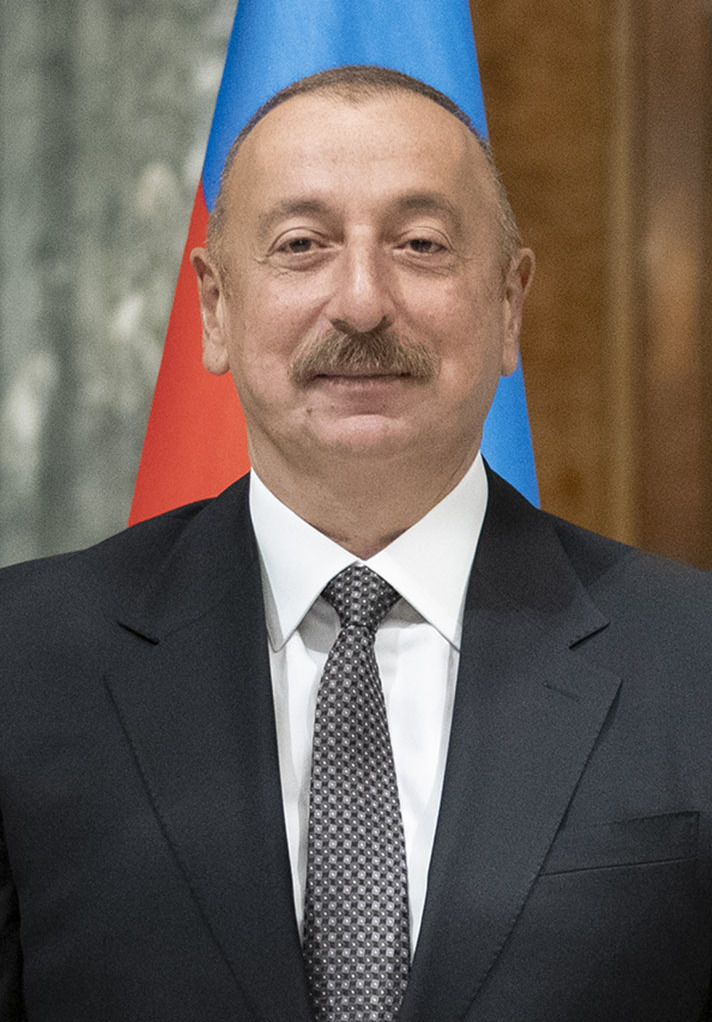
The modern presidency developed after Azerbaijan regained independence following the dissolution of the Soviet Union in 1991. The early post-independence period saw rapid institutional change as the young state established executive, legislative and judicial structures. Since independence, the presidency has been central to state-building, overseeing major policy areas including the economy, energy strategy and security. The current incumbent is Ilham Aliyev, who has held the office through multiple terms and whose tenure illustrates how presidential authority has shaped national politics.
Relationship with other institutions
Although the Prime Minister and cabinet handle day-to-day government administration, the President often exercises broader strategic authority. The Prime Minister functions as the head of government, but the balance between the two offices depends on constitutional provisions and political practice. The President interacts with the National Assembly, the judiciary, regional administrations and security institutions; presidential appointments and policy directives influence how these bodies operate.
Notable features and comparative perspective
- The office combines symbolic head-of-state functions with strong executive powers, distinguishing it from purely ceremonial presidencies elsewhere.
- Immunity provisions and the power to call referendums are notable legal characteristics that affect accountability and constitutional change.
- In comparative terms, the Azerbaijani presidency resembles other presidential systems where the head of state holds concentrated formal powers, though national context and political history shape its practical role.
Officeholders and continuity
The list of presidents commonly presented in reference works covers leaders from the first post-independence period to the present. These officeholders have guided the country through transitions in governance, conflict and economic development. For a concise reference on contemporary incumbency and past holders see official and scholarly summaries that document election outcomes, constitutional amendments and major policy initiatives.
Further reading and sources
For more detailed information consult primary documents such as the text of the Constitution, official government publications and reputable academic analyses. Background materials on the country's political system and foreign relations are available through national sources and comparative studies of presidential systems; general country overviews can be found at entries on Azerbaijan and in works addressing post-Soviet state formation. Additional resources include legal commentaries, election reports and historical reviews. 43025
Questions and answers
Q: Who is the head of state in Azerbaijan?
A: The President of Azerbaijan is the head of state in Azerbaijan.
Q: What powers does the President have compared to the Prime Minister and National Assembly?
A: The Constitution of Azerbaijan gives more powers to the President than to the Prime Minister and National Assembly.
Q: How long is a Presidential term?
A: A Presidential term in Azerbaijan lasts for five years.
Q: Can a President be re-elected without any limit?
A: Yes, a President can be re-elected without any limit according to Azerbaijani law.
Q: Does the Constitution allow Presidents to be members of political parties?
A: Yes, according to the Constitution, Presidents are allowed to be members of political parties.
Q: Who is currently serving as President of Azerbaijan?
A: Ilham Aliyev is currently serving as President of Azerbaijan.
Q: When did Azerbaijan become an independent country?
A: Azerbaijan became an independent country in 1991 when the Soviet Union collapsed that same year.
Related articles
Author
AlegsaOnline.com President of Azerbaijan: role, powers, and history Leandro Alegsa
URL: https://en.alegsaonline.com/art/78803