
Year 578 (AD)
A year of the Julian calendar in late antiquity: Byzantine emperor Justin II died and was succeeded by Tiberius II; the period saw ongoing Byzantine–Sasanian warfare and regional shifts across Europe and Asia.
Overview
578 was a common year beginning on Saturday in the Julian calendar. It falls in the late antique period, a time of political fragmentation and transition across the Mediterranean, Europe and Asia. Contemporary chroniclers record events differently by region, but historians group developments of this year into imperial successions, military conflicts and social-religious change.
Image gallery
1 Image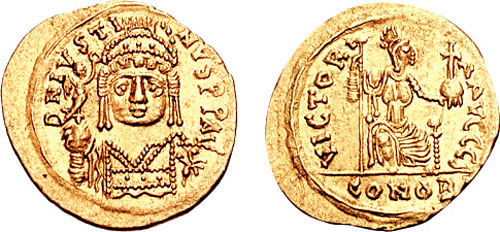
Major events
The most widely noted political occurrence of the year is the end of the reign of the Byzantine emperor Justin II and the succession of Tiberius II Constantine. This change altered senior leadership in Constantinople during an extended phase of tension with the Sasanian Persian empire. The broader Byzantine–Sasanian struggle continued to shape diplomacy and military priorities.
Elsewhere, various Germanic and post-Roman kingdoms continued to consolidate territories once controlled by the Western Roman state. The Lombard presence in Italy, Merovingian polities in Gaul, and Anglo-Saxon kingdoms in Britain each pursued local ambitions while also adjusting to shifting alliances and pressures.
Context and significance
The year sits amid long-term processes: the transformation of Roman institutions into medieval monarchies, the persistence of Christianity as a political and cultural force, and the competition for influence between Byzantium and Persia. In East Asia, northern and southern Chinese states were approaching the period that would culminate in the Sui dynasty (established just a few years later), illustrating parallel consolidation elsewhere.
Calendar and dating
Describing 578 as a "common year starting on Saturday" follows the proleptic Julian calendar used by later historians to align dates. The designation "AD 578" derives from the Anno Domini era that became standard in medieval Europe for numbering years.
Notable death
- Justin II – Byzantine emperor whose reign ended in 578; succeeded by Tiberius II Constantine.
Because surviving sources from this period are uneven in scope and reliability, reconstructions of the year's events emphasize broad trends over precise daily chronologies. For further reading on the later sixth century and the figures who shaped it consult specialized histories of Byzantium and the Sasanian empire.
Related articles
Author
AlegsaOnline.com Year 578 (AD) Leandro Alegsa
URL: https://en.alegsaonline.com/art/112980