
Year 600 (common year)
An overview of the year 600 in historical and calendrical context, its place in late antiquity, major cultural trends around the world, and the numerical and calendrical properties of 600.
Overview
The year 600 (often written AD 600 or 600 CE) is treated in modern chronology as a common year in the proleptic Gregorian calendar. It is the final year of the 6th century and the first year of the 600s decade. In calendrical discussion 600 is notable because its leap-year status differs between calendar systems: in the proleptic Gregorian calendar it is a common year, while in the Julian calendar it would be a leap year.
Image gallery
2 Images
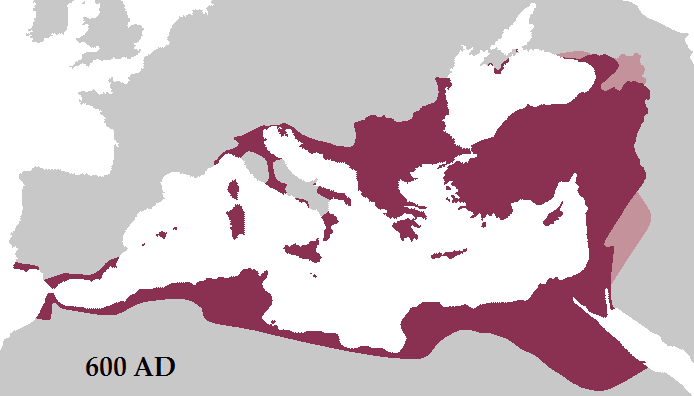
Historical context and broad trends
The date 600 is a convenient marker for historians who study the transition from late antiquity to the early medieval period. Around this time many regions experienced state consolidation, population movements, and religious change. Empires and polities that shaped the landscape included Byzantine and Sasanian realms in West Eurasia, the Sui dynasty in China, regional kingdoms across the Indian subcontinent, and multiple successor kingdoms in post-Roman Europe. Long-distance trade on the Silk Road and the Indian Ocean continued to connect distant regions.
Regional snapshots
- Europe: Fragmented post-Roman polities in Western Europe, with Merovingian and other dynasties establishing local power centers.
- East Asia: China under the Sui dynasty was reunified after centuries of disunity; political reforms and infrastructure programs were significant developments of the era.
- South Asia and Southeast Asia: A mosaic of regional kingdoms, active maritime trade, and flourishing artistic and religious life.
- Americas: Complex societies in Mesoamerica and the Andes continued to build urban centers and ceremonial architecture during their respective classic and formative phases.
Cultural and religious landscape
Religions such as Christianity, Buddhism, Hindu traditions, and local belief systems dominated different regions. The foundations for Islam would be established slightly later in the early 7th century, altering the political and religious map of the Middle East in subsequent decades. Literacy, artistic production, and technological transfer occurred unevenly but connected many zones through trade and diplomacy.
Numeric and calendrical notes
As an integer, 600 has the prime factorization 2^3 × 3 × 5^2 and twenty-four positive divisors (for example 1, 2, 3, 4, 5, 6, 8, 10, 12, 15, 20, 24, 25, 30, 40, 50, 60, 75, 100, 120, 150, 200, 300, 600). In calendar terms, the label "600" is a retrospective assignment: contemporaries used different local dating systems, and historians commonly reference the proleptic Gregorian or the Julian calendar when synchronizing events across regions. For general reference on how such calendar conventions are applied see chronological and calendrical studies.
Significance
While any single calendar year is an arbitrary slice of time, the year 600 is useful as a shorthand for studying a period of political realignment and cultural exchange. It helps mark the end of one long era and the emergence of social and political formations that shaped the medieval world.
Related articles
Author
AlegsaOnline.com Year 600 (common year) Leandro Alegsa
URL: https://en.alegsaonline.com/art/112998