
476 (AD): Deposition of the last Western Roman emperor
Year 476 AD, a Julian leap year often cited for the deposition of Romulus Augustulus by Odoacer and the conventional end of the Western Roman Empire; its significance and continuing debates explained.
476 AD was a leap year of the Julian calendar and is widely remembered for a political rupture in Italy that has long served as a convenient marker between antiquity and the medieval period. The year is most often identified with the removal of the young emperor Romulus Augustulus and the rise of the Germanic commander Odoacer.
Image gallery
2 Images
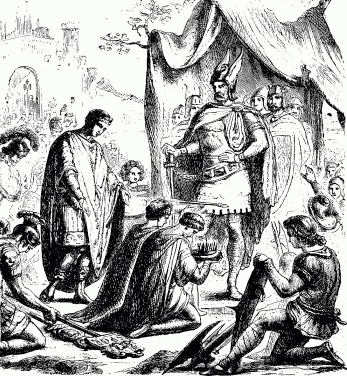
Main events
In September 476 Romulus Augustulus, a child-emperor placed on the throne by his father and general Flavius Orestes, was deposed by Odoacer, leader of a coalition of Germanic mercenaries. Odoacer chose to rule Italy as king rather than appoint another Western emperor. He reportedly transferred imperial insignia to the Eastern Roman emperor, Zeno, signaling that separate Western imperial authority was no longer necessary in his view.
Background and immediate consequences
The deposition followed decades of political fragmentation, repeated invasions, and the dependence of Roman armies on barbarian federates. By 476 central control in the western provinces had already weakened: local military leaders, barbarian kingdoms, and powerful magnates exercised most practical authority. Odoacer’s takeover created a new political arrangement in Italy, but many Roman administrative structures, laws, and cultural practices continued under his rule.
Significance and historiography
Historians often cite 476 as the conventional end of the Western Roman Empire and a symbolic start of the Middle Ages in Western Europe. Modern scholarship, however, stresses continuity as well as change: Roman law, urban life, the Church, and the Eastern Roman (Byzantine) state survived and adapted. Some scholars argue that the transformation was gradual and that other dates or processes better capture the transition.
Other notable aspects
- Calendar: 476 was a leap year under the Julian system, which added an intercalary day every fourth year.
- Numbers: as an integer, 476 factors as 2^2 × 7 × 17.
- Legacy: the year remains a focal point in school curricula and popular histories and is frequently discussed in debates about periodization and the end of antiquity.
For an overview and further reading on the events and debates surrounding this year, see sources grouped under 476 AD.
Related articles
Author
AlegsaOnline.com 476 (AD): Deposition of the last Western Roman emperor Leandro Alegsa
URL: https://en.alegsaonline.com/art/112910