
3D printing (additive manufacturing): overview, methods, materials, and uses
3D printing, or additive manufacturing, builds objects layer by layer from digital models. This article explains common technologies, materials, history, applications, benefits, and limitations.
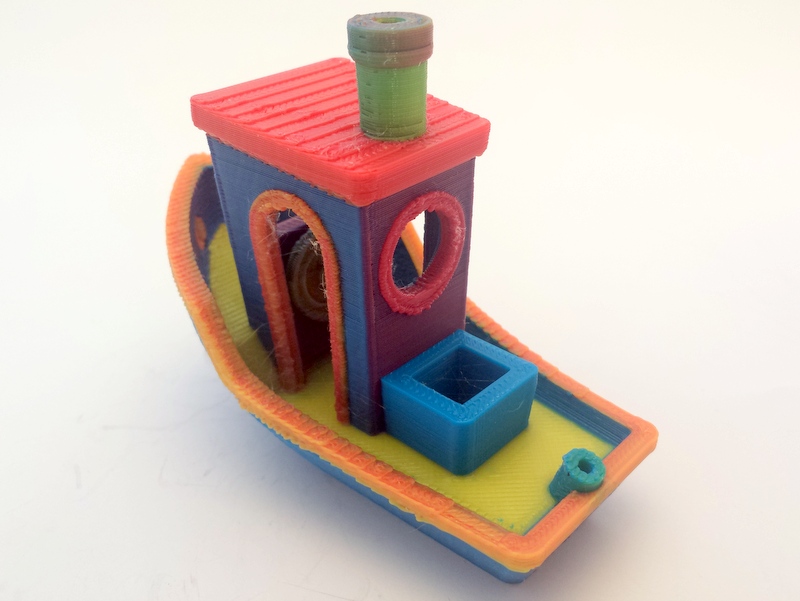
3D printing, commonly called additive manufacturing, is a family of processes that create three-dimensional solid objects by depositing, fusing, or curing material one layer at a time from a digital design. A 3D model produced in computer-aided design (CAD) software is translated into a slice-by-slice instruction set (a "sliced" file) that guides the printer. The layerwise approach contrasts with traditional subtractive methods, and it enables rapid iteration, geometric complexity, and on-demand production.
Image gallery
10 Images





Main technologies
- Fused deposition modeling (FDM/FFF) — melts and extrudes thermoplastic filament to build layers; common in consumer and prototyping printers.
- Stereolithography (SLA) — uses a light source to cure liquid photopolymer resin, producing fine detail and smooth surfaces.
- Selective laser sintering (SLS) — fuses powdered materials (plastic, nylon) with a laser, useful for complex, durable parts without support structures.
- Metal powder methods (DMLS/SLM) — use lasers or electron beams to fuse metal powders into dense metal parts for industry applications.
- Binder jetting and material jetting — deposit binders or droplets to produce parts or color models; suitable for sand casting patterns and full-color prototypes.
Each method has trade-offs in surface finish, material choices, resolution, speed, and cost. Some techniques require support structures, post-processing, or heat treatment to achieve required properties.
Materials
Many desktop and workshop printers use plastics such as PLA and ABS because they are inexpensive and easy to handle. Professional and industrial printers can work with cured resins, sintered metals like stainless steel or titanium, and engineered ceramics. Composite filaments, carbon-fiber blends, and flexible elastomers extend the range of mechanical properties. Material choice depends on performance needs, cost, and the intended application.
History and development
The first commercial 3D printing processes were developed in the 1980s, when technologies such as stereolithography appeared. Later innovations, including fused deposition processes, broadened access. Patent expirations and open-source initiatives in the 2000s helped lower prices and spurred hobbyist and small-business adoption. Since then, both consumer-grade and industrial systems have diversified, and ecosystems of software, materials, and services have grown.
Applications and examples
3D printing is widely used for rapid prototyping, allowing designers and engineers to test and refine parts without long lead times. Manufacturing uses include jigs and fixtures, custom tooling, low-volume production, and replacement parts. In medicine, 3D printing supports dental models, surgical guides, and patient-specific implants. Other fields include aerospace, automotive, education, architecture, art, and consumer products. Emerging areas such as bioprinting and multi-material printing are expanding potential uses.
Advantages and limitations
Advantages include fast iteration, the ability to produce complex internal geometries, reduced material waste compared with subtractive methods, and on-demand manufacturing that shortens supply chains. Limitations include slower production for large volumes, anisotropic mechanical strength (parts are often weaker along layer lines), variable surface finish requiring post-processing, material and equipment cost (especially for metal printers), and regulatory or certification hurdles for critical parts.
As the technology matures, trends include better multi-material printing, improved materials with higher performance, recycling and circular-economy initiatives for feedstock, and tighter standards for industrial and medical use. 3D printing remains a versatile tool that complements traditional manufacturing rather than entirely replacing it.
Questions and answers
Q: What is 3D printing?
A: 3D printing is a way of creating three dimensional (3D) solid objects by building up the object layer by layer.
Q: What materials are usually used for 3D printing?
A: Plastic is usually used for 3D printing because it is easier to use and cheaper. Some 3D printers can print with other materials like metals and ceramics, but they cost too much money for most people.
Q: What makes 3D printers useful?
A: 3D printers are useful because they can make new objects very fast, and are good at making them very detailed. This means an engineer can test a lot of new designs and not have to wait for someone else to make them. They are also useful for fixing parts made of plastic, and for making toys, figures, and models.
Q: Who uses 3D printers?
A: There are a lot of people who print 3D objects at home. Since 2003, many more materials printers have been sold than before. Also, the cost of 3D printers has gone down which makes them accessible to more people.
Q: How long has the technology been around?
A: The technology has been around since 2003 when many more materials printers were sold than before.
Q: How much do most 3d Printers cost?
A: Most 3d Printers cost less now than they did in 2003 due to advancements in technology that have allowed prices to go down significantly over time.
Related articles
Author
AlegsaOnline.com 3D printing (additive manufacturing): overview, methods, materials, and uses Leandro Alegsa
URL: https://en.alegsaonline.com/art/112863
Sources
- theengineer.co.uk : "The rise of additive manufacturing"
- createitreal.com : "3D Printer Technology - Animation of layering"
- all3dp.com : "How Much Does a Metal 3D Printer Cost in 2019?"
- ptonline.com : "3D Printers Lead Growth of Rapid Prototyping (Plastics Technology, August 2004)"
- dx.doi.org : "You Read It Here First"
- doi.org : 10.1126/science.291.5501.39b
- bases-brevets.inpi.fr : "Notice"
- v3.espacenet.com : v3.espacenet.com/textdoc?DB=EPODOC&IDX=.html
- fundinguniverse.com : "History of Stratasys, Inc. – FundingUniverse"
- cambridge.org : "RepRap – the replicating rapid prototyper"
- doi.org : 10.1017/S026357471000069X
- digitaltrends.com : digitaltrends.com/cool-tech/history-of-3d-printing-milestones/
- 3ders.org : "AMT-SPECAVIA builds Europe's first habitable 3D printed building"
- sciencedirect.com : "Design of a High-Precision 3D-Coordinate Measuring Machine"
- doi.org : 10.1016/S0007-8506(07)62871-6