
2006 Lebanon War (Second Lebanon War)
A 34-day conflict in July–August 2006 between Hezbollah and Israel, marked by heavy rocket fire, Israeli air and ground operations, large civilian displacement, and a UN-brokered ceasefire (UNSCR 1701).
Overview
The 2006 Lebanon War, often called the Second Lebanon War, was a brief but intense conflict fought from 12 July to 14 August 2006 between the Israeli military and the Lebanese Shi'a militia and political movement Hezbollah. The immediate trigger was a cross-border raid in which several Israeli soldiers were killed and two were captured by Hezbollah forces. Israel responded with large-scale air strikes, artillery bombardment and a partial ground invasion; Hezbollah fired thousands of rockets into northern Israel. The fighting lasted 34 days and ended after a UN-mediated ceasefire.
Image gallery
10 Images


Course and military characteristics
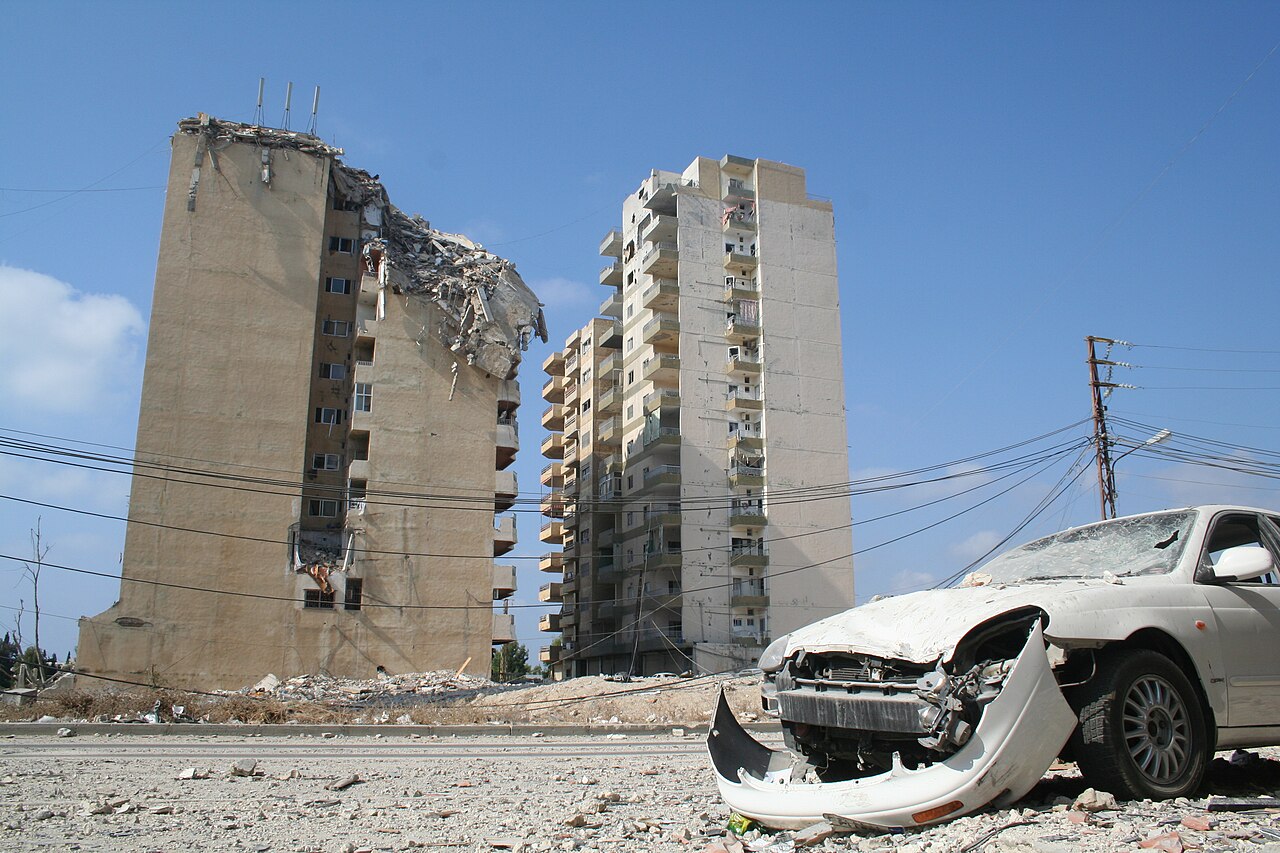
The campaign combined asymmetric and conventional elements. Israel relied on air power, naval blockades and targeted ground operations to degrade Hezbollah's capabilities, infrastructure and supply lines. Hezbollah used an extensive rocket arsenal, anti-tank guided missiles and fortified positions in southern Lebanon, as well as guerrilla-style tactics. Urban areas and civilian infrastructure on both sides were affected, with intense bombardment around border towns and the Bekaa Valley.
- Israeli operations: sustained aerial strikes, artillery barrages, limited ground incursions and naval interdiction.
- Hezbollah tactics: rocket barrages into Israeli population centers, ambushes and use of fortified bunkers and tunnels.
- Geography: fighting concentrated along the Israel–Lebanon border and northern Israel, with some operations deeper into Lebanon.
Humanitarian impact and casualties
The conflict produced substantial civilian harm and displacement. Estimates widely cited after the war reported roughly 1,109 Lebanese fatalities and 159 Israeli fatalities, with many more wounded. Over one million people on both sides were temporarily displaced as towns and villages came under attack or were evacuated. Critical infrastructure — homes, roads, power and communications — suffered extensive damage, complicating relief and recovery efforts. The conduct of operations drew international concern over civilian protection and proportionality.
Political outcome and international response
Hostilities formally ended with the adoption of United Nations Security Council Resolution 1701 on 14 August 2006. The text called for a cessation of hostilities, the deployment of the Lebanese armed forces to the south, reinforced UN peacekeepers, and measures aimed at preventing the re-arming of militias. The resolution was negotiated and passed by the United Nations Security Council and endorsed by the wider United Nations membership. Implementation and enforcement proved difficult, and questions about Hezbollah's armament and the long-term stability of the border region persisted.
Aftermath and significance
The war left lasting political and security effects in Lebanon and Israel. In Lebanon the conflict intensified debates over Hezbollah's military role and strained the country’s infrastructure and economy. In Israel it sparked public scrutiny of military preparedness and triggered inquiries into the government’s handling of the crisis. Regionally, the war illustrated the challenges of confronting armed non-state actors embedded within civilian populations and highlighted the limits of military force to achieve decisive political outcomes.
Notable facts and distinctions
- The 2006 conflict is often distinguished from the 1982 and other Lebanon wars by Hezbollah's use of sustained rocket fire into Israeli towns and by the prominence of an organized non-state armed group as a central combatant.
- International relief agencies, diplomatic actors and UN peacekeepers played significant roles in ceasefire monitoring and post-conflict reconstruction.
- Discussion about lessons learned from the conflict influenced later military planning, rules of engagement and debates about civil defense for border communities.
For contemporary context and primary documents related to the ceasefire and international response, see materials referenced by the parties and by international organizations. Additional archival reporting and official inquiries from both countries provide further detail on operational conduct, decision-making and post-war reconstruction efforts. Links to organizational profiles and statements appear under institutional references such as Hezbollah, the Israeli armed forces represented here as the Israeli military, and UN bodies like the United Nations and the UN Security Council.
Related articles
Author
AlegsaOnline.com 2006 Lebanon War (Second Lebanon War) Leandro Alegsa
URL: https://en.alegsaonline.com/art/112382