
1950 United States Census
The Seventeenth United States Census, taken April 1, 1950, counted 150,697,361 people (a 14.5% rise since 1940) and documented early postwar demographic changes used for apportionment and research.
Overview
The 1950 United States Census, formally the Seventeenth United States Census, was the nation’s decennial population count conducted for April 1, 1950. It produced a reported total population of 150,697,361, reflecting growth during the early post‑World War II era. The operation was carried out by the Census Bureau through a nationwide network of enumerators and questionnaires.
Image gallery
5 Images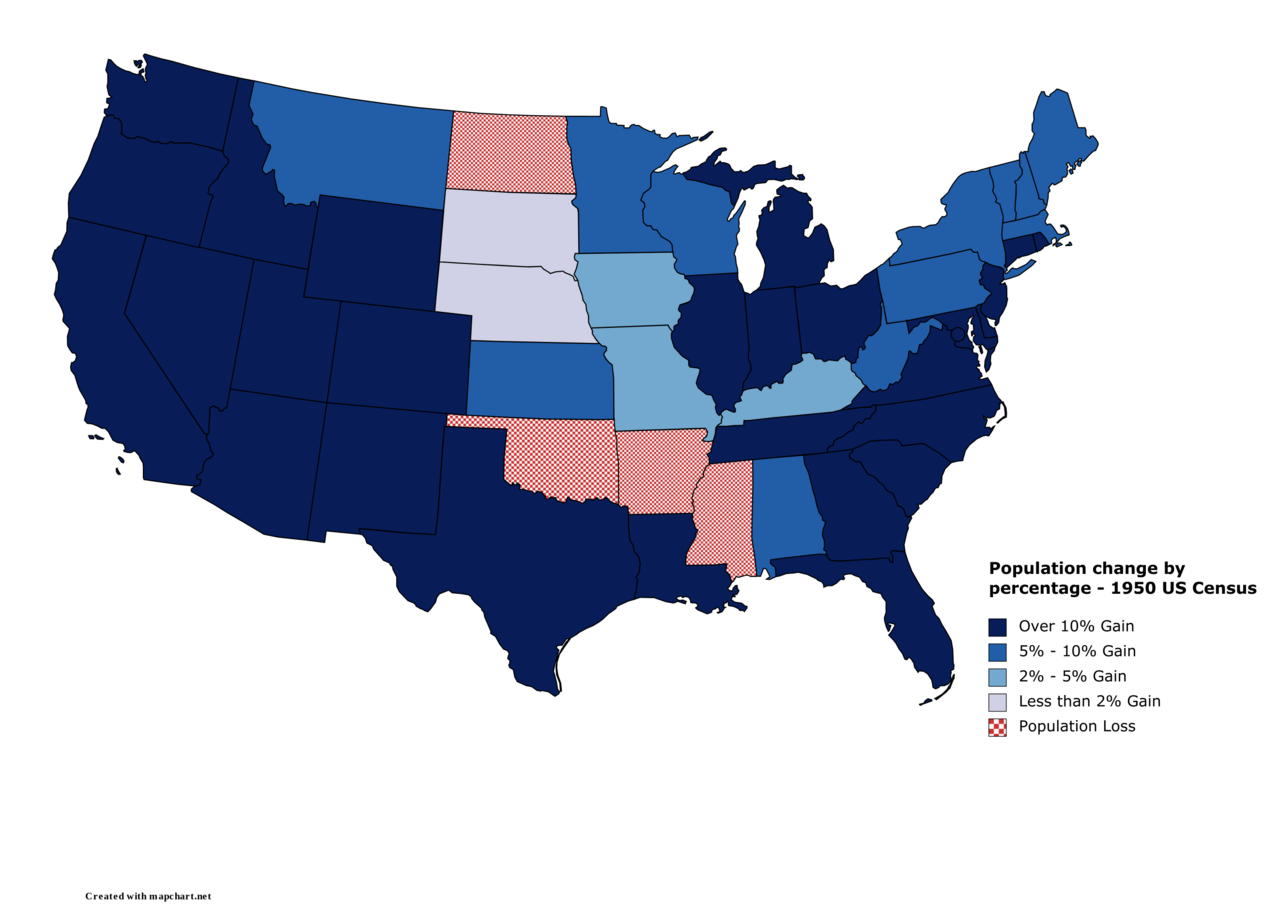



Key results and comparisons
Officials published the headline figure of 150,697,361 residents and noted this represented a 14.5% increase over the previous decennial count. That increase was measured against the figures from the 1940 Census. The total documented the combined effects of returning servicemembers, early years of the postwar baby boom, and internal migration patterns.
Context and demographic trends
In 1950 the United States was experiencing rapid social and economic change. Urban and suburban growth accelerated as housing construction and automobile ownership expanded. Migration toward the Sun Belt and from rural to metropolitan areas began shaping regional population shifts that influenced political representation and infrastructure planning for the following decades.
Uses and significance
The census figures provided the basis for federal apportionment of seats in the House of Representatives, state redistricting, and the distribution of various federal funds. Researchers, planners, and genealogists rely on these counts to study mid‑century demographics, economics, housing, and family structures.
Publication and later access
Summary reports, tabulations, and statistical analyses were issued by the Census Bureau; detailed individual census records are subject to confidentiality rules and long‑term archival release policies. Under the standard archival rule that makes personal census records public after 72 years, the 1950 individual records became available for research in the early 2020s, opening a rich source for family historians and scholars.
Notable facts and limitations
- The count was the first to exceed 150 million people in the United States, a milestone in national growth (United States population).
- Censuses can undercount or overcount certain populations; historians and demographers treat the totals alongside methodological notes and sampling error discussions when interpreting trends.
- Data from 1950 continue to inform long‑term studies of postwar economic development, migration, and urbanization.
For researchers seeking primary materials or official publications, the Census Bureau remains the central source of historical tables and methodological documentation; archival centers and genealogical repositories also provide digitized and indexed access to many 1950 records.
Related articles
Author
AlegsaOnline.com 1950 United States Census Leandro Alegsa
URL: https://en.alegsaonline.com/art/112015
Sources
- www2.census.gov : "Population and Area (Historical Censuses)" · web.archive.org