
1642 — Year of war, exploration, and scientific transition
Overview of the year 1642, covering the start of the English Civil War, major explorations by Abel Tasman, founding of Montreal, cultural works like Rembrandt's The Night Watch, and the deaths and births of Galileo and Newton.
1642 was a year of wide-ranging change across politics, exploration, science and the arts. It is remembered for the outbreak of armed conflict in England, notable voyages into the South Pacific, major urban foundations in North America, and striking coincidences in the history of science and painting. These events mark 1642 as a year when older orders confronted new forces of warfare, empire and knowledge.
Image gallery
8 Images



Notable events
- England: Tensions between King Charles I and Parliament escalated into open war, initiating the English Civil War.
- Exploration: Dutch navigator Abel Tasman made voyages that brought parts of Tasmania and New Zealand to European attention.
- North America: The settlement of Ville-Marie (later Montreal) was established by French colonists.
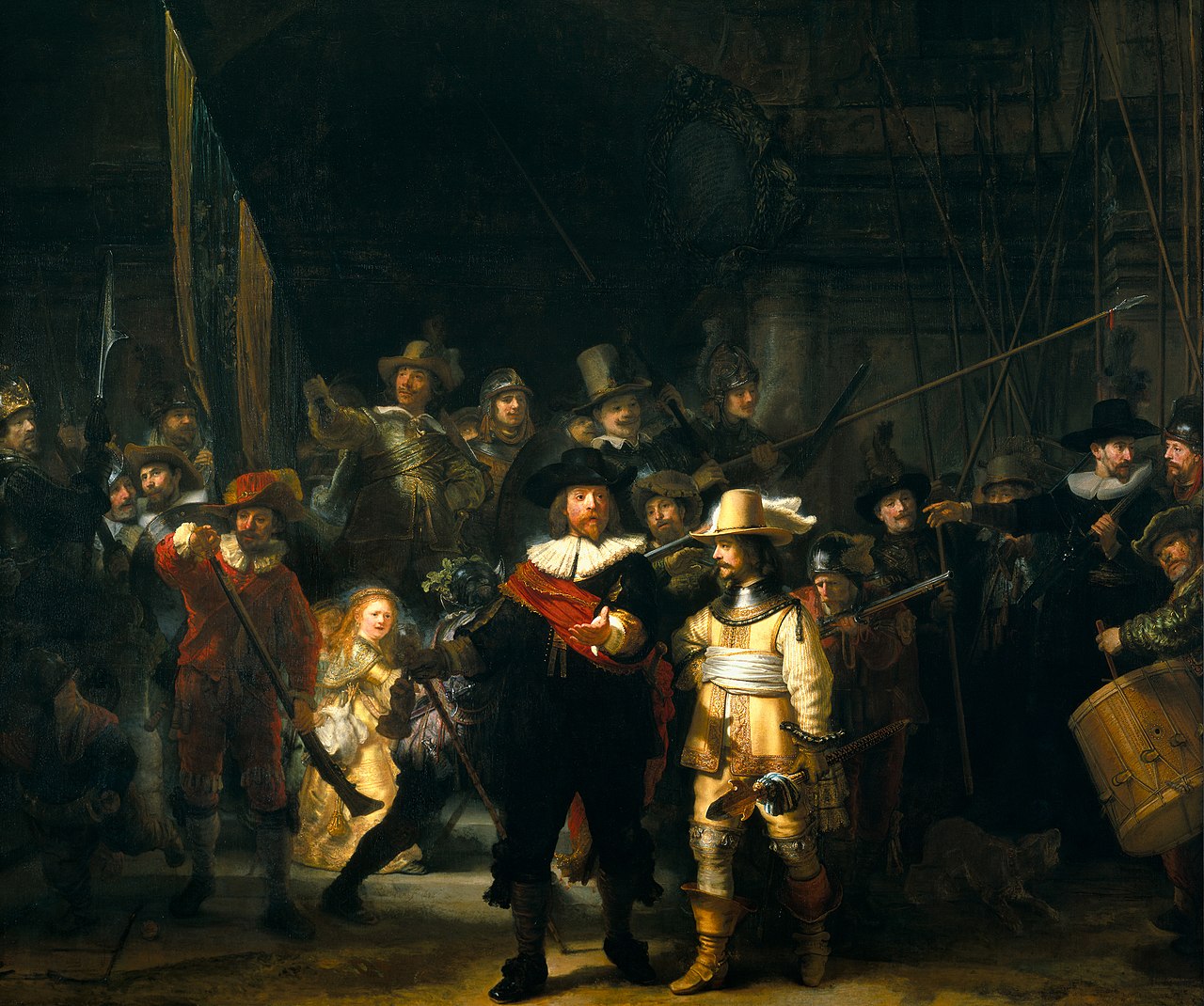
- Science and arts: The Italian astronomer Galileo Galilei died and, in the same year, Isaac Newton was born in England. In the Netherlands, Rembrandt completed The Night Watch.
- China: Severe destructive flooding occurred at Kaifeng amid the late-Ming internal conflicts.
The English Civil War began after a prolonged constitutional and religious struggle between King and Parliament. By raising his standard and calling supporters to arms, the king and his opponents moved from political contest to battlefield confrontation, a transformation that would reshape English governance and society over the following decade.
European maritime expansion continued to open new regions to sustained contact. Abel Tasman, sailing for the Dutch East India Company, charted islands and coastlines in the southern Pacific, including the islands now known as Tasmania and parts of New Zealand. In North America, French missionaries and settlers founded Ville-Marie, which grew into an important colonial and commercial center.
1642 also marks a cultural and scientific crossroads. The great astronomer Galileo, whose work laid foundations for modern physics and astronomy, died that year. At roughly the same time in England, Isaac Newton, later central to the scientific revolution, was born. In the arts, Rembrandt’s dramatic civic painting commonly called The Night Watch dates to 1642 and exemplifies Baroque developments in composition and light.
Overall, 1642 stands out as a year when political upheaval, overseas expansion and intellectual change intersected, setting trajectories that shaped later seventeenth-century history in Europe, Asia and the Americas.
Related articles
Author
AlegsaOnline.com 1642 — Year of war, exploration, and scientific transition Leandro Alegsa
URL: https://en.alegsaonline.com/art/111578