
1649: Regicide, the English Commonwealth, and wider consequences
A pivotal year: the execution of Charles I and abolition of the monarchy, the declaration of the English Commonwealth, Cromwell’s campaign in Ireland, and the Maryland Toleration Act—events that reshaped politics and religion.
Overview
1649 was a decisive year in British and colonial history. The execution of King Charles I and the formal abolition of the monarchy in England inaugurated a republican interlude known as the Commonwealth. Simultaneously, military campaigns and political realignments in Ireland and Scotland continued the turmoil begun during the Civil Wars. Across the Atlantic, developments in English North America reflected questions of religious liberty and governance.
Image gallery
10 Images







Major events
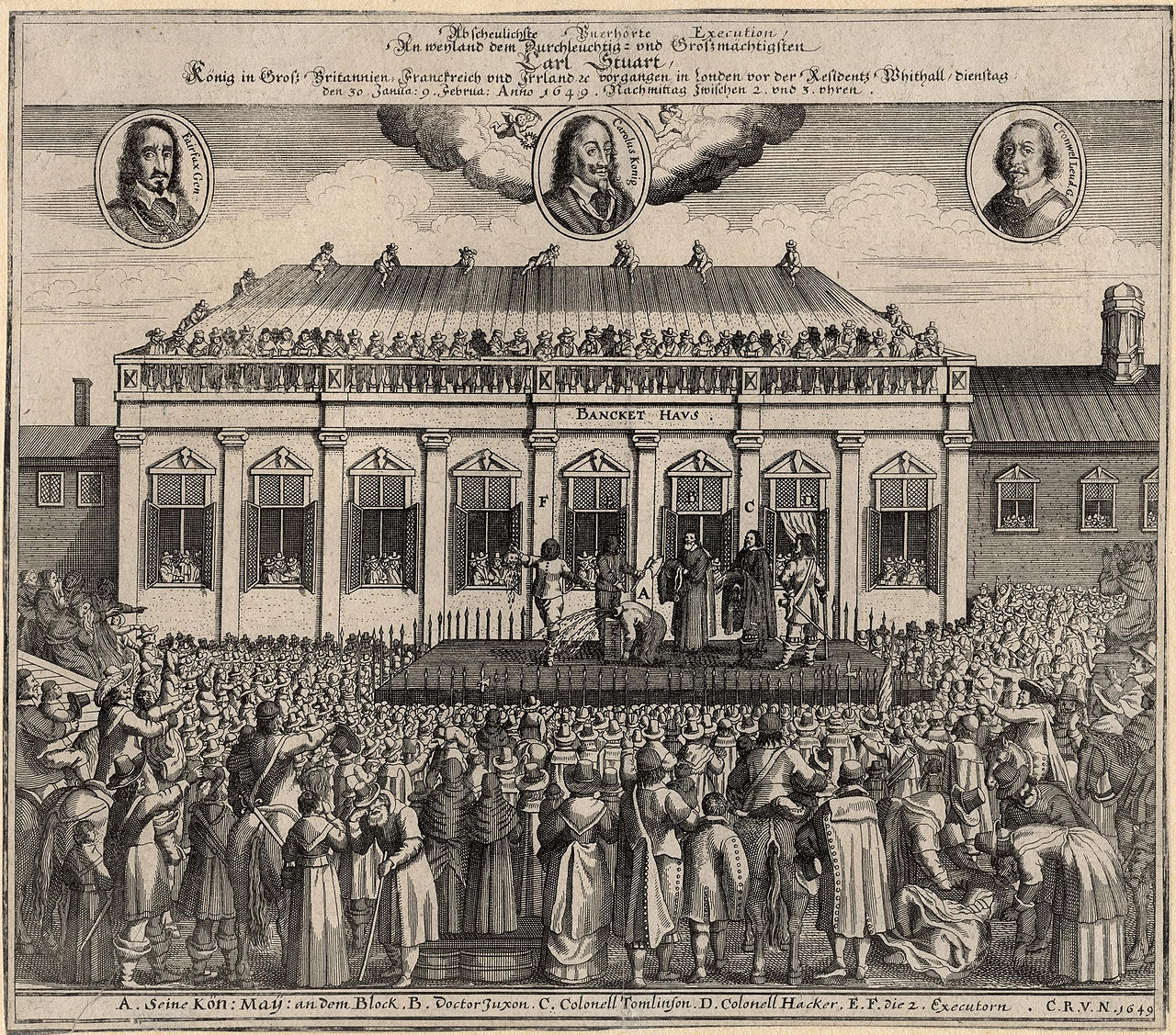
- Execution of Charles I: On January 30, 1649, Charles I was executed after his trial by a parliamentary court, an act that shocked contemporaries and marked a sharp break with the doctrine of divine right monarchy.
- Commonwealth of England: After the king’s death, Parliament declared England a commonwealth and republic, abolishing the crown and the House of Lords. Government during this period was dominated by the Rump Parliament and by senior military figures.
- Cromwell in Ireland: English forces under Oliver Cromwell began a vigorous campaign to suppress Royalist and Confederate resistance in Ireland; sieges and battles that year, notably at Drogheda and Wexford, had profound human and political consequences.
Scotland, the colonies, and religion
Scotland reacted to the regicide by declaring Charles II king and maintaining a separate military and political stance, prolonging the conflict between the kingdoms. In the English colonies, religious and political disputes continued to shape society. The Maryland Assembly adopted the Toleration Act in 1649, granting limited protection to Christians of various denominations and representing an early colonial statute concerning religious toleration.
Legal and cultural significance
The events of 1649 raised enduring questions about sovereignty, law, and conscience. The trial and execution of a reigning monarch challenged prevailing notions of absolute rule and inspired intense debate in pamphlets, sermons, and legal writings across Europe. The republican experiment in England was short-lived in its original form but influenced later constitutional developments and the balance between parliamentary and executive authority.
Consequences and legacy
Militarily and politically, the actions of 1649 reshaped landholding, governance, and sectarian relations—especially in Ireland, where the outcomes altered property and social structures for generations. In the Atlantic world, statutes such as Maryland’s Toleration Act foreshadowed longer-term struggles over religious freedom and the relationship between church and state. Historically, 1649 remains a symbol of radical interruption and contested authority in the early modern period.
Notable points
- The year is remembered primarily for regicide and the temporary abolition of monarchy in England.
- Its political and religious reverberations affected Britain, Ireland, and the colonial Atlantic, shaping debates about rights, governance, and belief.
Related articles
Author
AlegsaOnline.com 1649: Regicide, the English Commonwealth, and wider consequences Leandro Alegsa
URL: https://en.alegsaonline.com/art/111585