
1581 — political change, maritime achievement, and cultural context
Year 1581: the Dutch provinces formally repudiated Spanish rule, Sir Francis Drake was knighted, and Europe remained entangled in religious conflict amid expanding global voyages.
1581 was a year shaped by political realignment in northern Europe, continuing religious conflict across the continent, and expanding Atlantic maritime activity. It sits in the later Renaissance and in the middle decades of the long struggle between Protestant and Catholic states that defined much of 16th-century European affairs. The year is best remembered for a formal Dutch repudiation of Spanish sovereignty and for a celebrated English maritime return.
Image gallery
10 Images




Major events
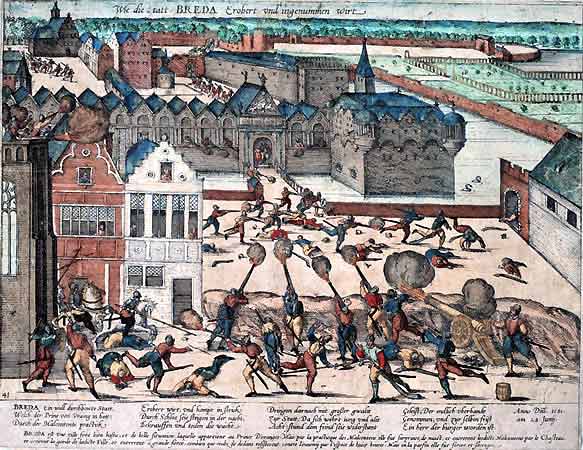
- Act of Abjuration (26 July 1581) — Several provinces in the Low Countries declared that they no longer recognized King Philip II of Spain as their sovereign, a foundational step toward the independence of the northern provinces during the Eighty Years' War.
- Sir Francis Drake — The English seaman and privateer returned from his circumnavigation and was publicly honoured by Queen Elizabeth I; his voyage underlined the growing global reach of English seafaring and the competitive nature of Atlantic expansion.
- Ongoing conflicts — Fighting and political maneuvering continued in the Spanish Netherlands, France, and the British Isles as local and international powers vied for territory, influence, and religious conformity.
These developments reflected wider patterns of the period: emerging nation-state identities, the spread of print culture that circulated political and religious ideas, and intensifying maritime competition among Portugal, Spain, England, and the Netherlands.
Culture, science and exploration
Intellectual and artistic life in 1581 remained rooted in Renaissance traditions, with courts and cities supporting literature, music, and visual arts. Printing presses continued to disseminate religious tracts, political proclamations, and scholarly works, accelerating debates about governance and faith. Exploration and privateering brought new commercial opportunities and geopolitical rivalries into sharper relief, as voyages returned with news, goods, and claims that would reshape overseas empires in the following decades.
Although no single scientific breakthrough defines 1581, the year belongs to an era of gradual accumulation of navigational knowledge, mapmaking refinement, and practical innovations that enabled longer ocean voyages and the expansion of trade networks.
Legacy and significance
The formal repudiation of Spanish rule by provinces in the Low Countries marked a decisive moment in the long process that created the Dutch Republic, an important player in 17th-century commerce and finance. Meanwhile, celebrated maritime achievements by figures such as Francis Drake symbolized the rise of seafaring nations that would contest Iberian dominance. Together, these strands—political independence movements, religious conflict, and oceanic expansion—help explain the political and cultural dynamics that carried Europe into the early modern period.
Related articles
Author
AlegsaOnline.com 1581 — political change, maritime achievement, and cultural context Leandro Alegsa
URL: https://en.alegsaonline.com/art/111509