
1590 (year)
Summary of the year 1590, a late 16th-century common year marked by early English colonization efforts, Toyotomi Hideyoshi's consolidation in Japan, and ongoing confessional and dynastic conflicts in Europe.
Overview
1590 was a common year in the closing decades of the 16th century, situated in the late Renaissance and the early modern era. It was not defined by a single global turning point, but by a set of regional episodes that illustrate major trends of the period: European overseas expansion and colonial experiments, military and political consolidation in East Asia, and continuing religious and dynastic conflicts across Europe. Communication and travel remained slow by modern standards, so many events had local consequences that later connected to wider developments.
Image gallery
7 Images



Major events
- Roanoke and early English colonization: An English relief expedition under John White returned to the Roanoke settlement on the coast of present-day North Carolina and found the colony abandoned. The fate of the so-called "Lost Colony" remains a subject of research and speculation; contemporary reports noted a carving and the absence of clear signs of conflict.
- Unification of Japan: Toyotomi Hideyoshi completed decisive campaigns against the Hōjō clan, most notably the siege of Odawara, consolidating his authority over much of Japan. These actions advanced a process of centralization after a long century of regional warlord rivalries and helped set the stage for a more unified state.
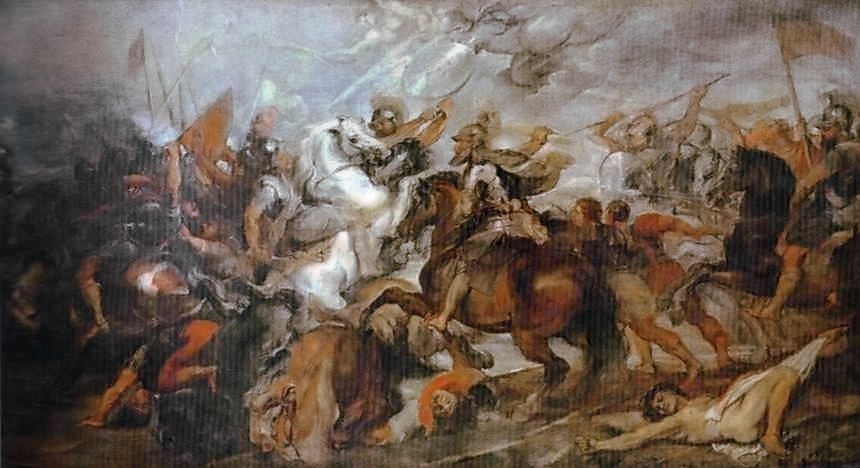
- French Wars of Religion and continental politics: The confessional wars in France continued to shape diplomacy and warfare. Rivalries among Spain, France, England and the Holy Roman Empire influenced shifting alliances and military operations across the continent, prolonging instability tied to religion and dynastic claims.
- Exploration and colonial activity: European voyages of exploration and coastal reconnaissance in the Americas and Asia continued. Spain and Portugal maintained extensive imperial networks, while England and France undertook further expeditions and trading ventures that would later support permanent colonies.
Context and significance
Events of 1590 are best understood as part of longer processes. The English experience at Roanoke highlighted the hazards and uncertainties of early colonization: limited supplies, dependence on indigenous relations, and logistical difficulties. In East Asia, Hideyoshi's campaigns brought many regional warlords under a central authority, reshaping Japan's political order. In Europe, the legacy of the Reformation and the Counter-Reformation continued to influence state policies, military mobilization and international diplomacy.
Culture, science and society
The year falls within a vibrant cultural moment. In Europe the printing press supported wider circulation of literature, religious tracts and scientific ideas; theatre, music and the visual arts flourished in different regional styles. Intellectual and practical inquiry advanced steadily, though characteristic scientific revolutions of the 17th century were still emerging. Social life remained organized around local hierarchies, but increasing state capacity and long-distance trade slowly altered economic and cultural patterns.
Calendar and chronology
1590 is described as a common (non-leap) year. Calendrical practice varied: the Gregorian calendar, introduced in 1582, was adopted by many Catholic states, while Protestant and Orthodox polities often continued to use the Julian calendar. As a result, dates in sources from this period sometimes differ by several days depending on jurisdiction, and historians take care when comparing contemporary records.
Notable facts
- The disappearance of Roanoke remains one of the most persistent mysteries in accounts of early English colonization; archaeological and documentary research continues to seek explanations.
- Toyotomi Hideyoshi's successes in this period were central to the political unification of Japan after decades of internecine conflict among daimyō.
- 1590 illustrates how local incidents—colonial failures, sieges, diplomatic maneuvers—fit into wider early modern transformations: overseas expansion, state formation and confessional conflict.
Related articles
Author
AlegsaOnline.com 1590 (year) Leandro Alegsa
URL: https://en.alegsaonline.com/art/111518