
1555 — Year of treaties and religious settlement in mid‑16th‑century Eurasia
1555 saw major diplomatic and religious settlements: the Peace of Augsburg in the Holy Roman Empire, the Treaty of Amasya between Ottomans and Safavids, and a rapid papal succession that shaped the Counter‑Reformation.
Overview
The year 1555 is notable less for a single dramatic incident than for several diplomatic and religious settlements that shaped European and Near Eastern politics. Rulers and negotiators sought to manage confessional, dynastic and imperial tensions through compromise, treaties and changes of leadership. These arrangements had lasting effects on state formation, religious law and international boundaries.
Image gallery
7 Images





Major events
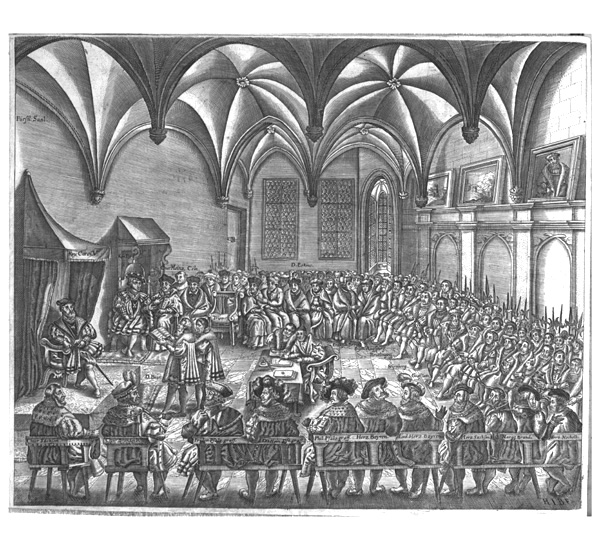
- Peace of Augsburg (1555): A settlement within the Holy Roman Empire that allowed each territorial prince to determine whether Lutheranism or Roman Catholicism would prevail in his lands, expressed in the principle usually summarized as cuius regio, eius religio. The agreement ended large-scale imperial warfare between Charles V's forces and many German princes but did not extend legal protection to other Protestant confessions such as Calvinism.
- Treaty of Amasya (1555): A diplomatic accord between the Ottoman Empire and the Safavid Persian state that delineated frontier zones and curtailed decades of open warfare, creating a more stable border in the Near East and allowing both empires to concentrate on internal affairs and other fronts.
- Papal succession (1555): The papacy changed hands twice in quick succession. Following the death of Pope Julius III, Cardinal Giovanni dei Medici was elected as Marcellus II but reigned only briefly; he was succeeded by Pope Paul IV (Gian Pietro Carafa), whose election signaled a more rigorous, often confrontational phase of Catholic reform and enforcement of doctrine.
Religious and political context
These settlements reflected attempts to stabilize authority in a fragmented Europe. The Peace of Augsburg institutionalized a territorial, ruler-centered solution to confessional conflict within the empire, but its exclusions left unresolved tensions that resurfaced in later decades. Within the Catholic world, papal leadership and local reform initiatives advanced the Counter‑Reformation: reforming clergy, tightening discipline and reinforcing doctrinal conformity.
Near East and international effects
The Treaty of Amasya eased Ottoman‑Safavid confrontation and produced a diplomatic understanding that held for a generation, shaping trade routes and regional power balances. With a more stable eastern frontier, the Ottoman state could direct attention to Mediterranean and European affairs, while the Safavids consolidated their authority in Persia.
Global and cultural background
Beyond Europe and the Near East, mid‑century global expansion continued. Iberian and other maritime empires extended trade networks, colonial administration and resource extraction in the Americas and Asia. Intellectual and cultural life moved forward with the spread of printing, vernacular literature and humanist learning; artistic and scientific developments of the Renaissance matured alongside the practical demands of governance and empire.
Significance and legacy
1555 is significant for the way compromise and diplomacy were used to manage explosive religious and territorial disputes. The Peace of Augsburg became a precedent for state-centered resolution of confessional conflict, even as its limits presaged later wars. The Amasya settlement altered Ottoman‑Safavid relations and regional geopolitics. Together, these outcomes influenced the political map and the balance of power into the late 16th and early 17th centuries.
Notable facts
- The Latin formula cuius regio, eius religio entered political vocabulary as shorthand for territorial confessional rules.
- The rapid papal turnover in 1555 demonstrated how leadership changes could redirect Catholic responses to Protestantism and international policy.
Related articles
Author
AlegsaOnline.com 1555 — Year of treaties and religious settlement in mid‑16th‑century Eurasia Leandro Alegsa
URL: https://en.alegsaonline.com/art/111481