
1480 (Year) — events, context and numerical properties
1480: a year at the close of the Middle Ages noted for the Great Stand on the Ugra River, Ottoman activity in Italy, and wider Renaissance developments; also treated as the integer 1480 with its mathematical traits.
1480 is a year in the late Middle Ages that is often singled out by historians for several turning points in Eurasian politics and for its place within the wider cultural transition to the Renaissance. Chronologically, it follows 1479 and precedes 1481. In historical summaries the date is remembered less for a single dominant event than for a cluster of developments that shaped state formation, warfare and cultural exchange across Europe and the Ottoman sphere.
Image gallery
2 Images
Notable events and political context
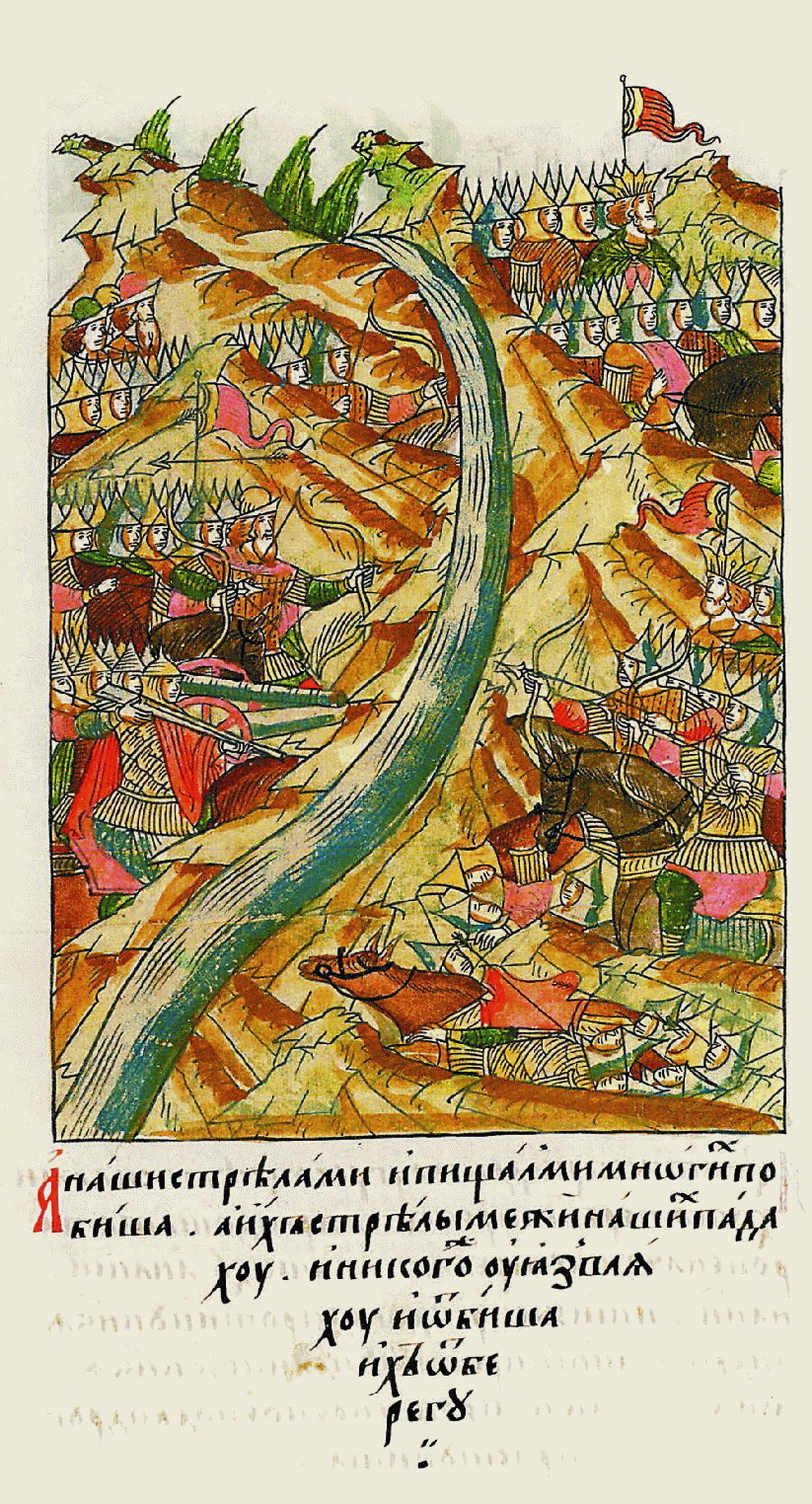
- The Great Stand on the Ugra River: In eastern Europe, the standoff on the Ugra River between the forces of Grand Prince Ivan III of Moscow and the Tatar army of the Great Horde is conventionally dated to 1480. The withdrawal of the Horde after the encounter is often taken as a landmark in the decline of Mongol-Tatar suzerainty over the principalities that became Muscovy.
- Ottoman actions in southern Italy: Ottoman forces undertook operations in the central Mediterranean, most prominently the capture of the port city of Otranto in southern Italy. Ottoman presence in the region underscored the volatile balance between western Italian states and Ottoman maritime power.
- Cultural and technological currents: The spread of printing, the mobility of artists and patrons, and intensified maritime exploration continued to mark the last decades of the 15th century, contributing to the political and intellectual landscape in which 1480 sits.
These events should be read as part of longer processes: the consolidation of centralized states in western and eastern Europe, the expansion of Ottoman influence in the Mediterranean, and the gradual diffusion of Renaissance learning and techniques from Italy to other regions.
1480 as a number
As an integer, 1480 is an even composite number. Its prime factorization is 2^3 × 5 × 37. It has 16 positive divisors, among them 1, 2, 4, 5, 8, 10, 20, 37, 40 and 740. The sum of its proper divisors exceeds the number (sum = 1,940), so it is classified as an abundant number. In Roman numerals it is written MCDLXXX.
Whether considered as a date or a quantity, 1480 occupies a transitional moment: historically at the hinge between medieval polities and early modern states, numerically a composite with simple prime factors. For readers exploring the era, 1480 is a useful focal point to trace longer developments in politics, warfare and culture across Eurasia.
Related articles
Author
AlegsaOnline.com 1480 (Year) — events, context and numerical properties Leandro Alegsa
URL: https://en.alegsaonline.com/art/111398