
1225 (number and year)
1225 is a number notable as 35² and a triangular number. As the year AD 1225 it saw the reissue of Magna Carta and dynastic manoeuvres in Europe and the Crusader states amid wider thirteenth‑century change.
Overview
1225 may denote the integer 1225 or the calendar year AD 1225. As a number it combines several elementary arithmetic properties that make it a common example in recreational and elementary number theory. As a year it falls in the High Middle Ages, a period of legal development, dynastic politics and Crusader activity in western Europe, and of large‑scale expansion and realignment across Eurasia.
Image gallery
1 Image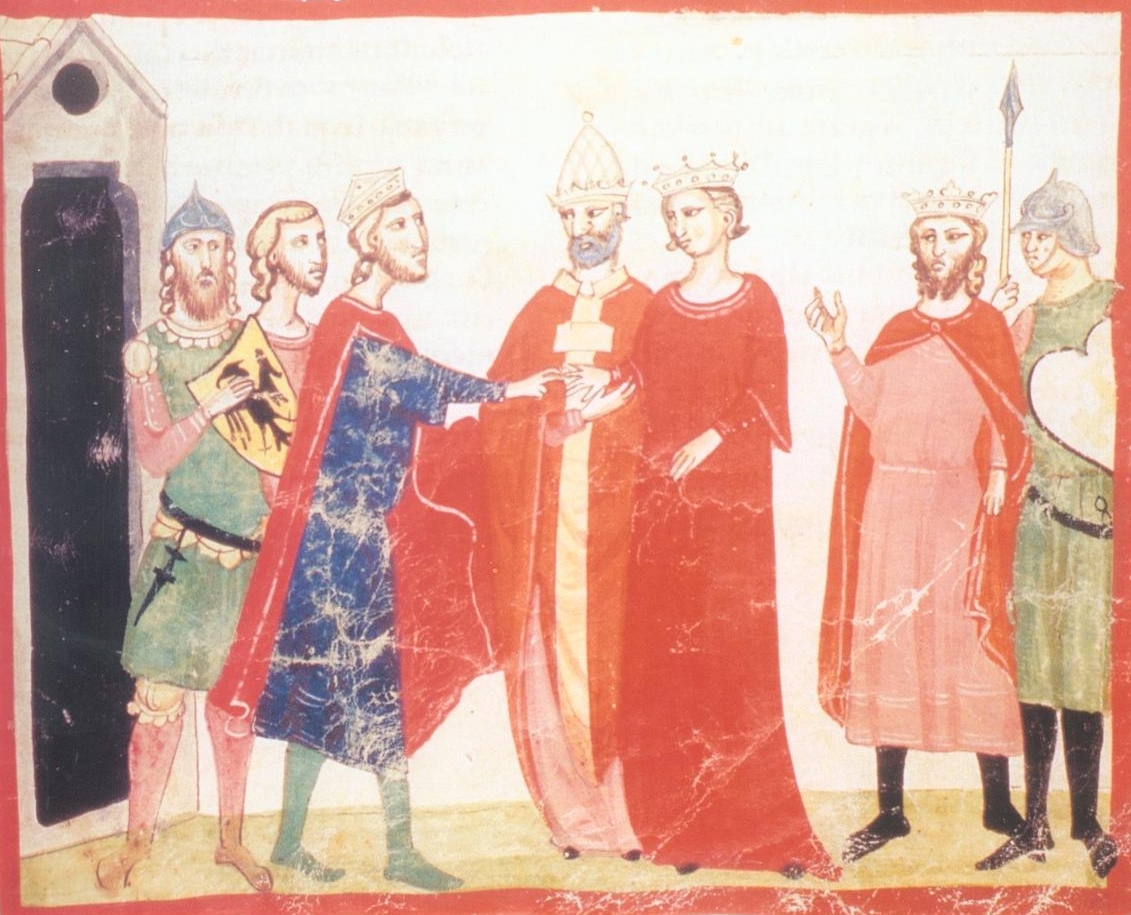
Mathematical characteristics
Arithmetically, 1225 = 35 × 35, so it is a perfect square. It is also triangular: 1225 = 49 × 50 / 2, the 49th triangular number, which means it is one of the integers that are both square and triangular. The number appears in basic combinatorics as 1225 = C(50,2), the number of unordered pairs that can be chosen from 50 items.
Notable arithmetic facts
- Perfect square: 1225 = 35².
- Triangular number: T49 = 1225, the sum of the first 49 positive integers.
- Binomial coefficient: 1225 = C(50,2), the number of distinct pairs from 50 objects.
- Prime factorization: 1225 = 5² × 7², so its divisors arise from those prime powers.
- Divisor arithmetic: the full set of positive divisors is 1, 5, 7, 25, 35, 49, 175, 245 and 1225; the sum of all divisors is 1767, making it a deficient number because the sum of proper divisors is less than the number itself.
Year AD 1225: historical context
The year 1225 sits within a dynamic phase of medieval history. In western Europe monarchs and magnates continued to negotiate rights, revenues and legal customs; the papacy was a major political actor; and campaigns in the eastern Mediterranean kept the Crusader states central to international diplomacy. Beyond Europe, the expanding Mongol polities were reshaping power structures across Asia, with long‑term consequences for Eurasian trade and politics.
Selected events and significance
One widely noted event in 1225 was an important confirmation of the charteral concessions in England: King Henry III issued a revised form of Magna Carta, a step that helped fix its clauses in later English constitutional practice. On the imperial and Mediterranean stage, rulers used marriages and dynastic claims to press territorial and crusading ambitions; for example, imperial marriage alliances of the period strengthened claims on Crusader territories and influenced subsequent campaigns. More broadly, the legal and institutional adjustments of the 1220s contributed to the evolving structures of royal government, feudal obligation and international diplomacy during the thirteenth century.
Both senses of 1225—numeric and chronological—therefore connect elementary mathematical interest with a year that exemplifies continuity and change in high medieval politics, law and international relations.
Related articles
Author
AlegsaOnline.com 1225 (number and year) Leandro Alegsa
URL: https://en.alegsaonline.com/art/111148