
1228 (number and year)
Overview of 1228 as an integer and as a calendar year: mathematical properties, representations, and notable historical events such as the Sixth Crusade and the canonization of Saint Francis.
Overview
1228 can refer either to the natural number that follows 1227 and precedes 1229, or to the calendar year 1228 in the Common Era (AD). As a number it has specific arithmetic properties and representations; as a year it appears in medieval European and Near Eastern history with several well-documented events.
Image gallery
1 Image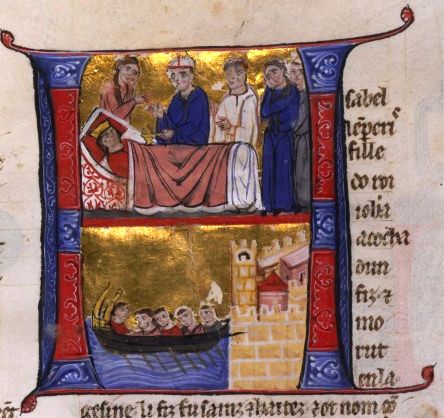
Mathematical properties
1228 is an even composite integer. Its prime factorization is 2^2 × 307, where 307 is a prime number. It has six positive divisors: 1, 2, 4, 307, 614 and 1228. The sum of all divisors is 2,156, so the sum of proper divisors (928) is less than 1228, making it a deficient number. Euler's totient function yields φ(1228) = 612.
Other common representations include the binary form 10011001100 and the Roman numeral MCCXXVIII. In arithmetic contexts 1228 appears as a simple example of a composite number with a small power of two factor multiplied by a larger prime.
Year 1228 (Common Era)
The year 1228 lies in the High Middle Ages. Two widely noted developments associated with that year are:
- The beginning of the Sixth Crusade led by Holy Roman Emperor Frederick II, an expedition notable for its diplomatic negotiations with the Ayyubid sultan al-Kāmil that ultimately produced temporary Christian control of some holy sites without major pitched battles.
- The canonization of Francis of Assisi by Pope Gregory IX on 16 July 1228, a key moment for the Franciscan movement and for popular religious life in Europe.
Cultural and historical significance
As a year, 1228 marks both the continuation of crusading politics in the eastern Mediterranean and a milestone in the recognition of mendicant religious orders in Western Christendom. As a number, 1228 is used in ordinary numbering systems: catalog numbers, product codes, addresses and other identifications where sequential integers are required.
Notable facts and distinctions
- 1228 is not a prime and is not squarefree (it contains 2^2).
- It is deficient, since the sum of its proper divisors (928) is smaller than the number itself.
- It appears in standard numeral systems with straightforward conversions (binary, Roman numerals) useful for examples in elementary number theory or historical dating.
Whether encountered in arithmetic problems or medieval chronicles, 1228 is a number that bridges mathematical description and historical reference, illustrating how a simple integer can carry both technical properties and associations with concrete events.
Related articles
Author
AlegsaOnline.com 1228 (number and year) Leandro Alegsa
URL: https://en.alegsaonline.com/art/111151