
1226 — the number and the year
Overview of 1226 as an integer (mathematical properties, factorization, classifications) and as a calendar year (notable events and historical context).
Overview
1226 can refer either to the integer one thousand two hundred twenty-six or to the calendar year 1226 in the Common Era. As a number it has simple arithmetic and classification properties that interest both recreational and elementary number theory. As a year, it appears in several well-documented medieval events in Europe and Asia and marks transitions in royal succession and military campaigns.
Image gallery
2 Images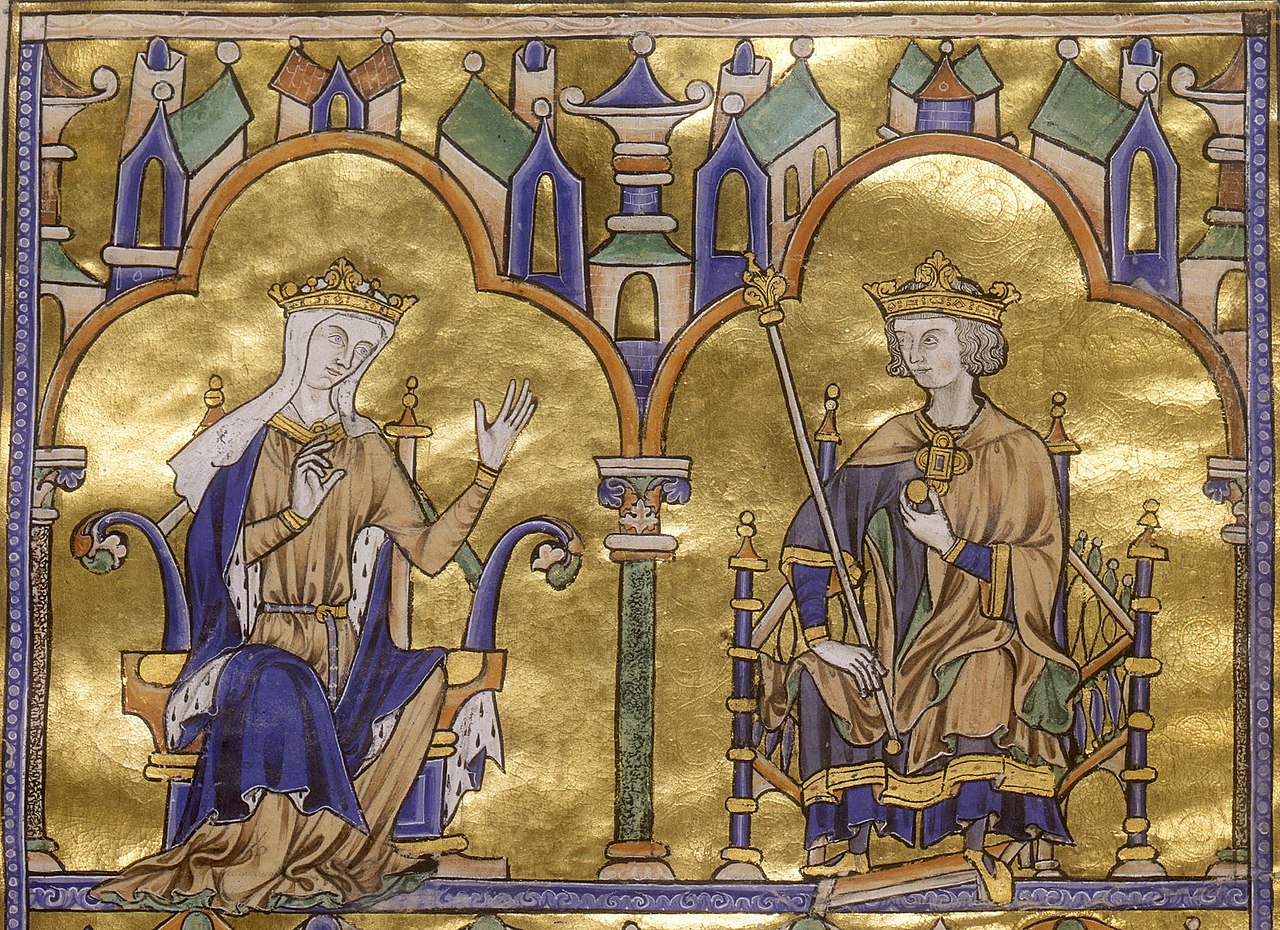

Mathematical properties
As an integer, 1226 is even and composite. Its prime factorization is 2 × 613, where 613 is a prime number; therefore 1226 is a semiprime (the product of exactly two primes). Its positive divisors are 1, 2, 613 and 1226. The sum of the proper divisors (1 + 2 + 613) equals 616, which is less than 1226, so the number is classified as deficient. The Euler totient function φ(1226) equals 612, since φ(2·613) = φ(2)·φ(613) = 1·612.
Representations and simple facts
In Roman numerals 1226 is written MCCXXVI. In decimal digits its digit sum is 1 + 2 + 2 + 6 = 11. In binary it is represented as 10011001010. These alternate representations are often used when discussing numeration systems or encoding values across computing and historical notation.
The year 1226 (Common Era)
The year 1226 falls in the High Middle Ages and is noted for several events with lasting significance. In Western Christendom, the founder of the Franciscan Order, Francis of Assisi, died in 1226. In France, the death of King Louis VIII in that year led to the minority of his son Louis IX, with Blanche of Castile acting as regent and shaping French politics during the young king's early reign. In Asia, the Mongol ruler Genghis Khan directed campaigns against the Tangut-led Western Xia state, a major phase in Mongol expansion that would continue into the late 1220s.
Uses and cultural references
Beyond mathematics and history, the number 1226 sometimes appears in cataloging systems, product model numbers, postal codes, or scholarly references where numeric identifiers are needed. Its dual identity as both an integer and a dated year makes it a compact label in databases, chronologies and index systems.
Notable distinctions
- Semiprime: product of two primes (2 and 613).
- Deficient number: proper divisors sum to less than the number.
- Historical year: connected to the deaths and successions of major medieval figures and to Mongol military activity.
Related articles
Author
AlegsaOnline.com 1226 — the number and the year Leandro Alegsa
URL: https://en.alegsaonline.com/art/111149