
1218 (number and year)
Overview of 1218 as an integer (factorization, divisors, representations) and as the year AD 1218 in the High Middle Ages, including the Fifth Crusade and broader historical context.
1218 can denote the natural number following 1217 and preceding 1219, or the calendar year 1218 AD. Both senses are common in technical, historical and administrative writing: as a numeral it appears in arithmetic, indexing and coding; as a year it falls in the early 13th century within the period often called the High Middle Ages.
Image gallery
1 Image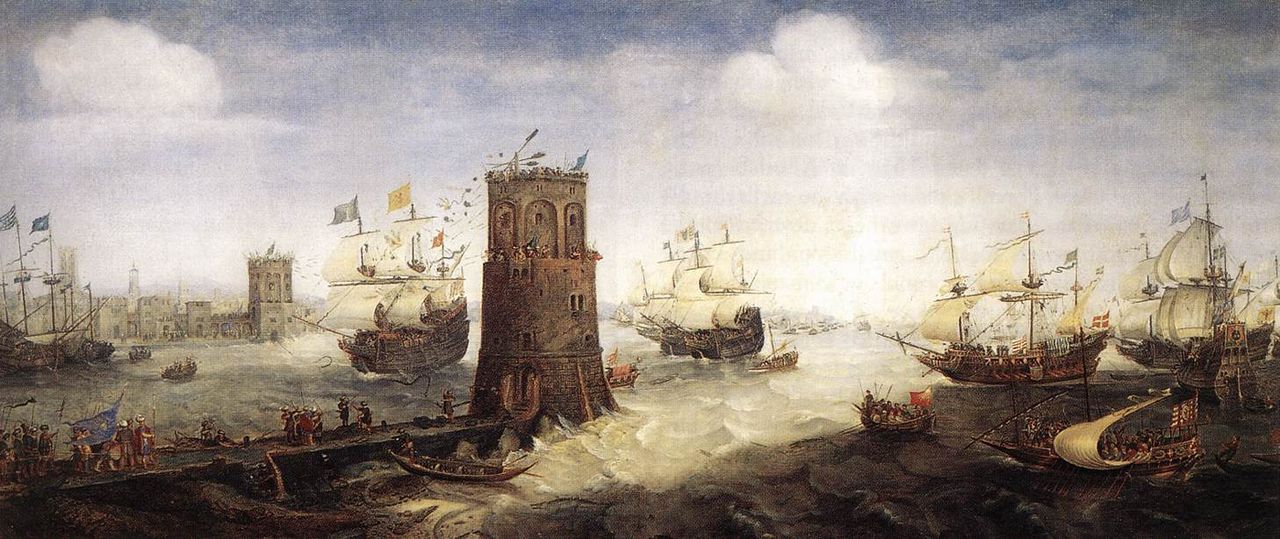
Mathematical properties
As an integer, 1218 is even and composite. Its prime factorization is 2 × 3 × 7 × 29, a product of four distinct primes. From that factorization one obtains 16 positive divisors in total. The sum of all divisors (the sigma function) equals 2880, so the sum of proper divisors is 1662; because this exceeds 1218 the number is classified as abundant. The Euler totient phi(1218) equals 336.
Other standard representations include the Roman numeral form MCCXVIII, hexadecimal 0x4C2, and binary 10011000010. Simple digit tests show it divisible by 3 because its digit sum is 12; it is not divisible by 9. It is not a prime, not a square, and not a perfect power.
Year 1218 (AD)
The year 1218 AD lies in the early 13th century, within the High Middle Ages in European chronology. It was a time of expanding royal authority, urban growth and frequent military and religious conflicts. In the context of the Crusades, 1218 is closely associated with the Fifth Crusade and the beginning of sustained siege operations against Egyptian positions in the Nile delta, notably the campaign that targeted the port of Damietta.
Concurrently, other long-running conflicts such as the Albigensian Crusade in southern France continued to affect political alignments and ecclesiastical policy. More broadly, the early decades of the 1200s saw the consolidation of states in Europe and the Near East and the rise of powerful steppe polities in Central Asia; the period is marked by shifting trade routes, diplomatic contacts and military encounters across regions.
Uses and cultural notes
- As a practical label, 1218 is used in catalog numbers, model designations, statute citations, and other sequential systems where four-digit identifiers are helpful.
- In historiography, citing the year 1218 usually requires additional geographic or topical context, since events in different regions were unrelated and diverse in nature.
- In records, inscriptions and data systems the numeral functions as an unambiguous reference point; in calendrical terms it denotes a common year of the medieval (Julian) calendar, not a leap year.
Whether encountered in mathematics, chronology or everyday indexing, 1218 is a straightforward composite number with simple arithmetical properties and a place in a historically active year of the early 13th century.
Related articles
Author
AlegsaOnline.com 1218 (number and year) Leandro Alegsa
URL: https://en.alegsaonline.com/art/111140