
1204 (MCCIV) — Sack of Constantinople, the Fourth Crusade and its aftermath
In 1204 the Fourth Crusade was diverted to Constantinople, resulting in the city's sack, establishment of the Latin Empire and long-term political and cultural consequences for Byzantium and western Europe.
1204 (MCCIV) was a leap year beginning on Thursday according to conventions that are often expressed with a linked weekday notation (leap year starting on Thursday) and was dated by contemporaries within the Julian calendar. Modern chronology counts the year as 1204 in the Common Era/Anno Domini framework; it falls in the 2nd millennium and the 13th century. The year is best known for events that dramatically reshaped the political and cultural map of the eastern Mediterranean.
Image gallery
1 Image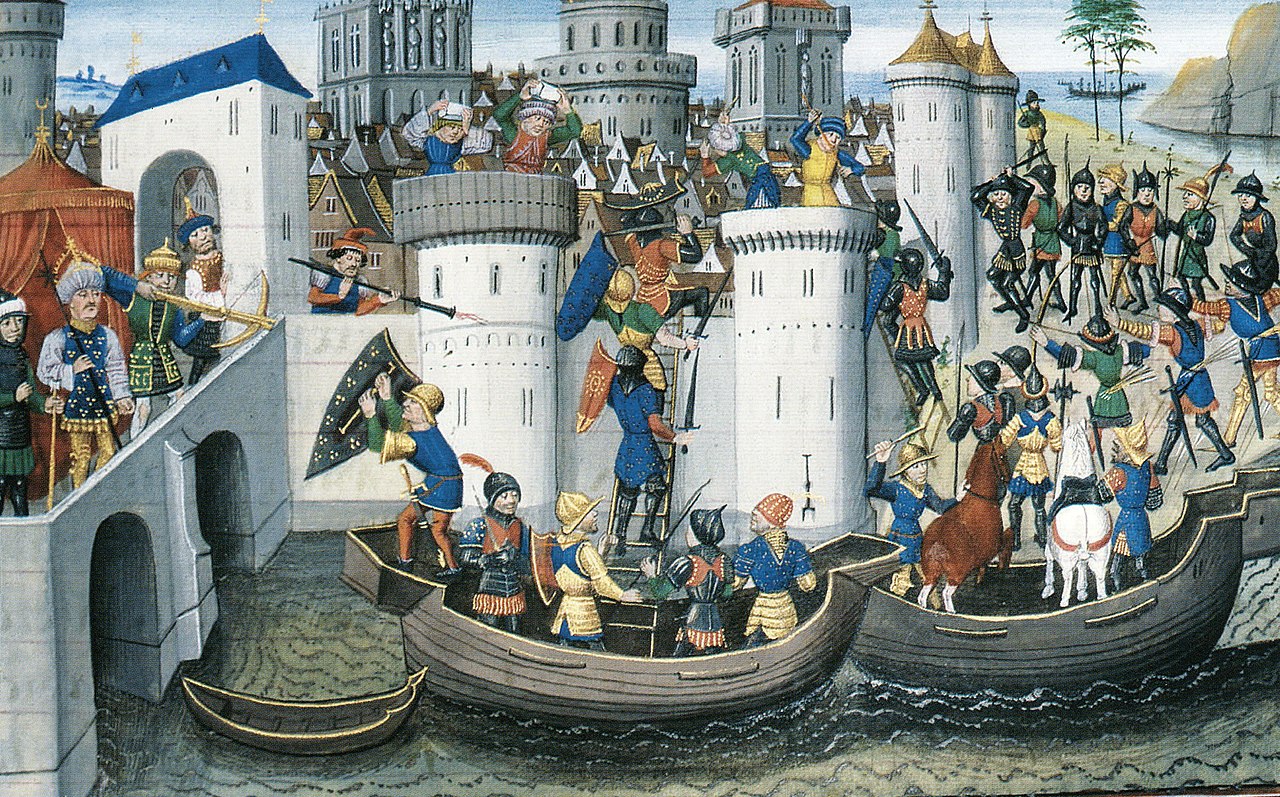
Fourth Crusade and the Sack of Constantinople
The dominant episode of 1204 was the diversion of the Fourth Crusade from its original objective in the Holy Land to the Byzantine capital. A combination of Venetian commercial interests, crusader indebtedness and complex local politics led to an attack on Constantinople. In April 1204 crusader and Venetian forces entered the city, which was subjected to extensive looting, the seizure of relics and artworks, and widespread damage to churches and imperial buildings. Many treasures were removed to western ports, notably Venice, and the event had an immediate psychological impact across Christendom.
Creation of the Latin Empire and successor states
After the fall of the city, crusader leaders organized a partition of Byzantine territories and installed a Latin regime centered on Constantinople, commonly called the Latin Empire. A Western European ruler was proclaimed emperor and a system of Frankish principalities and Venetian colonies was set up in former Byzantine lands. In reaction, several Byzantine Greek polities persisted or were established in exile, including the Empire of Nicaea, the Despotate of Epirus and the Empire of Trebizond; these states preserved Orthodox institutions and formed the basis for later Byzantine restoration efforts.
Political and cultural consequences
- The sack deepened the schism between the Eastern Orthodox and Roman Catholic churches and left lasting bitterness that affected ecclesiastical relations for centuries.
- Venice and other Italian maritime powers secured trading privileges and territorial footholds in the Aegean and the eastern Mediterranean, shifting commercial balances.
- Byzantine political fragmentation weakened centralized authority and made the region more vulnerable to later powers; though successor states sought recovery, the event is widely regarded as a turning point in Byzantine fortunes.
Contemporaneously, 1204 saw important developments in western Europe, including the consolidation of royal power in France at the expense of Angevin domains held by King John of England. Over the following decades the political map of both the eastern and western Mediterranean changed as a direct and indirect consequence of the year's events.
Scholars continue to treat 1204 as a pivotal year: it exemplifies the complex interaction of crusading zeal, commercial ambition and dynastic politics, and its material and institutional effects were felt for generations. The Latin regime in Constantinople endured for some decades before Greek successor states eventually recovered the city, but the redistribution of power and cultural patrimony that began in 1204 shaped medieval Europe and the Near East in lasting ways.
Related articles
Author
AlegsaOnline.com 1204 (MCCIV) — Sack of Constantinople, the Fourth Crusade and its aftermath Leandro Alegsa
URL: https://en.alegsaonline.com/art/111126