
Óscar Arias — Costa Rican statesman and Nobel Peace Prize laureate
Costa Rican politician Óscar Arias (born 1940) served as president in 1986–1990 and 2006–2010. He received the 1987 Nobel Peace Prize for promoting a Central American peace process and later held international humanitarian roles.
Óscar Arias Sánchez (born 13 September 1940) is a Costa Rican politician, lawyer and international public figure best known for his leadership in negotiating an end to regional armed conflicts in Central America and for serving two nonconsecutive terms as President of Costa Rica. He was born in Heredia, Costa Rica and rose to prominence within the National Liberation Party (Partido Liberación Nacional, PLN) before becoming president in 1986. He again held the presidency from 2006 to 2010.
Image gallery
5 Images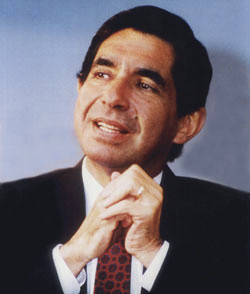


Political career and presidencies
Arias entered national politics in the 1970s and became one of the PLN's principal figures. His first administration began in 1986 after a closely watched election at a time of intense regional conflict. As president he combined domestic policy with a strong diplomatic push to reduce violence and encourage democratic transitions in neighboring countries. Returning to office in 2006, he ran on a platform that mixed economic reforms, social programs and continued emphasis on Costa Rica's international profile. His later term attracted debate at home over trade and economic policy.
Peace initiatives and the Nobel Prize
Internationally Arias is widely identified with the peace plan he championed for Central America. His work to promote negotiations and political solutions among warring parties in the region earned him the Nobel Peace Prize in 1987. The Nobel Committee recognized his role in advancing dialogue and de-escalation and cited the regional relevance of the agreements he supported; more information about that recognition is available from the Nobel Committee via official sources. The prize helped to cement Arias's reputation as a statesman focused on conflict resolution and democratic processes.
Roles in international organizations
After leaving the presidency, Arias remained active in international public life. He has served on boards and advisory bodies addressing humanitarian, legal and development issues. In 2003 he was elected to the board of the International Criminal Court's Trust Fund for Victims, a role that linked his experience in reconciliation and recovery to the court's victim-assistance mandate; the Trust Fund is noted in official listings as one of its governance bodies. He has also been associated with nonprofit groups and networks that bring former democratic leaders and specialists together to promote good governance.
Honors, positions and public perception
- Recipient of the Nobel Peace Prize (1987).
- Awarded other humanitarian distinctions and prizes for his work in peace and development.
- Participant in international boards, think tanks and nonprofit initiatives focused on peace, security and victim assistance.
Supporters regard Arias as a pivotal figure in restoring regional stability and elevating Costa Rica's diplomatic profile. His work has been credited with creating space for political transitions away from armed conflict and toward negotiated settlements.
Controversies and legacy
Like many long-serving public figures, Arias's record has invited critique as well as praise. Some domestic critics have disputed elements of his economic and trade policies, particularly his support for certain free-trade initiatives during his later political activity. At the same time, his advocacy for peace, democratic institutions and international cooperation continues to shape how he is assessed in Costa Rican and regional history. His career illustrates the tensions that can arise when a leader moves between diplomacy, national governance and global civil society roles.
Related articles
Author
AlegsaOnline.com Óscar Arias — Costa Rican statesman and Nobel Peace Prize laureate Leandro Alegsa
URL: https://en.alegsaonline.com/art/110865
Sources
- clubmadrid.org : Former Heads of State and Government | Club de Madrid
- Óscar Arias Sánchez