
Đặng Thị Ngọc Thịnh
Vietnamese politician; Vice President of Vietnam 2016–2021 and acting President from 21 Sep to 23 Oct 2018 after Trần Đại Quang's death.
Overview
Đặng Thị Ngọc Thịnh (born 25 December 1959) is a Vietnamese politician and member of the Communist Party of Vietnam. She served as Vice President of the Socialist Republic of Vietnam from 2016 until 2021 and briefly assumed the duties of head of state in 2018. Her elevation to acting president followed the death of President Trần Đại Quang and was carried out under constitutional procedures and the decisions of the National Assembly and state institutions. For an official profile see her profile.
Image gallery
2 Images
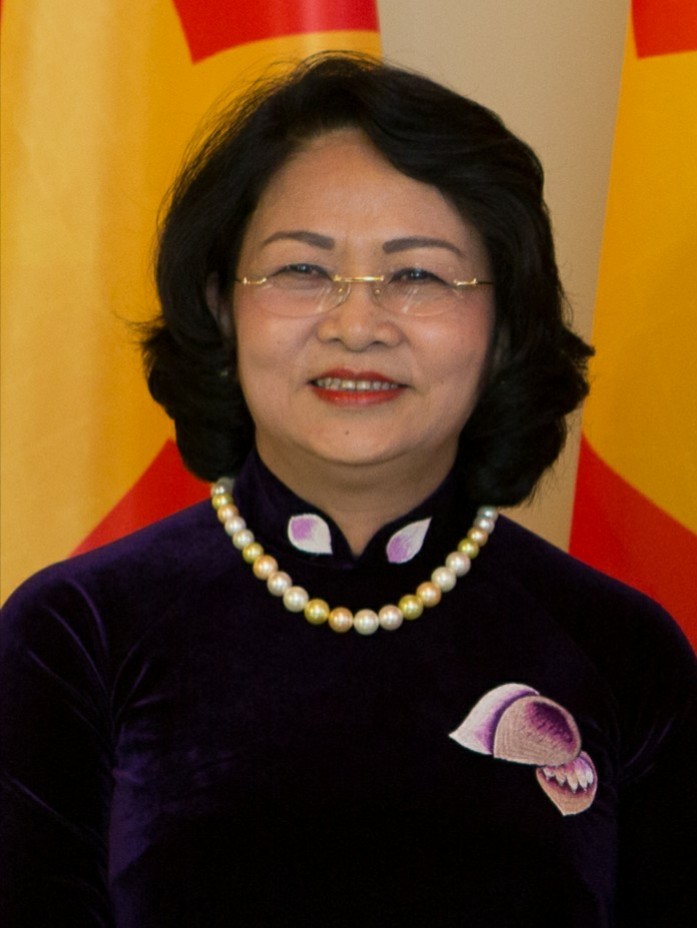
Political career and offices
Thịnh's career spans roles at both provincial and national levels, rising through party and government structures to become one of the country's senior officials. As Vice President she performed functions defined by the constitution and acted as deputy to the president, representing Vietnam on ceremonial occasions and in some state matters. The Vice Presidency in Vietnam is chosen by the National Assembly on the nomination of the president and with party approval; Thịnh's tenure fit within this framework.
Acting presidency, September–October 2018
After President Trần Đại Quang died in September 2018, Đặng Thị Ngọc Thịnh took on the duties of the presidency on an acting basis from 21 September 2018 until a successor was appointed on 23 October 2018. During that interval she carried out routine head-of-state responsibilities, including receiving credentials, attending official ceremonies, and ensuring continuity of constitutional functions. Her short term as acting president made her the highest-ranking woman to exercise the office, albeit temporarily; more information on that period is available at related sources.
Roles, responsibilities and significance
The vice president in Vietnam has a mix of ceremonial, representative and constitutional duties. Typical responsibilities include:
- standing in for the president when the president is unable to perform duties;
- representing the state at domestic and international events;
- participating in state and party consultations and committees;
- engaging with social, cultural and public welfare initiatives.
Thịnh's service is noted for reflecting the broader participation of women in Vietnamese politics and for demonstrating how constitutional procedures ensure continuity of the state when a president can no longer serve. Her time in office is documented in official records and contemporary news reports; for a selection of references see further reading.
Background and legacy
Born in 1959, Đặng Thị Ngọc Thịnh built her public career over decades within state and party institutions. While the presidency in Vietnam is a largely ceremonial role compared with the Communist Party leadership, acting as head of state placed her at the center of formal state functions and succession processes. Her brief stewardship is often noted in discussions of female political leadership in Vietnam and the constitutional mechanisms that manage leadership transitions.
Related articles
Author
AlegsaOnline.com Đặng Thị Ngọc Thịnh Leandro Alegsa
URL: https://en.alegsaonline.com/art/110872
Sources
- dbqh.na.gov.vn : "Đặng Thị Ngọc Thịnh"