
Zadar — Historic Dalmatian Port City on the Adriatic
Zadar is a coastal city in Croatia known for its Roman and medieval core, the cathedral of St. Anastasia, modern sound-and-light installations, ferry links to islands, and a population around 75,000.
Overview
Zadar is a coastal city in northern Dalmatia on the Adriatic Sea and serves as an administrative, cultural and transport center for its region. The urban area occupies a compact peninsula and surrounding districts and has a population of roughly 75,000. It is part of Croatia's long maritime tradition and combines an ancient core with contemporary public art and seaside promenades. The city's main cathedral is dedicated to Saint Anastasia and commonly referenced as the Zadar Cathedral.
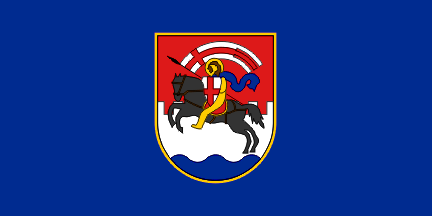
Image gallery
10 Images


Historical development
Zadar's history stretches back to antiquity: it developed from Illyrian and Roman settlements into a fortified medieval town. Over centuries it passed through Byzantine, Croatian and Venetian administrations, leaving a layered historic fabric of Roman ruins, medieval churches and Venetian walls. The built heritage reflects these phases; archaeological remains such as a Roman forum sit beside early medieval churches. The city experienced substantial damage during 20th-century conflicts but has rebuilt and preserved many surviving monuments.
Landmarks and cultural life
Key features in Zadar's compact old town include several distinctive sites and contemporary attractions that draw visitors and scholars:
- Church of St. Donatus — an outstanding example of pre-Romanesque architecture set on the former Roman forum.
- Zadar Cathedral — the large basilica dedicated to Saint Anastasia, with parts dating from the medieval period.
- Roman and medieval remains — archaeological layers visible around the old town and museum displays.
- Sea Organ and Greeting to the Sun — modern installations on the waterfront that generate music from waves and a daytime/nighttime light display, blending engineering with public space design.

Economy, transport and events
Zadar functions as a regional transport hub with ferry links to nearby islands, a busy port, and an airport serving domestic and international routes. Tourism is a major economic sector, supported by cultural festivals, museums and coastal recreation. The city also hosts educational institutions, maritime services and small industry tied to regional trade.
Notable facts and distinctions
Zadar is often noted for the juxtaposition of very old monuments and striking modern public art on its seafront. Anecdotes about spectacular sunsets are common in travel writing, and the city markets its waterfront as a signature experience. Its survival through multiple historical phases makes Zadar a useful case study in Adriatic urban continuity and cultural layering.
Related articles
Author
AlegsaOnline.com Zadar — Historic Dalmatian Port City on the Adriatic Leandro Alegsa
URL: https://en.alegsaonline.com/art/110333