
Yvain (Owain) — Knight of the Lion in Arthurian legend
Yvain (Owain) is a prominent Knight of the Round Table, son of King Urien, hero of medieval romances such as Chrétien de Troyes' tale of the Lion, and linked to the historical ruler Owain mab Urien.
Overview
Yvain (also given as Owain, Ywain, Ewain or Uwain) is a knight of King Arthur’s court in medieval Arthurian literature. He is traditionally described as a son of King Urien and takes a central role in a number of chivalric romances. The most famous narrative featuring him is the romance by Chrétien de Troyes usually called Yvain, the Knight of the Lion. In these tales Yvain undertakes a series of quests that test his martial skill, personal honor and capacity for love.
Image gallery
6 Images



Origins and textual history
The character has roots both in historical memory and in later medieval storytelling. He is commonly associated with the historical northern British ruler Owain mab Urien, king of Rheged in the era traditionally placed in the early medieval period. Literary versions of the figure appear in Anglo-Norman, Old French and Welsh sources; a Welsh variant survives in the Mabinogion as "Owain, or the Lady of the Fountain." Major medieval treatments include Chrétien de Troyes' 12th‑century romance and a German adaptation by Hartmann von Aue, titled Iwein.
The Yvain narrative and key episodes
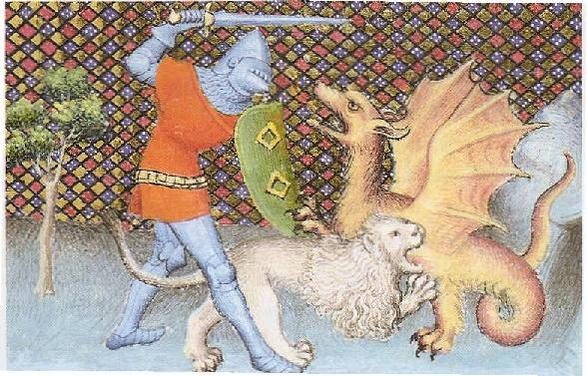
In the best-known account Yvain wins fame by avenging a relative of Arthur, defeats a hostile knight who guards a magical fountain, and then courts the fountain’s widow, often called Laudine. Several distinctive episodes follow: Yvain fights monsters and rival knights, rescues the weak, loses his sanity through grief or distraction, and — after a period of wandering and moral testing — regains his honor with the help of a lion companion he frees and befriends. The lion acts as a symbolic and practical ally in later contests.
Characteristics and motifs
- Chivalric testing: quests that combine combat, courtesy and service to women.
- Madness and recovery: a fall from grace and subsequent redemption.
- Lion companion: an animal helper that embodies loyalty and reformed identity.
- Love and duty: tension between romantic attachment and knightly obligations.
Legacy and notable distinctions
Yvain’s tale influenced later medieval romances and modern retellings of Arthurian material, contributing themes of personal failure and recovery that recur across the cycle. The Welsh tradition preserves an independent strand of the story, while continental adaptations (for example by Hartmann) show how the figure was reshaped to fit local tastes. Yvain is distinct from other Arthurian heroes through the lion episode and the very explicit portrayal of his lapse into madness and rehabilitation.
Further reading and links
For contextual studies of knights of Arthur’s court and their tales, see works on the Round Table and on the historical kingdom of Rheged. These sources help trace how a regional ruler’s memory became a staple figure in pan‑European chivalric literature.
Related articles
Author
AlegsaOnline.com Yvain (Owain) — Knight of the Lion in Arthurian legend Leandro Alegsa
URL: https://en.alegsaonline.com/art/110285