
Youth in Revolt (2009 film)
2009 dark comedy directed by Miguel Arteta, adapted from C.D. Payne's novel. Michael Cera leads as a shy teen who invents an alter ego; the film received generally favorable reviews.
Overview
Youth in Revolt is a dark coming-of-age comedy film directed by Miguel Arteta and adapted from the novel by C.D. Payne. Released theatrically in early 2010 after a festival premiere in 2009, the movie is best known for Michael Cera's performance as an awkward teenager who creates a brazen alter ego to pursue first love.
Image gallery
1 Image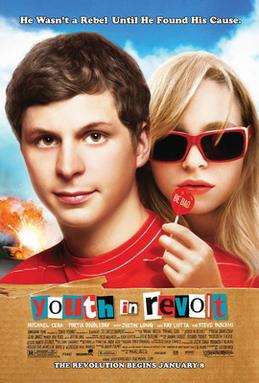
Plot and themes
The story follows a socially awkward adolescent who reinvents himself as a confident, aggressive persona to win the attention of the girl he adores. The contrast between the shy protagonist and his invented alter ego drives much of the film's humor, which blends romantic comedy beats with offbeat, sometimes transgressive gags. Themes include identity, adolescent rebellion, and the gap between fantasy and consequence.
Adaptation and production
The screenplay translates the episodic tone of the original novel into a single narrative focused on character and comic set pieces. Miguel Arteta's direction emphasizes intimate performances and the awkwardness of adolescence rather than broad slapstick. The film balances a quirky, sometimes dark sensibility with more mainstream romantic-comedy elements.
Release and reception
Youth in Revolt premiered at a film festival in 2009 and reached wider audiences the following year. Critics gave it generally positive reviews: it holds a fresh-to-mixed rating on review aggregators, reflecting appreciation for the lead performance and the film's offbeat voice. For example, summary scores are recorded on review sites such as Rotten Tomatoes and Metacritic.
Cast and notable facts
- Michael Cera — lead role, noted for playing a more daring comic character than in his earlier work.
- Portia Doubleday — co-star often cited as the object of the protagonist's affection.
- Zach Galifianakis — supporting role contributing to the film's oddball tone.
Critics and viewers have pointed out that the film stands out for attempting a darker, more mischievous take on teenage desire than many mainstream comedies. Its mixture of heartfelt coming-of-age moments and intentionally uncomfortable humor makes it a distinctive entry in late-2000s American indie-style comedies.
Related articles
Author
AlegsaOnline.com Youth in Revolt (2009 film) Leandro Alegsa
URL: https://en.alegsaonline.com/art/110116