
Yamaha DX7 — digital FM synthesizer (1983)
Iconic 1983 digital synthesizer by Yamaha. Popularized FM synthesis, factory presets like electric piano and brass, and shaped 1980s pop production. Complex programming, lasting legacy and modern emulations.
The Yamaha DX7 is a landmark digital programmable synthesizer introduced in 1983. It used frequency modulation (FM) synthesis to generate tones unlike then-common analog subtractive machines. The DX7 became widely known for its clear electric-piano, bell-like and brass sounds and for delivering a new palette of digital timbres to pop, rock and electronic music.
Image gallery
3 Images
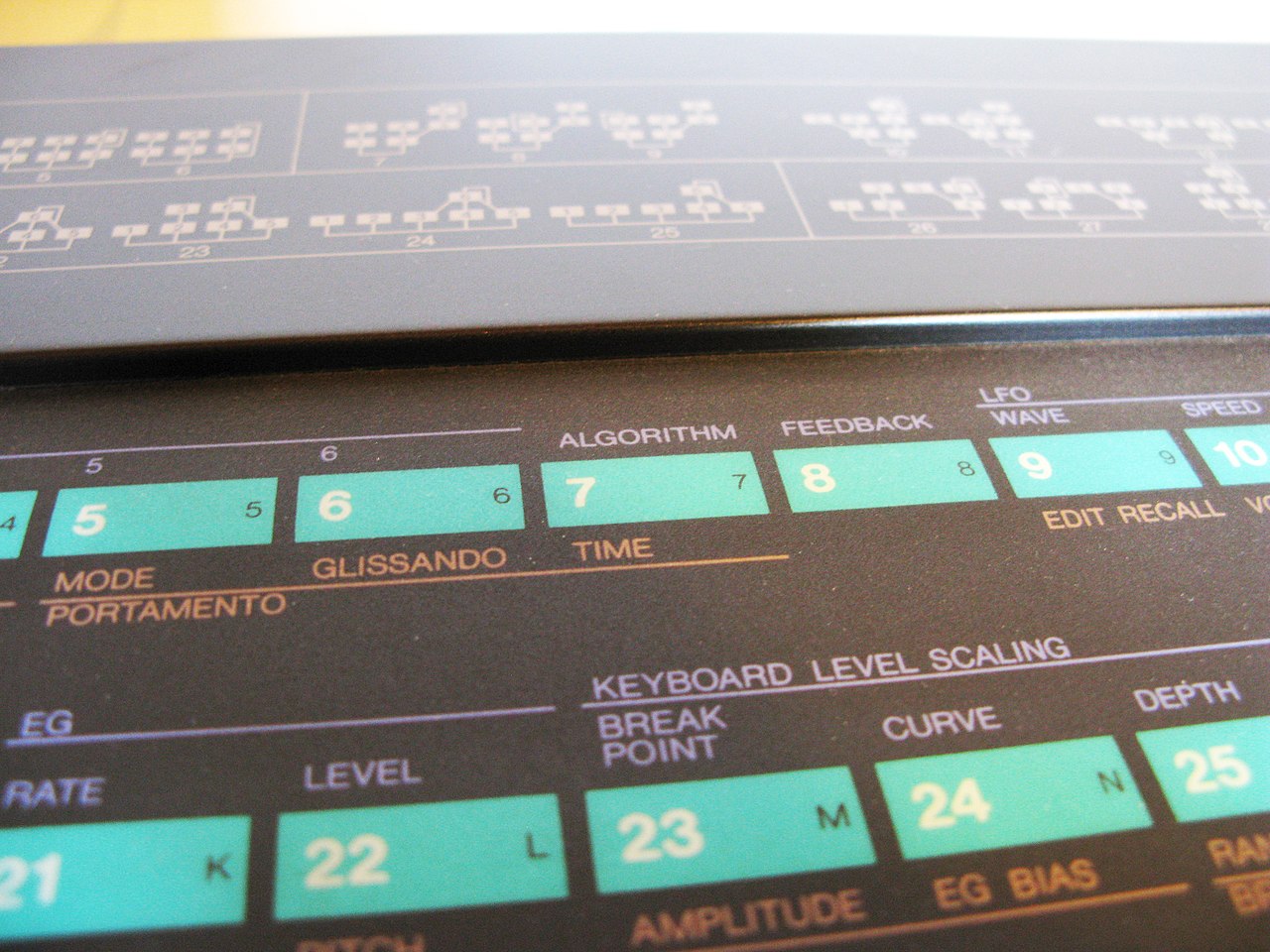

Core characteristics
The instrument implements six-operator FM synthesis, allowing operators to act as carriers or modulators arranged in a variety of algorithms. It offered multitimbral presets stored in ROM, velocity-sensitive keys and support for emerging studio standards such as MIDI. Capability for up to 16 simultaneous voices made it suitable for layering or polyphonic parts in studio and live settings.
Programming and presets
Programming the DX7 was powerful but unfamiliar to many users: FM parameters are less visually intuitive than analog filter-based controls, so factory patches and third-party sound libraries became very popular. Examples of famous preset types include the electric piano, metallic bells, pads and bright synth-brass voices. The ROM-4A patch labeled "Synthbrass" is one documented instance heard on the 1980s hit "Sunglasses at Night." Developers and players often traded patches and techniques to replicate signature studio sounds.
- Signature tones: electric piano, bells, brass, basses, pads
- Technology: six-operator FM, preset ROM, velocity sensitivity, MIDI
- Use: studio production, live performance, sound design
Historically, the DX7 helped shift mainstream popular music toward digital timbres in the 1980s. Its accessibility and distinctive presets made it a fixture in studios and on records. While many players found on-panel editing challenging, a generation of sound designers mastered FM programming and published patches that spread across scenes worldwide.
Today the DX7's influence persists: original hardware remains collectible, and its sounds are reproduced in modern software synths and sample libraries. For further manufacturer details see manufacturer information, and for historical or technical discussions consult dedicated resources such as specialist articles.
Related articles
Author
AlegsaOnline.com Yamaha DX7 — digital FM synthesizer (1983) Leandro Alegsa
URL: https://en.alegsaonline.com/art/109585