
Wushu (sport): Modern competitive practice of Chinese martial arts
Wushu is the standardized competitive form of Chinese martial arts, comprising choreographed routines (taolu) and full‑contact sparring (sanda). It was developed in mid‑20th century China and is practiced worldwide.
Wushu is a modern competitive interpretation of traditional Chinese martial arts that emphasizes performance, athleticism, and standardized rules. As a regulated sport, it draws on many older styles and techniques collectively known as traditional Chinese martial arts. The contemporary system was largely shaped in the decades after 1949 to create a common framework for teaching, demonstration, and competition.
Image gallery
7 Images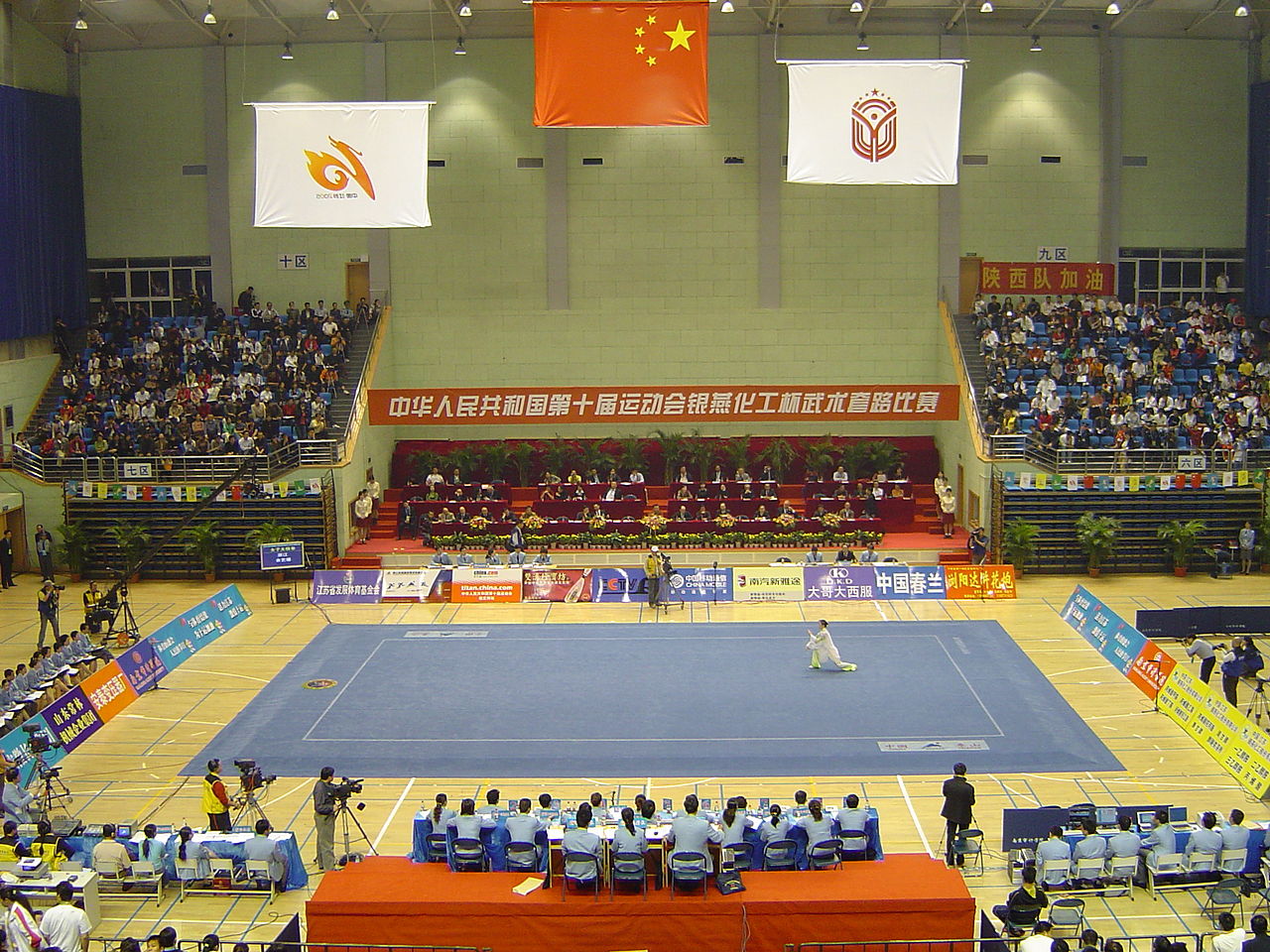



Historical background and organization
In the years following the founding of the People’s Republic of China, committees and sporting bodies worked to systematize diverse martial traditions into a curriculum suitable for national physical education and cultural promotion. This process — often described as an effort to nationalize and modernize training — produced standardized routines, training methods, and competition rules. International governance developed later; the International Wushu Federation (IWUF) was formed to promote the sport globally and now organizes the World Wushu Championships, whose inaugural edition for the modern era took place in Beijing in 1991 (Beijing 1991).
Primary disciplines
Competitive wushu consists of two principal disciplines with distinct aims and formats:
- Taolu (forms) — Choreographed routines performed solo or in pairs, combining stances, strikes, kicks, balances, jumps and acrobatic maneuvers. Judges score routines for technical quality, expression, and degree of difficulty. Time limits and required elements are specified for different event categories.
- Sanda (sparring) — Full‑contact fighting based on striking and grappling. Sometimes called sanshou or associated with the traditional raised platform, or lei tai, sanda incorporates techniques influenced by Chinese striking arts (boxing) and grappling traditions such as wrestling, giving it a broad combat character (combat).
Taolu: characteristics and scoring
Taolu routines are evaluated by panels that consider accuracy of technique, power, speed, balance, rhythm and overall presentation. Modern competitive taolu often contains high‑difficulty acrobatic elements — athletes may perform rapid rotations and jumping kicks that are described by their rotational degrees — while adhering to time limits for each event. Difficulty components are separately listed and rewarded, so competitors combine classical technique with athletic elements to maximize scores.
Sanda: rules and equipment
Sanda matches are contested under a ruleset that allows punches, kicks and selected throws, with rounds scored by judges or a referee. Protective equipment such as headgear, gloves, mouthguards and body protectors is commonly used in amateur competitions to reduce injury risk. Compared with sports like kickboxing or Muay Thai, sanda places a stronger emphasis on integrating takedowns and throws into stand‑up fighting while maintaining striking exchanges.
Practice, international reach and distinctions
Wushu is practiced both as a competitive sport and as a cultural performance. Taolu is often presented at festivals and demonstrations for its aesthetic qualities, while sanda is trained for practical combat skills and competition. The IWUF and regional federations promote standardized rules, coaching qualifications and international events, which has helped wushu spread beyond China to schools, clubs and national teams worldwide. Although modern wushu borrows from traditional systems, it is distinct in its codified, sport‑oriented approach: standardized routines, judged performance criteria, and formalized sparring rules differentiate it from the more varied and lineage‑based traditional martial arts.
For further information on rules, event calendars and national organizations, consult federation resources and training centers that specialize in taolu and sanda. Many practitioners balance athletic training with study of the traditional forms that inspired modern wushu, preserving cultural links while participating in an internationally governed sport.
Questions and answers
Q: What is Wushu?
A: Wushu is a sport that originated from traditional Chinese martial arts and was created in China after 1949 to nationalize the practice of traditional Chinese martial arts.
Q: Who created Wushu?
A: Wushu was created by government committees.
Q: How has Wushu become an international sport?
A: Wushu has become an international sport through the International Wushu Federation (IWUF). The IWUF holds the World Wushu Championships every two years.
Q: What are the two disciplines of competitive wushu?
A: The two disciplines of competitive wushu are taolu (forms) and sanda (sparring).
Q: What does taolu involve?
A: Taolu involves martial arts routines which are judged and given points according to specific rules on quality and difficulty of movements, such as stances, kicks, punches, balances, jumps, sweeps and throws.
Q: How long can taolus last for in competitions?
A: Taolus have time limits that can range from 1 minute 20 seconds to over five minutes.
Q: What is sanda similar to?
A Sanda is similar to kickboxing or Muay Thai but it involves more grappling techniques.
Related articles
Author
AlegsaOnline.com Wushu (sport): Modern competitive practice of Chinese martial arts Leandro Alegsa
URL: https://en.alegsaonline.com/art/109288
Sources
- masteringwushu.com : Mastering WUSHU
- highperformancewushu.com : Fundamentals of High Performance Wushu: Taolu Jumps and Spins
- shouyuliang.com : Kung Fu Elements