
Wolfsberg District, Carinthia: geography, history and administration
Overview of Wolfsberg District in the Austrian state of Carinthia: location, landscape, history, economy, administration and cultural highlights centered on the town of Wolfsberg.
Overview
The Wolfsberg District is an administrative district in the Austrian state of Carinthia. Its administrative centre and largest town is Wolfsberg. The district occupies a part of the Lavant Valley and adjacent Alpine foothills, forming a mix of valleys, forested slopes and small mountain ranges. It is one of Carinthia's inland districts and plays a regional role in commerce, services and rural life. For administrative details see district information.
Image gallery
3 Images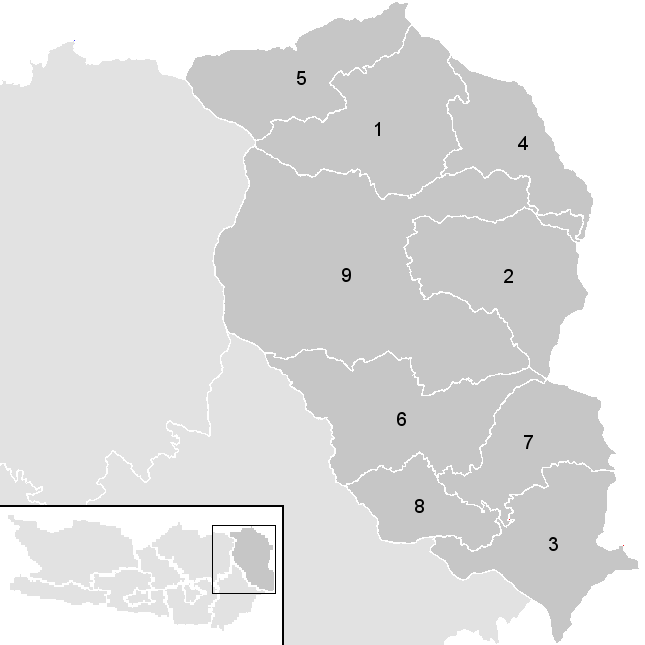


Geography and local characteristics
Topographically the district combines river valleys and upland terrain. The Lavant River and its tributaries shape much of the local drainage and settlement pattern, while surrounding hills and lower Alpine ridges support forestry and pasture. Settlements range from market towns to scattered farming villages. The district shares internal state boundaries and connects to wider transport routes that lead toward larger Carinthian centres and neighbouring states; consult regional maps at state resources for routes and services.
History and cultural heritage
The area has a long history of settlement shaped by medieval agrarian communities, local trade and the estates of nobility. Over centuries small market towns developed around parish churches and manor houses, leaving a legacy of historic buildings, chapels and local museums. Traditional Carinthian customs and dialects remain visible in festivals, crafts and folk music. For cultural programs and tourism information see visitor resources.
Economy, tourism and daily life
The district economy is diverse for a rural region: agriculture, forestry and small-scale manufacturing coexist with service industries and tourism. Outdoor activities such as hiking, cycling and winter sports attract domestic visitors to local trails and slopes, while cultural tourism highlights churches, historic centers and regional cuisine. Local markets and weekly events continue to be important for village life.
Administration and notable facts
As a Bezirk (district) in Austria, Wolfsberg performs intermediate administrative functions between the state (Land) and municipalities, including certain public services, civil registration tasks and coordination of regional planning. The district contains multiple municipalities that manage local affairs. Although not a major urban centre, Wolfsberg District is notable for its combination of natural landscapes, rural traditions and accessibility within southern Austria.
- Primary town: Wolfsberg (administrative seat)
- Landscape: river valleys, forests, low mountains
- Economy: agriculture, forestry, small industry, tourism
This summary gives a concise picture of Wolfsberg District as a regional unit of Carinthia with a mix of historical, cultural and natural features and a role in local administration and rural economy.
Related articles
Author
AlegsaOnline.com Wolfsberg District, Carinthia: geography, history and administration Leandro Alegsa
URL: https://en.alegsaonline.com/art/108834