
Berote Kalan (union council in Abbottabad District)
Berote Kalan is a union council in Abbottabad District, Khyber Pakhtunkhwa, Pakistan. This article summarizes its location, administration, geography, local life and historical naming convention.
Overview
Berote Kalan (also spelled Birote Kalan) is one of the administrative union councils of Abbottabad District in the province of Khyber Pakhtunkhwa, Pakistan. Union councils are the smallest elected local government units in Pakistan, responsible for basic civic administration and community development. Berote Kalan is listed among the district's local councils and serves as a focal point for nearby villages and hamlets.
Image gallery
1 Image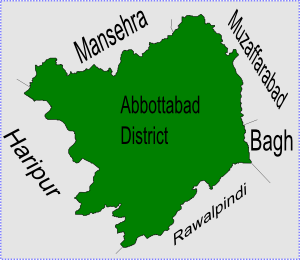
Geography and environment
The area is characterized by hilly terrain typical of the lower Himalaya foothills in and around Abbottabad. Slopes, valleys and small streams shape local land use, with vegetation ranging from cultivated terraces to patches of natural forest. The climate tends to be more temperate than the plains, with cooler summers and colder winters at higher elevations.
Administration and services
As a union council, Berote Kalan plays a role in local governance, including civic services, record keeping, and small infrastructure projects. Typical responsibilities include:
- maintaining local roads and water supply schemes;
- coordinating community development and dispute resolution.
History and name
The suffix "Kalan" is Persian/Urdu for "big" and is commonly used in South Asia to distinguish a larger settlement from a nearby smaller one (often paired with "Khurd"). The locality's history is tied to the broader Hazara region and the administrative evolution of Abbottabad District, with local traditions and patterns of settlement shaped by agriculture and hill trade routes.
Economy, language and culture
Economic life in and around Berote Kalan is largely rural: small-scale farming, livestock, local markets and remittances from migrants are typical economic supports. Languages spoken locally commonly include Hindko and Urdu, alongside regional dialects. Cultural life reflects the traditions of Hazara and northern Pakistan, including seasonal festivals and community gatherings.
Notable considerations
Berote Kalan should be understood as a local administrative area rather than a single urban center; it comprises multiple settlements and serves local governance needs. For official information and administrative boundaries consult district-level sources or local government records via the appropriate provincial and district portals.
Tags
Related articles
Author
AlegsaOnline.com Berote Kalan (union council in Abbottabad District) Leandro Alegsa
URL: https://en.alegsaonline.com/art/10873
Sources
- abbottabad.gov.pk : Berote Kalan Union Council
- abbottabad.sdnpk.org : Administrative Units of District Abbottabad