
Wilmington, North Carolina
Coastal city and county seat on the Cape Fear River known for its historic riverfront, port, beaches, film industry, and the 1898 Wilmington insurrection—a pivotal event in local and racial history.
Wilmington is a coastal city in New Hanover County, North Carolina, in the United States. It serves as the county seat and sits on the lower Cape Fear River near the Atlantic Ocean. The city's population was roughly 100,000 in the early 21st century, concentrated in a compact historic core and expanding suburban neighborhoods; a mid-2000s estimate recorded about 96,000 residents (population). Wilmington's location has shaped its role as a regional port, cultural center, and gateway to nearby beaches.
Image gallery
10 Images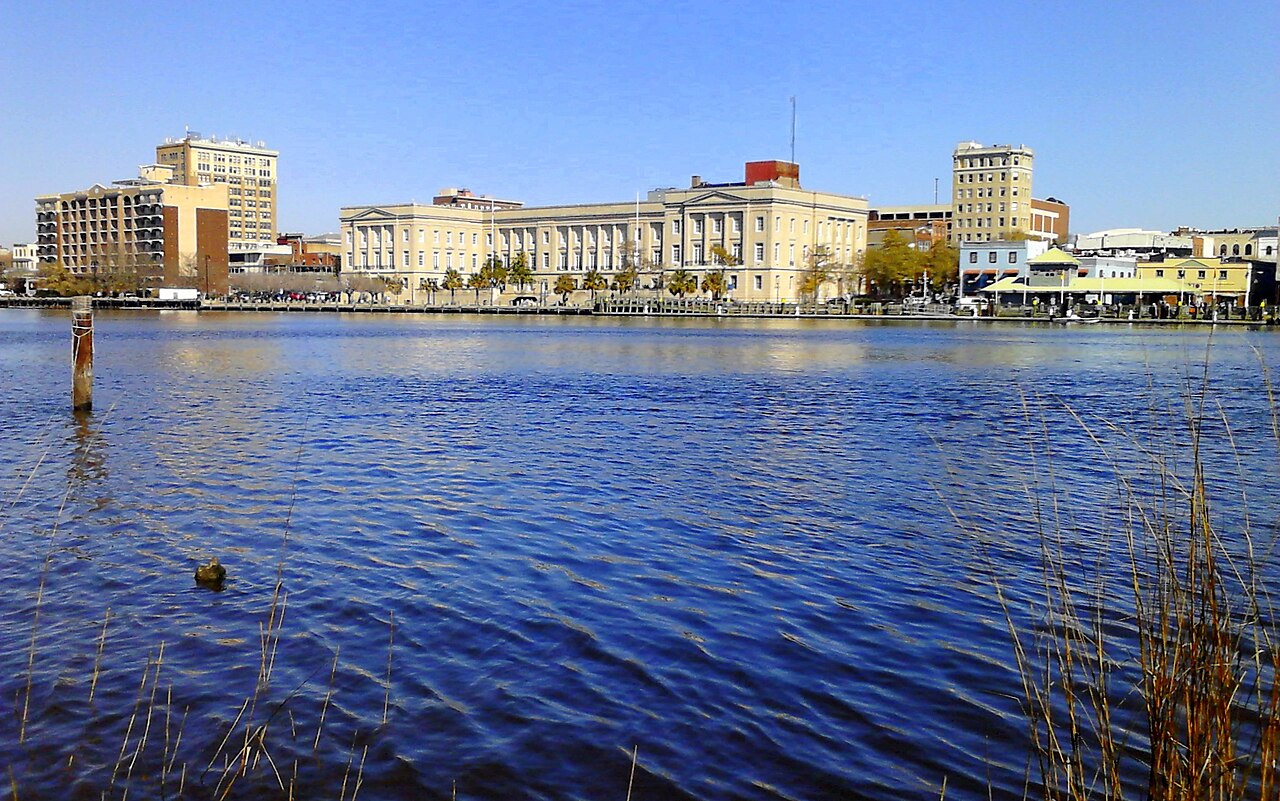




Geography and character
Wilmington's riverfront and downtown district feature 19th- and early 20th-century architecture, a walkable Riverwalk, and commercial piers. The city lies at sea level with a humid subtropical climate, which supports year-round outdoor activities. Nearby barrier islands include Carolina Beach and Wrightsville Beach, popular for recreation, fishing, and tourism. The Port of Wilmington handles container traffic, bulk goods, and serves as a logistical hub for southeastern North Carolina.
History
Founded in the 18th century and named for Spencer Compton, the Earl of Wilmington (Spencer Compton), the town grew as a colonial port and later as a center for shipbuilding and trade. The name reflects ties to British political figures of the era, when King George II reigned and the Earl served as Prime Minister. Over time Wilmington's economy shifted from agriculture and shipping to diversified industry, tourism, and services.
Wilmington Insurrection of 1898
One of the city's most significant and troubling episodes is the 1898 white supremacist uprising, often called the Wilmington insurrection. In that violent affair, a white mob overthrew the local, partially African American municipal government, killed residents and political leaders, and forced many African Americans to flee. Historians widely regard the event as a coup d'état (coup d'état) and a turning point that led to disenfranchisement and segregation in the region.
Throughout the 20th and 21st centuries Wilmington has worked to preserve its historic districts while acknowledging and interpreting difficult aspects of its past. The city hosts educational institutions such as the University of North Carolina at Wilmington, cultural festivals, and community initiatives that explore local history and reconciliation.
Economy, culture, and landmarks
Modern Wilmington combines port activity, manufacturing, higher education, and a notable film and television production industry centered around local studios. Visitors are drawn to historic sites, maritime attractions, and nearby beaches. Notable points of interest include:
- Historic Riverwalk and downtown historic district
- Battleship and maritime museums
- Nearby coastal beaches and resorts
- Film studios and arts venues that support a regional creative economy
Transportation links include the Port of Wilmington, regional highways, and a small commercial airport. The city's combination of coastal geography, historic architecture, and active cultural life makes it a prominent municipality in southeastern North Carolina and a focal point for conversations about urban growth, heritage preservation, and social history (demographic reference, county seat, national context). For further local resources and official information see municipal and county sites linked from regional directories (city, county, state).
Related articles
Author
AlegsaOnline.com Wilmington, North Carolina Leandro Alegsa
URL: https://en.alegsaonline.com/art/108389
Sources
- factfinder.census.gov : "American FactFinder"
- geonames.usgs.gov : "US Board on Geographic Names"
- factfinder.census.gov : "US Census Bureau - North Carolina by place"
- naco.org : "Find a County"